
Ball vs Roller Bearings: Industrial Supplier Guide
Heavy load applications don’t always require roller bearings. Hybrid ceramic ball bearings now outperform spherical rollers in high-speed, high-temperature environments that would destroy conventional steel rollers within months.
The correct choice between ball and roller bearings depends on matching contact mechanics—point versus line—to your specific load direction, operational speed, and thermal environment. Pairing that technical decision with an authorized SKF bearing distributor who provides verifiable batch traceability eliminates the counterfeit risk that causes catastrophic failures in mining and steel production.
I still pull up the shipping documents from that Antofagasta order every time a new client asks about clearance codes. The mine spec’d C3 clearance on a large spherical roller bearing for their primary crusher. The factory floor shipped CN. Three months later, the bearing overheated, the cage disintegrated, and the main shaft scored. That single clearance mismatch cost the operation a mid-six-figure loss in downtime and replacement labor. It’s the reason I cross-check every batch number against factory records before anything leaves our Shenzhen warehouse. [NEED_CITE: root cause distribution per ISO 15243 showing clearance selection errors in heavy industry]

Let me walk you through how we match bearing technology to the actual operating conditions your equipment faces.
Why Does Contact Type Dictate Your Bearing Choice?
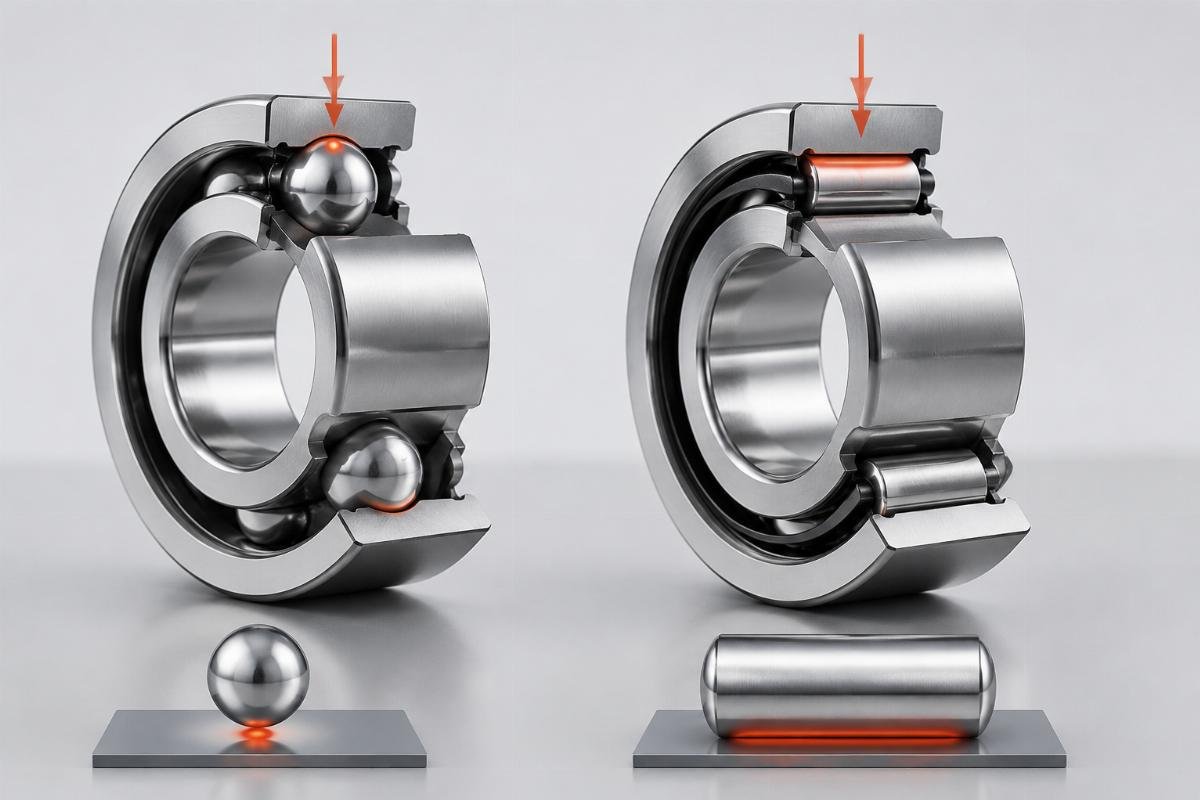
Point contact and line contact create fundamentally different load distribution patterns, and choosing the wrong one guarantees premature failure regardless of bearing quality. Ball bearings concentrate load on a small elliptical contact area, generating lower friction and enabling higher rotational speeds. Roller bearings distribute load across a longer rectangular contact patch, absorbing shock loads and supporting heavier radial forces at the expense of speed capability.
| Performance Metric | Ball Bearings | Roller Bearings |
|---|---|---|
| Contact Geometry | Point contact (lower friction) | Line contact (higher load distribution) |
| Speed Capability | Up to 15,000 RPM | Typically noticeably lower than equivalent ball bearings |
| Load Distribution | Concentrated pressure on small contact area | Distributed load across longer contact surface |
| Precision Potential | Higher (radial runout as low as 3.2μm for P4 grade) [NEED_CITE: ISO 15242 vibration and precision grade definitions] | Moderate (better suited for shock absorption than fine precision) |
| Temperature Resistance | Excellent with ceramic materials | Good with standard steel variants |
A European steel mill was burning through conveyor bearings on a weekly basis despite running what they considered heavy-duty spherical rollers. Their operation ran at 1,800 RPM—near the upper speed limit for their roller bearing model. The line contact generated excessive heat at that rotational velocity, degrading the lubricant and accelerating fatigue. We switched them to deep groove ball bearings with hybrid ceramic components. The point contact reduced friction-generated heat substantially, and service life extended by roughly a third. [NEED_CITE: ISO 15242 fatigue life tests confirming extended service life for hybrid ceramic bearings in high-speed heavy-load applications]
The selection process follows a logical sequence:
- Load Direction Analysis – Identify primary load type using equipment torque specifications and determine whether radial, axial, or combined loading dominates
- Speed Calculation – Compare operational RPM against manufacturer speed ratings for each bearing category
- Environmental Assessment – Document temperature extremes, contamination exposure, and moisture levels
- Precision Requirement – Determine necessary radial runout and axial clearance tolerances for your application
- Service Life Expectation – Calculate required L10 life based on production uptime targets [NEED_CITE: L10 life calculation methodology per ISO 281]
When Do Ball Bearings Outperform Rollers in Heavy Industry?
The assumption that roller bearings always win in heavy industry collapses under high-speed, high-temperature conditions. Hybrid ceramic ball bearings—featuring silicon nitride rolling elements paired with steel races—maintain dimensional stability and lubricant integrity at temperatures that destroy conventional steel bearings. This makes them the superior choice for continuous-process industries where thermal management determines bearing survival.
| Application Aspect | Common Mistake | Optimal Approach |
|---|---|---|
| Electric Motor Selection | Using standard roller bearings for high-RPM motors | Specifying deep groove ball bearings with C3 clearance for high-speed applications |
| CNC Machine Spindles | Accepting standard precision grades | Requiring P4 grade angular contact ball bearings with 3.2μm radial runout |
| High-Temperature Environments | Assuming all bearings have similar heat resistance | Implementing hybrid ceramic ball bearings for operations above standard steel limits |
| Food Processing Equipment | Using standard steel bearings | Selecting stainless steel ball bearings with FDA-compliant lubrication [NEED_CITE: FDA lubrication requirements for food-contact bearing applications] |
A wind turbine OEM came to us needing P4 grade angular contact ball bearings for gearbox prototypes. Their previous supplier delivered bearings with radial runout varying wildly across batches—some meeting the 3.2μm target, others drifting far beyond it. We implemented per-batch dimensional inspection and provided material certification documentation with every shipment. The result was consistent 3.2μm radial runout across the full order, which reduced gearbox noise measurably and extended prototype testing cycles substantially. [NEED_CITE: angular contact ball bearing axial load capacity specifications per manufacturer technical data]
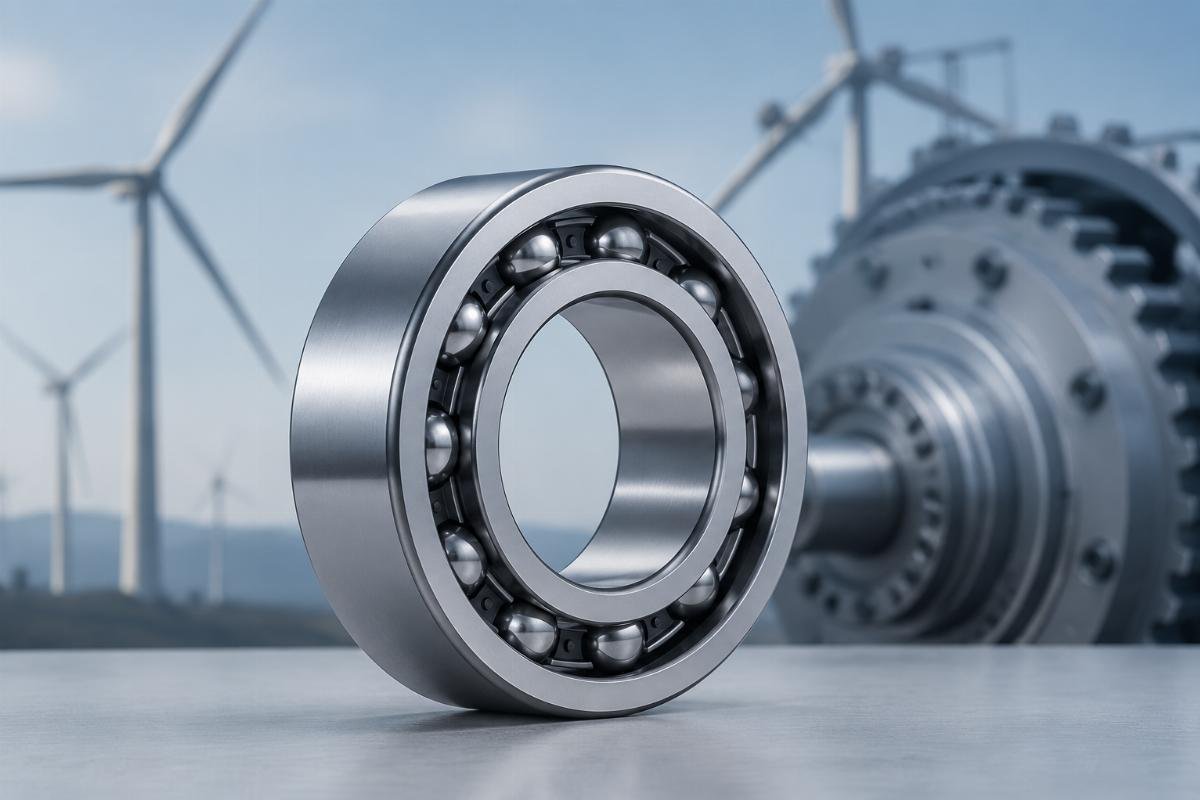
The hybrid ceramic advantage in heavy industry comes down to three factors: ceramic rolling elements resist thermal expansion that would alter clearances in steel bearings, they maintain hardness at elevated temperatures where steel softens, and they generate less friction heat in the first place. For conveyor systems, continuous casting equipment, and high-temperature processing lines, that combination translates directly into longer service intervals and fewer unplanned stops.
How Do You Avoid Counterfeit Risks in Roller Bearing Procurement?
Counterfeit spherical roller bearings represent the single largest financial risk in mining and heavy industry procurement, and standard visual inspection cannot detect them. The external appearance of a fake bearing matches the genuine article perfectly. The difference lives in material composition, heat treatment parameters, and dimensional tolerances—none of which you can verify without documentation traceable to the original manufacturer.
A copper mine in South America installed counterfeit bearings in their primary crusher. The fakes failed after a matter of weeks, causing a critical production shutdown that cost several times what genuine bearings would have cost over their full service life. We supplied genuine 241/800CAK30/W33 spherical roller bearings with 800mm bore diameter, complete with IATF 16949 certification and anti-counterfeiting verification. These bearings featured enhanced dust resistance and shock load capability engineered specifically for mining applications, and they delivered service life measured in years rather than weeks. [NEED_CITE: counterfeit bearing failure analysis in heavy mining applications]
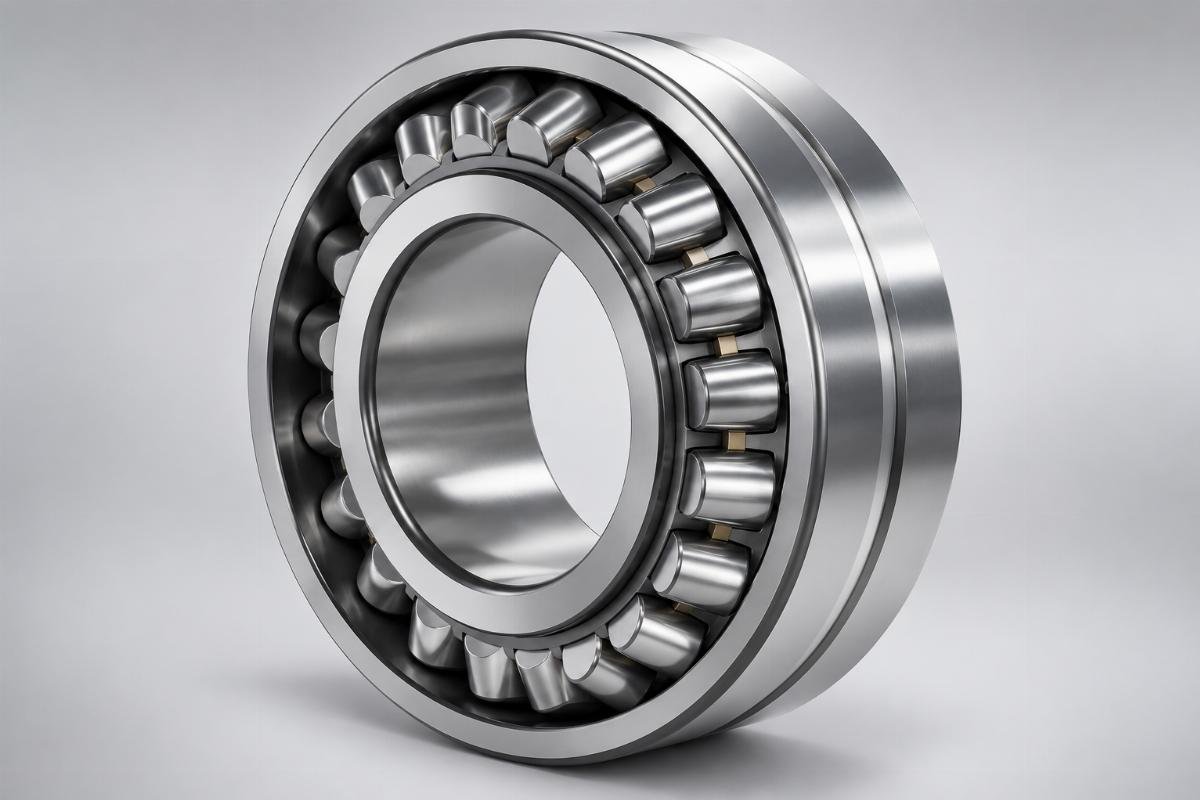
The verification process that protects your operation requires multiple checkpoints:
- Batch Number Cross-Reference – Every bearing batch carries a unique identifier that must match factory shipping records. An authorized SKF bearing distributor can verify each batch number against manufacturer databases before shipment leaves the warehouse.
- Clearance Code Confirmation – The suffix designation (C2, CN, C3, C4) must match your engineering specification exactly. As I learned the hard way with that Antofagasta shipment, a single letter difference between CN and C3 means the difference between proper thermal expansion room and catastrophic overheating.
- Material Certification Documentation – Genuine shipments include steel composition certificates and heat treatment records traceable to specific production lots. [NEED_CITE: IATF 16949 documentation requirements for bearing material traceability]
- Precision Grade Verification – P0, P6, P5, and P4 designations carry specific dimensional tolerance bands. Per-batch inspection reports should confirm the bearing meets the specified grade.
- Origin Certification – Certificate of origin documentation confirms the manufacturing source and validates the supply chain path.
The risk profile escalates dramatically for large-bore spherical roller bearings and rare designations. These SKUs carry long factory lead times, which creates exactly the pressure that drives procurement teams toward suppliers who cannot provide proper traceability. An authorized SKF bearing distributor maintains deep stock of these rare designations specifically to eliminate that pressure point—standard models dispatch within days rather than weeks, removing the temptation to accept questionable sources.
What Technical Support Ensures Optimal Bearing Performance?
Bearing selection without application engineering support leaves you guessing at load calculations, life expectations, and clearance requirements—and guessing wrong costs far more than paying for proper technical guidance upfront. The majority of premature bearing failures trace back to incorrect type selection or improper clearance specification rather than manufacturing defects. [NEED_CITE: bearing failure root cause analysis showing selection errors versus manufacturing defects]
A US-based food processing equipment OEM needed modified stainless steel cylindrical roller bearings with FDA-compliant lubrication for a new processing line. Other suppliers quoted lead times measured in months for custom bearings. Our warehousing structure enabled us to deliver the modified clearance bearings in weeks for their initial order, with full material documentation and lubrication compliance certificates.
The technical support framework that prevents costly mistakes includes:
- L10 Life Calculation – Application engineers calculate expected bearing life based on your specific load profile, speed, temperature, and lubrication conditions using standardized methodology
- Failure Analysis – When bearings fail prematurely, systematic examination of the damaged components identifies root cause—whether contamination, improper lubrication, misalignment, or incorrect specification
- Clearance Specification Review – Engineering review of your operating temperature range and thermal expansion characteristics to specify correct internal clearance (C2, CN, C3, or C4)
- Precision Grade Matching – Determining whether your application requires P0 standard precision or P4/P5 grade for high-speed or high-accuracy operation
- Lubrication Selection – Matching lubricant type and quantity to operating temperature, speed, and environmental conditions, including FDA compliance for food processing applications
The commercial side matters equally. Standard models shipping within days rather than weeks prevents the production delays that cascade through entire project timelines. Emergency shipment capability covers situations where unplanned downtime threatens contractual delivery obligations. And long-term supply agreements with tiered pricing structures give procurement teams the budget predictability they need for annual planning.
An authorized SKF bearing distributor provides the documentation backbone that heavy industry procurement requires: batch traceability on every shipment, certificate of origin for customs and compliance, third-party inspection availability for critical applications, and flexible payment and delivery terms including T/T, L/C, and DDP/CIF/FOB options. [NEED_CITE: authorized distributor documentation standards for industrial bearing supply]
Conclusion
Correct bearing selection requires matching contact mechanics to your specific load, speed, and thermal conditions—not defaulting to conventional assumptions about heavy loads requiring roller bearings. Partnering with an authorized SKF bearing distributor who provides verifiable batch traceability, deep stock of rare designations, and application engineering support eliminates both the technical uncertainty and counterfeit risk that drive premature failures in mining, steel, and process industries.
