China Bearing Certifications: Protect Industrial Equipment Quality
Most buyers think ISO 9001 guarantees quality for heavy industrial bearings. Only a fraction of claimed suppliers maintain the process controls that actually prevent catastrophic failures.
Certification is not paperwork—it is a strategic tool for traceability and counterfeit prevention. Genuine IATF 16949 implementation, not just ISO 9001 claims, ensures performance under the extreme loads and temperatures of steel mills, mining sites, and wind farms. The difference between a scanned certificate and batch-specific verification is the difference between a machine that runs and a production line that stops.
I remember a steel mill client in the Middle East who received a full container of spherical roller bearings with a Certificate of Conformity that looked perfectly legitimate. The problem? The laser-marked batch numbers on the bearing boxes did not match the COC. The entire shipment sat in customs for weeks while the mill missed a critical production window. That sting taught me that traceability is not an administrative exercise—it is operational insurance. Since then, I have spent my career helping procurement teams across multiple regions verify that their China bearing certifications actually mean something on the shop floor [NEED_CITE: annual economic impact of counterfeit industrial bearings on global supply chains].

Let me walk you through what real certification looks like, why the gap between paper claims and actual practice matters, and how to protect your operations.
Why ISO 9001 Is Not Enough for Heavy Industrial Bearings?
ISO 9001 provides a quality management framework, but it does not mandate the statistical process controls and material verification that heavy industry demands. Many procurement specialists assume that any ISO-certified supplier can deliver bearings suitable for continuous casting machines or grinding mills. The reality is far more nuanced.
While a significant majority of Chinese bearing suppliers claim ISO certification, only a small fraction maintain the production controls required for high-stress industrial applications [NEED_CITE: percentage of Chinese bearing suppliers with valid IATF 16949 certification versus ISO 9001 only]. This gap creates hidden risks that surface as unplanned downtime, premature failures, and safety hazards.
Here is how the two standards compare across critical dimensions:
| Certification Aspect | ISO 9001 Requirements | IATF 16949 Additions |
|---|---|---|
| Process Control | Basic quality management system | Advanced statistical process control (SPC) for critical dimensions |
| Traceability | General product tracking | Component-level traceability with extended record retention |
| Failure Analysis | Corrective action procedures | Root cause analysis with PPAP (Production Part Approval Process) documentation |
| Material Verification | Supplier audit requirements | Incoming material testing with certificate of analysis (COA) |
| Production Monitoring | Quality manual implementation | Real-time process monitoring with Cpk ≥ 1.33 for key characteristics |
IATF 16949 was originally developed for the automotive sector, but its requirements for SPC, PPAP, and material-level traceability make it far more relevant to heavy industrial bearing applications than ISO 9001 alone. When a supplier implements IATF 16949 genuinely—not just as a wall certificate—they are demonstrating control over the variables that actually determine bearing life: dimensional consistency, material purity, and process repeatability.
A European steel mill learned this distinction the hard way. They had been sourcing 6309 deep groove ball bearings from an ISO 9001-certified supplier for their continuous casting line. Repeated premature failures were causing costly unplanned downtime. When they switched to dual-certified 6309 deep groove ball bearings at precision grade P5, with full IATF 16949 documentation including dimensional measurement records and material verification, their unplanned downtime dropped noticeably within half a year. The critical difference was that the new supplier’s IATF 16949 processes caught a batch with substandard steel before it reached the production line—something the previous ISO 9001-only supplier’s system never flagged.
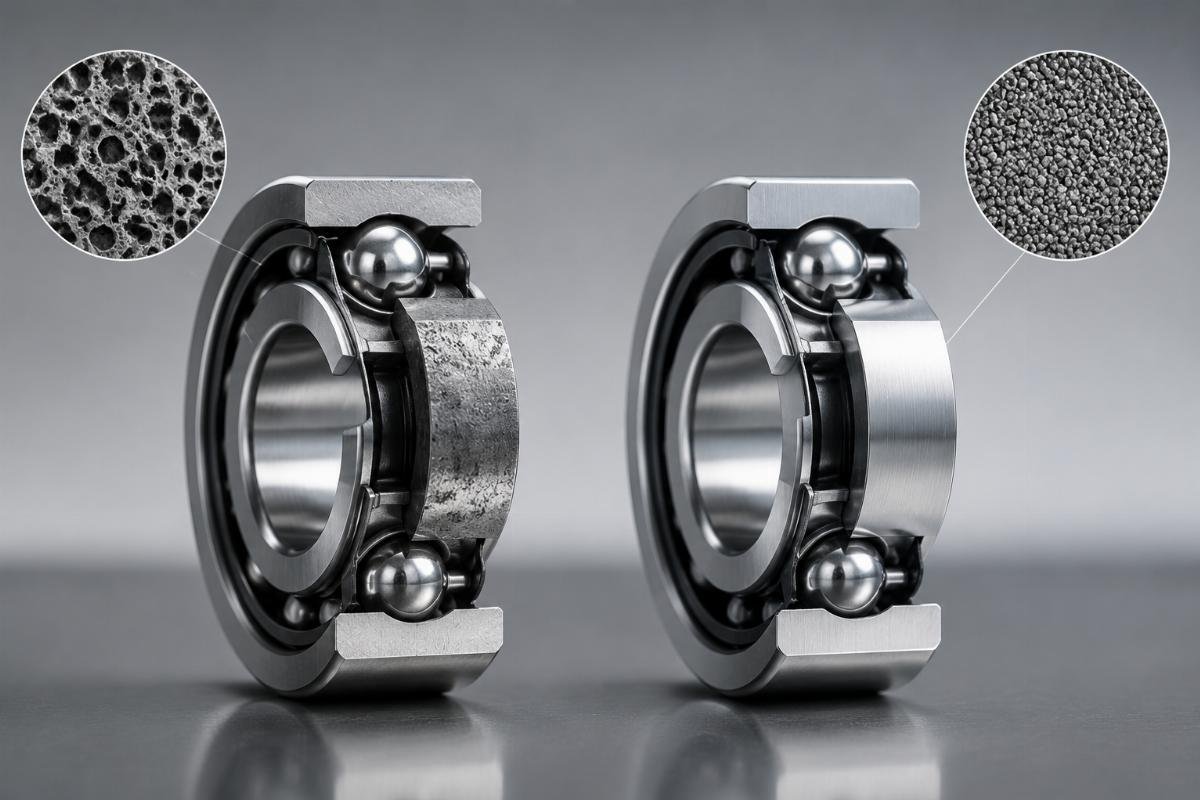
The takeaway is clear: if your application involves heavy loads, high temperatures, or continuous operation, a China bearing certifications discussion that stops at ISO 9001 is incomplete. You need to ask whether your supplier’s certification extends to the process controls that actually prevent failure.
How Do Counterfeit Bearings Impact Your Bottom Line?
Counterfeit bearings are a leading cause of unplanned industrial downtime, yet the majority of buyers do not verify batch-level certification before accepting shipments. The financial consequences extend far beyond the cost of a replacement bearing—they include lost production, equipment damage, safety incidents, and the cascading costs of emergency procurement.
Industry research indicates that counterfeit bearing incidents in mining and heavy manufacturing operations generate substantial direct and indirect costs per event [NEED_CITE: average cost of counterfeit bearing failure in mining and heavy industry operations]. For operations running continuous processes, a single failed bearing can halt an entire production line, and the losses accumulate by the hour.
The root cause is almost always the same: buyers accept scanned certification documents without cross-referencing batch numbers to the issuing body or the physical product. Trading companies frequently reuse generic certificates across multiple shipments, making it nearly impossible to trace a specific bearing back to its manufacturing origin.
| Evaluation Dimension | Common Mistake | Correct Verification Practice |
|---|---|---|
| Document Review | Accepting scanned certification copies without batch numbers | Cross-referencing certificate numbers with issuing body databases using specific batch codes |
| Supplier Type | Sourcing from trading companies with generic certification claims | Partnering with authorized distributors or manufacturers with self-operated warehousing and batch tracking |
| Inspection Protocol | Relying on supplier-provided inspection reports | Requesting independent third-party testing for critical orders, including metallurgical analysis |
| Failure Response | Accepting replacement without root cause analysis | Requiring batch-specific failure investigation with material test data from the failed component |
An Australian mining company discovered this gap when a shipment of spherical roller bearings for their grinding mill failed prematurely. The supplier had provided ISO 9001 certificates, but the batch numbers etched on the bearings did not match the certification documents. When we helped the client investigate, the discrepancy became obvious—the certificates were generic documents reused across multiple unrelated shipments.
We were able to supply replacement 231/500 spherical roller bearings in stainless steel with modified clearance, fully traceable from the SKF global headquarters through our self-operated warehousing system. Every unit carried verifiable batch markings that matched the accompanying documentation. The client avoided what would have been a costly production shutdown, and their maintenance costs dropped noticeably in the following period thanks to the consistent quality of traceable stock.
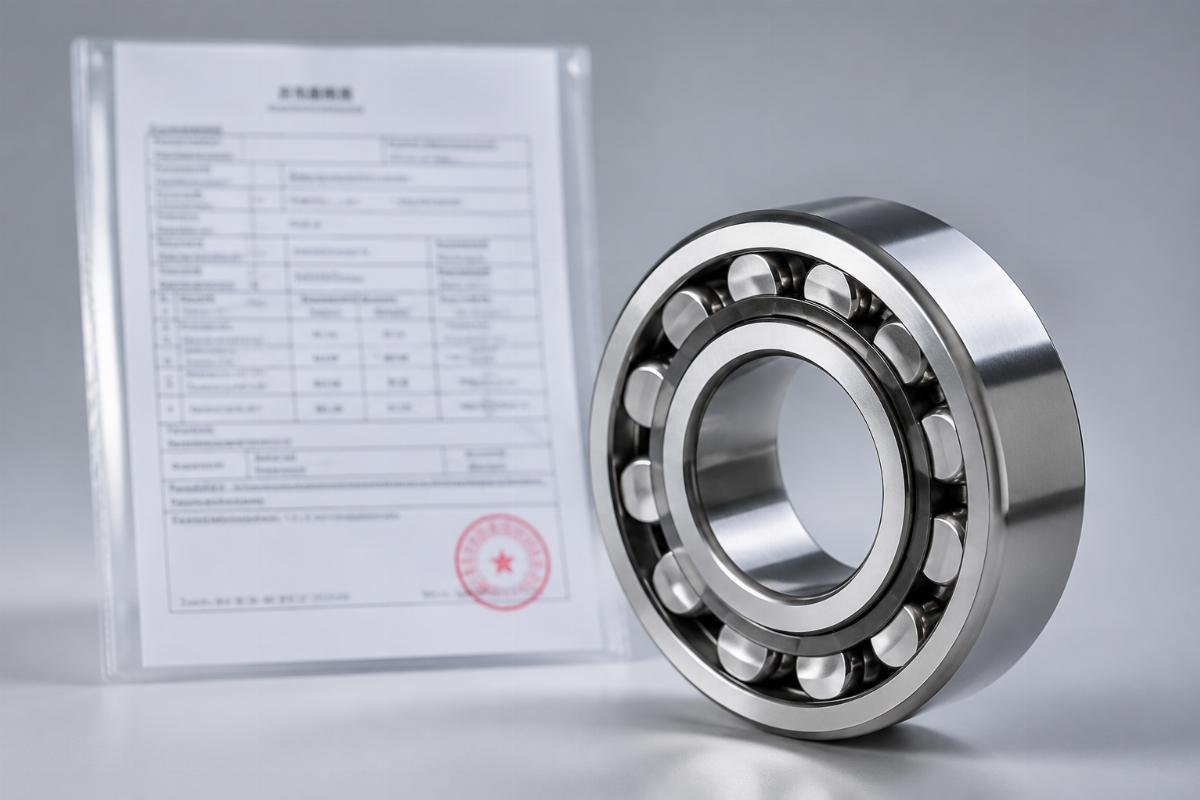
This is why batch-specific traceability matters more than any certificate hanging on a supplier’s wall. When you evaluate China bearing certifications, the question is never "do they have a certificate?"—it is "can they prove this specific batch came from this specific production run with this specific material certification?"
What Are the 5 Steps to Verify a China Bearing Supplier’s Claims?
Effective certification evaluation requires a structured approach that goes far beyond reading a PDF. With thousands of bearing suppliers in China claiming various certifications, distinguishing genuine compliance from paper theater demands a repeatable methodology. Over my career supporting procurement teams across multiple regions, I have refined a verification process that consistently separates reliable suppliers from risky ones.
The challenge is real: many trading companies present polished documentation that looks authoritative but lacks the traceability backbone to support it. They may hold ISO certificates, but those certificates often cover their trading operations—not the manufacturing process that produced the bearings in your container.
Here is the five-step verification framework we apply to every supplier relationship:
-
Certification Body Cross-Check – Verify the certificate status on the IATF global oversight database and confirm the scope explicitly includes bearing manufacturing. Many certificates cover "mechanical components" broadly without specifying bearings [NEED_CITE: common scope limitations in Chinese bearing supplier IATF 16949 certificates].
-
Batch Traceability Audit – Request traceability documentation for a random past batch. A genuine system will link each bearing batch to specific heat numbers, inspection records, and material certificates. If the supplier cannot produce this for a historical batch, their system is not functional—it is performative.
-
Quality Control Interview – Ask detailed questions about inspection frequencies, sampling methods, and acceptance criteria for critical dimensions like raceway roundness and roller parallelism. Suppliers with real SPC implementation will answer confidently; those without will deflect.
-
Failure Analysis Capability – Inquire about in-house testing facilities and request examples of failure analysis reports. A supplier that can perform metallurgical analysis, ultrasonic flaw detection, and root cause investigation demonstrates commitment beyond shipping boxes.
-
Logistics Transparency – Verify warehouse ownership and direct shipping capabilities. Suppliers operating from self-managed warehouses with inventory management systems provide far greater assurance than those relying on third-party logistics where product substitution can occur unnoticed.
A wind farm operator needed replacement main shaft bearings on an urgent timeline. They required IATF 16949 documentation with specific hybrid ceramic material certifications and compatibility verification for their condition monitoring systems. We provided full traceability documentation for our 22330 spherical roller bearings at precision grade P4, including per-batch precision inspection records. The operator approved these as OEM alternatives, and the lead time compressed significantly compared to the factory-original timeline—while maintaining full performance standards.
This structured approach is what separates a China bearing certifications strategy that protects your operation from one that merely looks good on paper. Every step is designed to expose the gap between claimed compliance and actual capability.
How Did Certified Bearings Solve Real Industrial Crises?
When certification is implemented as a genuine operational discipline—not just a marketing claim—the results are measurable and repeatable. Across steel mills, mining operations, and energy facilities, we have seen proper certification practices resolve problems that generic sourcing could not address.
The pattern is consistent: operations that invest time in verifying China bearing certifications before placing orders consistently outperform those that accept documentation at face value. The difference shows up in downtime metrics, maintenance budgets, and—most importantly—operational confidence.
Consider the European steel mill mentioned earlier. Their continuous casting line had been plagued by recurring bearing failures. The root cause was not the bearing design—it was the material inconsistency in batches sourced from an ISO 9001-only supplier who could not provide heat-specific material certifications. After switching to a dual-certified supply chain with IATF 16949 controls, including incoming material testing with COA linked to specific heat numbers, their unplanned downtime dropped substantially. The mill’s maintenance team could finally plan interventions based on predictable wear patterns rather than reacting to surprise failures.
The Australian mining operation tells a similar story. Their grinding mill relied on large spherical roller bearings that operated under extreme load conditions. When a non-traceable batch failed, they faced the prospect of an extended production shutdown while sourcing emergency replacements. By establishing a relationship with an authorized distributor offering full batch traceability—where every 231/500 spherical roller bearing could be traced back to its original manufacturing records—they eliminated the risk of receiving substituted or counterfeit stock. Their maintenance costs dropped noticeably, and more importantly, their procurement team gained the confidence to approve long-term supply agreements rather than scrambling for every replacement order.
These cases illustrate a broader trend: heavy industry operations that treat China bearing certifications as a strategic procurement tool—rather than a compliance checkbox—consistently achieve better operational outcomes. The certification itself does not prevent failures; the process controls, material verification, and traceability systems that genuine certification requires are what make the difference.
Conclusion
Certification without traceability is just paper. Traceability backed by genuine process controls is operational insurance. For procurement specialists and MRO managers sourcing from China, the path forward is clear: verify beyond the certificate, demand batch-specific documentation, and partner with suppliers whose quality systems extend from the manufacturing floor to your warehouse door. The cost of skipping this verification is never just the price of a bearing—it is the cost of everything that bearing supports.