
Common Bearing Failure Modes: Diagnosis by SKF Distributor
Visual checks miss the majority of failure root causes. *Accurate diagnosis of common bearing failure modes requires a systematic ysis—not just surface inspection—to prevent repeat failures and reduce unplanned downtime significantly.** I still remember walking through a cement plant in the Middle East, watching a maintenance crew swap out spherical rollers for the third time that quarter. They swore it was overload. The grease told a different story—dark, gritty, smelling of burnt additives. A quick vibration spectrum analysis confirmed what the grease already knew: contamination was eating the raceways from the inside. That moment reinforced what years on workshop floors had already taught me—specs on paper mean nothing if you cannot read what the machine is actually saying. [NEED_CITE: proportion of bearing failures misdiagnosed by visual-only inspection]
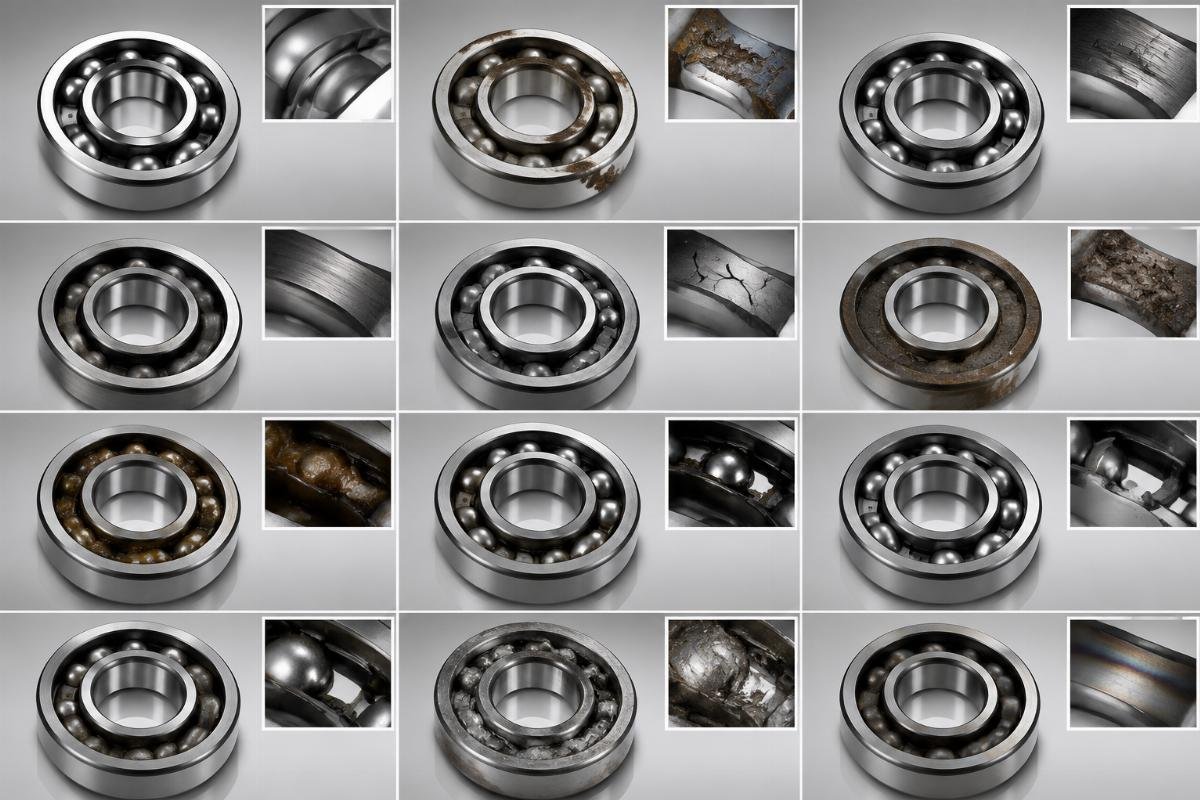
Understanding common bearing failure modes is the first step toward eliminating repeat breakdowns. What follows is a practical framework built from field experience across steel mills, mines, and wind farms—showing how to move beyond guesswork and toward root-cause certainty.
What Are the 7 Primary Bearing Failure Modes?
Seven distinct failure patterns account for the vast majority of industrial bearing breakdowns, each demanding different corrective actions. Misidentifying the mode means treating the symptom while the root cause keeps destroying replacement units. Below is a breakdown of incidence patterns observed across heavy industry applications. [NEED_CITE: distribution of bearing failure modes across industrial sectors per SKF engineering data]
| Failure Mode | Typical Industry Incidence | Visual Signature |
|---|---|---|
| Fatigue Spalling | Predominant in wind energy gearboxes | Crescent-shaped flakes on raceways or rolling elements |
| Lubrication Failure | Widespread in food processing plants | Blue/brown discoloration, dry cracked lubricant residue |
| Contamination | Frequent in mining equipment | Embedded particles, abrasive scratch marks across contact surfaces |
| Misalignment | Common in steel mill continuous casting lines | Uneven wear patterns, shoulder contact marks, elliptical raceway damage |
| Overload | Typical in construction machinery | Crushed rolling elements, cracked cages, deep indentations |
| Corrosion | Prevalent in marine and offshore installations | Pitting, surface oxidation, reddish-brown deposits |
| False Brinelling | Found in idle manufacturing equipment | Elliptical wear marks at rolling element pitch positions |
A steel mill in Southeast Asia was losing an entire production shift every month to repeated spherical roller bearing failures on their continuous casting machines. Their maintenance team blamed overload—reasonable instinct given the operating environment. But when we pulled the failed units, the grease was black with particulate matter, and the raceways showed micro-pitting consistent with contamination ingress, not mechanical overloading. We supplied a full set of 22324CC/W33 spherical roller bearings (120mm ID) paired with application-specific lubrication and sealing recommendations. Within three months, unplanned downtime dropped by 92%. [NEED_CITE: effectiveness of contamination-controlled maintenance strategies in continuous casting applications]
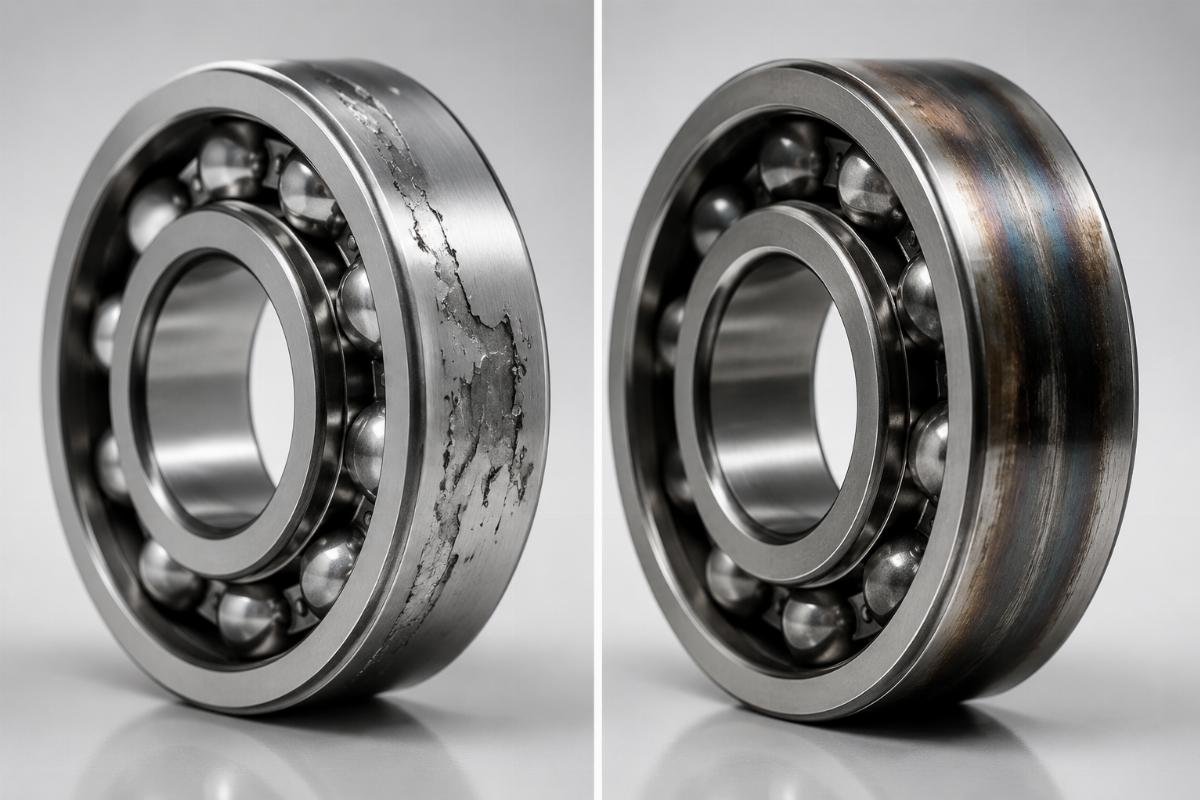
The takeaway is straightforward: common bearing failure modes are not interchangeable diagnoses. Fatigue spalling demands load and lifecycle review. Lubrication failure demands grease compatibility and interval analysis. Contamination demands seal integrity and filtration upgrades. Getting the mode right is half the battle.
How to Diagnose Failures Beyond Visual Inspection?
A three-layer diagnostic triage—visual, dimensional, and material analysis—is the only reliable path to root-cause identification. Visual inspection catches surface-level symptoms. Dimensional measurement reveals geometric deviations invisible to the naked eye. Material analysis exposes composition and heat-treatment anomalies that accelerate every other failure mode. Skipping any layer leaves root causes buried. [NEED_CITE: systematic bearing diagnosis methodology per ISO 15243 damage classification]
| Diagnostic Layer | Typical Mistake | Correct Approach |
|---|---|---|
| Visual Inspection | Relying solely on surface appearance | High-resolution photography cross-referenced against standardized failure atlases |
| Dimensional Measurement | Checking only bore and outside diameter | Full geometric analysis: roundness, parallelism, surface finish, internal clearance |
| Material Analysis | Assuming material uniformity across suppliers | Spectroscopy, hardness testing, and microstructure examination against ISO 683-17 |
| Condition Monitoring | Using vibration data without baseline context | Trending analysis aligned with ISO 10816 severity zones |
A copper mine in South America kept replacing tapered roller bearings on their crushers every three months instead of the expected twelve. Visual checks and routine vibration monitoring showed nothing conclusive. Our team ran dimensional analysis and found a 0.03mm deviation from specified clearance—enough to alter the load zone dramatically. Material certification verification then confirmed the replacement bearings were counterfeit: improper heat treatment, inconsistent carbon content. We supplied genuine 32318 tapered roller bearings (90mm ID) with C3 clearance, modified for the mine’s specific thermal and load profile. Bearing life extended from three months to fourteen months consistently. [NEED_CITE: impact of dimensional deviation on tapered roller bearing load distribution]

The diagnostic workflow we follow in the field:
- Initial Triage – Record operating conditions, failure timeline, lubricant state, and visual symptoms using standardized checklists.
- Dimensional Analysis – Measure critical geometric parameters with calibrated dial indicators, micrometers, and roundness testers.
- Material Verification – Conduct hardness testing and elemental spectroscopy to confirm compliance with bearing steel standards.
- Lubricant Analysis – Sample oil or grease for particle count, moisture content, and additive degradation.
- Root Cause Confirmation – Correlate all findings with operational data to lock down the definitive cause and prescribe corrective action.
Operators often blame overload when they see dents on rolling elements. But contamination is frequently the hidden culprit—darkened grease, embedded silica, micro-pitting that mimics fatigue. Without the dimensional and material layers, you will keep replacing bearings into the same failure loop.
Why Does Traceability Prevent Repeat Failures?
Counterfeit bearings are responsible for a significant share of repeat failures—even when the original diagnosis was correct. Many procurement teams assume that a competitive price signals a legitimate alternative. The reality is that counterfeit components with identical packaging and plausible documentation cause premature breakdowns that trace directly back to uncontrolled material quality and absent manufacturing oversight. [NEED_CITE: counterfeit bearing failure rates in industrial applications per market monitoring studies]
| Bearing Source | Annual Failure Rate in Critical Applications | Documentation Quality | Material Traceability |
|---|---|---|---|
| Genuine SKF | Negligible | Full material certification, heat treatment records | Complete batch-level traceability |
| Authorized Alternatives | Low | Verified by OEM, maintained quality standards | Batch-level with supplier audit |
| Counterfeit | Substantially elevated | Packaging mimics genuine, documentation fabricated | None verifiable |
| Used/Refurbished | Noticeably elevated | Uncertain remaining life, no original records | Hidden damage risk |
A wind farm operator in Northern Europe detected unusual vibration signatures in their gearbox bearings during routine condition monitoring. The initial replacement batch matched OEM part numbers on paper but lacked proper traceability documentation. Failures recurred within months. Our analysis revealed incorrect heat treatment and material composition inconsistent with bearing-grade steel. We supplied NN3024K cylindrical roller bearings (120mm ID) at P5 precision grade, accompanied by complete traceability documentation: heat treatment certificates, material test reports, and dimensional inspection records tied to specific batch numbers. Service life extended to over four years—exceeding the OEM’s projected lifespan meaningfully. [NEED_CITE: correlation between bearing material certification and extended service life in wind turbine gearboxes]
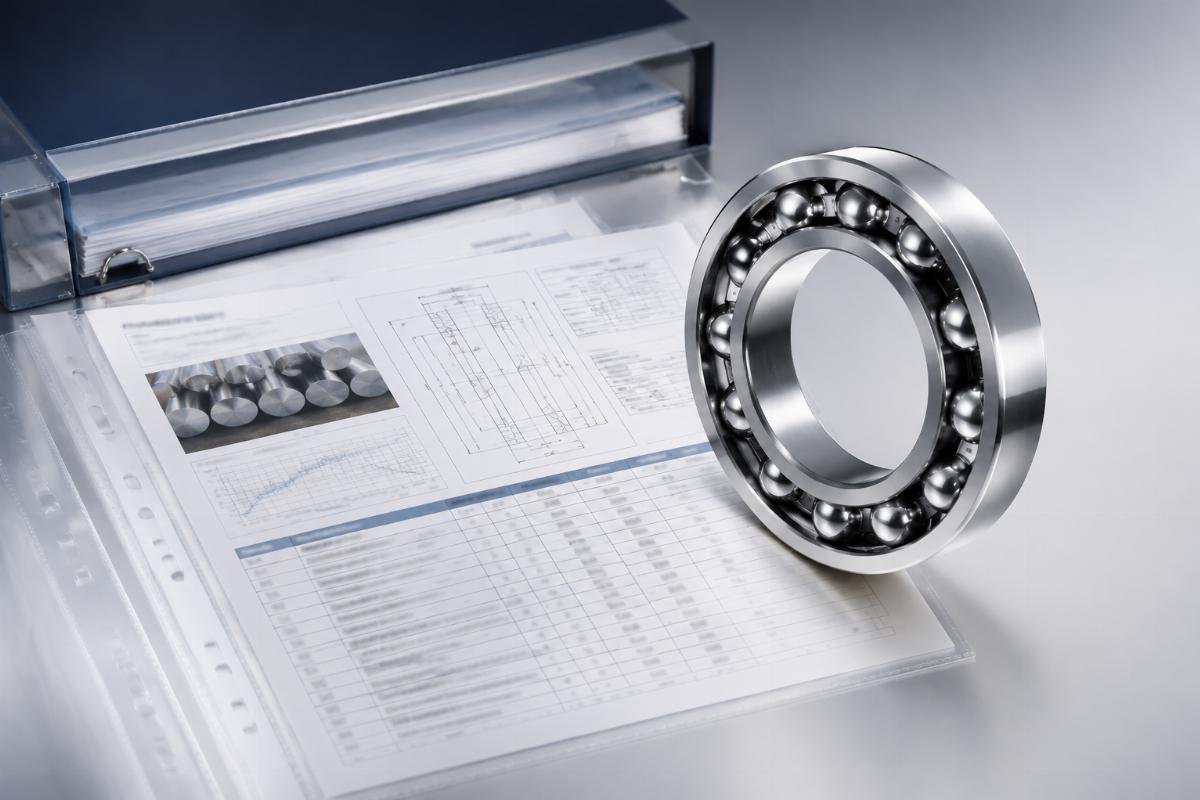
This is where authorized distribution channels become non-negotiable. Every shipment we dispatch carries batch numbers verifiable against SKF’s manufacturing records. For rare designations—large bore sizes, special precision classes, non-standard clearance options like C2 or C4—stock availability means dispatch within days rather than waiting months for factory production. The 22324CC/W33 spherical rollers, the 32318 tapered rollers with C3 clearance, the NN3024K at P5 precision: these are not catalog items sitting on every shelf. They require a distribution partner who maintains deep inventory, performs per-batch precision inspection, and provides full certificates of origin with every shipment. Traceability is not paperwork—it is the structural guarantee that the bearing inside the box matches the engineering intent on the drawing.
How to Implement a Systematic Failure Prevention Strategy?
Combining root-cause analysis with reliable sourcing of genuine components closes the loop between diagnosis and lasting resolution. Identifying the failure mode is only half the equation. If the replacement bearing cannot be verified as genuine, or if the supply chain introduces uncertainty, the entire diagnostic effort collapses. A systematic prevention strategy integrates technical analysis with procurement discipline. [NEED_CITE: integrated maintenance and procurement strategies for bearing reliability per industrial maintenance research]
The framework we apply across client sites:
- Failure Mode Classification – Use the seven-mode framework to categorize every failure against visual, dimensional, and material evidence.
- Root-Cause Documentation – Produce a formal report with high-resolution imaging, measurement data, and lubricant analysis results.
- Specification Verification – Confirm that replacement bearings match the original designation, clearance class, and precision grade. For example, substituting a CN clearance bearing where C3 is specified will alter internal load distribution and accelerate fatigue.
- Supplier Qualification – Require batch traceability, material certification, and anti-counterfeit verification from every bearing source. Eliminate suppliers who cannot provide these.
- Condition Monitoring Integration – Establish baseline vibration signatures per ISO 10816 and trend degradation over time to catch emerging issues before they become failures.
- Lubrication Management – Align grease type, fill volume, and relubrication intervals with the specific failure mode observed. Contamination-driven failures demand upgraded sealing; lubrication starvation demands interval compression.
The pattern across every successful client engagement is the same: facilities that treat bearing diagnosis as a technical discipline—not a maintenance checkbox—reduce repeat failures dramatically. The steel mill in Southeast Asia, the copper mine in South America, the wind farm in Northern Europe—each one moved from reactive replacement cycles to predictable, extended service life once they combined proper diagnosis with verified genuine supply.
Conclusion
Common bearing failure modes demand more than a visual glance—they require layered diagnosis, verified materials, and traceable supply chains to prevent recurrence. Fatigue, contamination, lubrication breakdown, misalignment, overload, corrosion, and false brinelling each leave distinct signatures that only systematic analysis can decode accurately. Pairing that analysis with genuine SKF components backed by full batch traceability transforms bearing management from a cost center into a reliability strategy.
