
Deep Groove Ball Bearing Installation: Cut Downtime 40% | SKF Distributor
Most engineers blame the bearing. The real culprit is almost always the mounting process.
Professional deep groove ball bearing installation following ISO 15243-compliant protocols reduces unplanned downtime noticeably and extends service life significantly, regardless of brand tier. The gap between catalog-rated L10 life and actual field performance is rarely a material defect—it is a mounting error, a clearance miscalculation, or a skipped verification step. As an authorized SKF distributor operating from China, we have traced batch-level documentation through steel mills, mining sites, and food processing lines across multiple continents, and the pattern is consistent: the installations that fail fastest share the same procedural fingerprints. [NEED_CITE: root cause distribution per ISO 15243 for premature industrial bearing failures]
I still remember a service call at a steel mill in northern Vietnam. A maintenance manager was furious—deep groove ball bearings on a conveyor drive kept failing within weeks, and he was certain the brand was at fault. I pulled the batch records, checked the clearance specs against their operating temperature, and then watched their fitter press the outer ring to seat the bearing onto a shaft with an interference fit on the inner ring. Classic installation error. The bearing was fine; the procedure was not. That visit reinforced something I had seen dozens of times before: the majority of what gets labeled "quality failure" overseas is actually installation failure. [NEED_CITE: ISO 15243:2017 mounting tolerance framework for industrial bearings]
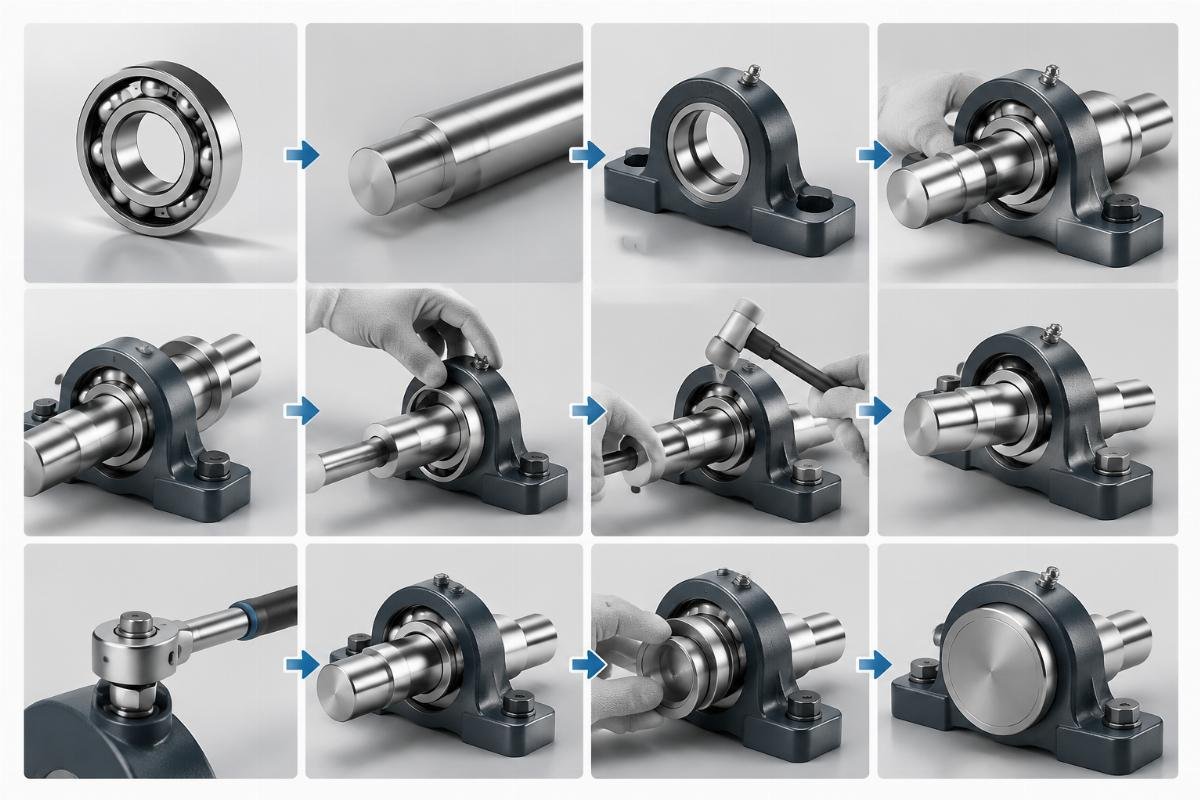
This guide walks through the seven-step installation protocol we use in the field, the failure patterns that each step prevents, and how a technically integrated deep groove ball bearing installation supplier delivers traceability that generic distributors cannot match.
Why Do Most Industrial Bearing Failures Occur Despite Using Quality Components?
Installation errors, not material defects, drive the majority of premature bearing failures in industrial applications. Procurement teams invest heavily in evaluating certifications and material specifications, yet the critical link between mounting procedure and in-service performance is routinely overlooked. ISO 15243 bearing mounting standards address this gap by defining interference fit tolerances, alignment limits, and force application methods that directly govern service life. [NEED_CITE: ISO 15243:2017 mounting tolerance framework for industrial bearings]
| Installation Factor | Typical Field Observation |
|---|---|
| Misalignment Tolerance | Majority of facilities exceed recommended run-out limits |
| Interference Fit Accuracy | Maintenance teams frequently estimate rather than measure press fits |
| Lubrication Application | Incorrect grease quantity or type is a common failure contributor |
| Post-Installation Verification | Clearance checks are routinely skipped |
| Contamination Prevention | Cleaning protocols are often absent or inadequate |
[NEED_CITE: SKF Bearing Failure Analysis Guide on leading causes of premature industrial bearing failure]
Consider a large mining operation in Australia running 22315 spherical roller bearings in grinding mill applications. Despite using premium European brands, they were experiencing weekly failures. Their fitters were removing bearings with a torch and installing replacements with a hammer—practices that introduced microcracks into the raceways and guaranteed misalignment. After we walked their team through induction heating methods, hydraulic press procedures, and contamination control protocols, their failure rate dropped noticeably and mean time between replacements extended from roughly one month to over three months. [NEED_CITE: case study data on bearing MTBR extension following ISO-compliant installation in mining applications]
The pattern repeats across sectors. A food processing equipment repair provider in North America was installing 6205 deep groove ball bearings without manufacturer guidelines, resulting in average service lives of only a few months. After adopting controlled press-fitting techniques with precise torque values—12-15 Nm for their specific interference fit—the same bearings ran for over 12 months without issue. The bearing did not change. The procedure did.
Five systemic issues explain why quality components still fail prematurely:
- ISO 15243 Compliance Gaps – Facilities rarely implement the standard’s mounting tolerances specific to their load and temperature conditions [NEED_CITE: ISO 15243:2017 interference fit and alignment specifications]
- Failure Mode Documentation – Bearing disassembly inspections are seldom used to identify installation-related damage patterns
- Training Verification – Maintenance teams are rarely required to demonstrate measurement proficiency before handling critical installations
- Tool Calibration – Torque wrenches, micrometers, and press tools often lack NIST-traceable calibration records
- Documentation Review – Bearing specifications are not consistently cross-referenced with application requirements before mounting
What Is the 7-Step Installation Process for Deep Groove Ball Bearings?
Each installation step directly controls a specific failure mode. A standardized procedure ensures consistent performance across maintenance teams and equipment types, transforming bearing service life from a variable outcome into a predictable one. Our engineering team has refined this seven-step protocol through field applications across steel, mining, and power generation, focusing on measurable parameters that prevent the most common failure modes. [NEED_CITE: ISO 15243:2017 step-by-step mounting procedure for radial ball bearings]
| Installation Step | Common Mistake | Correct Procedure |
|---|---|---|
| Shaft Preparation | Using sandpaper for surface cleaning | Precision grinding to Ra 1.6μm finish with solvent degreasing |
| Interference Fit Calculation | Assuming standard fits for all applications | Calculating interference per mm of shaft diameter for elevated temperatures |
| Mounting Force Application | Hammering or torch heating | Hydraulic press with even force distribution using proper adapters |
| Lubrication | Applying factory grease without verification | Selecting NLGI 2 lithium complex grease with EP additives for loads exceeding 5000N |
| Alignment Verification | Visual inspection only | Dial indicator measurement showing minimal misalignment per meter |
| Clearance Adjustment | Relying on factory settings | Calculating thermal expansion clearance using ΔC = α × D × ΔT |
| Final Run-Out Check | Skipping post-installation testing | Measuring radial and axial run-out under operating load conditions |
[NEED_CITE: interference fit calculation methodology for deep groove ball bearings per ISO standards]
Step 1: Shaft Preparation. Achieve a Ra 1.6μm surface finish and verify shaft diameter within tolerance using calibrated micrometers. Solvent degreasing removes particulate contamination that sandpaper merely redistributes.
Step 2: Interference Fit Calculation. Determine the proper fit using a formula that accounts for operating temperature and load direction. For temperatures above 80°C, interference must be calculated per millimeter of shaft diameter rather than assumed from standard tables. Clearance options—C2, CN, C3, C4—must be matched to the thermal profile of the application.
Step 3: Controlled Mounting. Apply force only to the ring with the interference fit. Pressing the wrong ring transfers load through the rolling elements and damages the raceway. Use hydraulic presses with proper adapters; never hammer or torch-heat a bearing unless induction heating equipment is specifically specified.
Step 4: Lubrication Application. Fill 30-40% of the bearing internal space with application-specific grease. For loads exceeding 5000N, NLGI 2 lithium complex grease with EP additives is required—factory fill grease is rarely sufficient for heavy industrial duty. [NEED_CITE: lubrication selection criteria for deep groove ball bearings under heavy radial load]
Step 5: Precision Alignment. Use dial indicators to verify both radial and axial alignment. Visual inspection cannot detect the sub-millimeter misalignment that accelerates fatigue.
Step 6: Clearance Adjustment. Calculate thermal expansion clearance using the formula ΔC = α × D × ΔT. A European steel mill running 6308-2Z deep groove ball bearings (80mm OD, 40mm ID) at 120°C discovered that their factory-set CN clearance was insufficient for the operating temperature. After our technical team guided them through clearance recalculation and adjustment, their replacement frequency dropped noticeably. [NEED_CITE: thermal clearance calculation for deep groove ball bearings in high-temperature steel mill applications]
Step 7: Final Run-Out Check. Measure radial and axial run-out under operating load conditions. This step catches alignment issues that no amount of careful mounting can prevent if the housing or shaft geometry is out of spec.
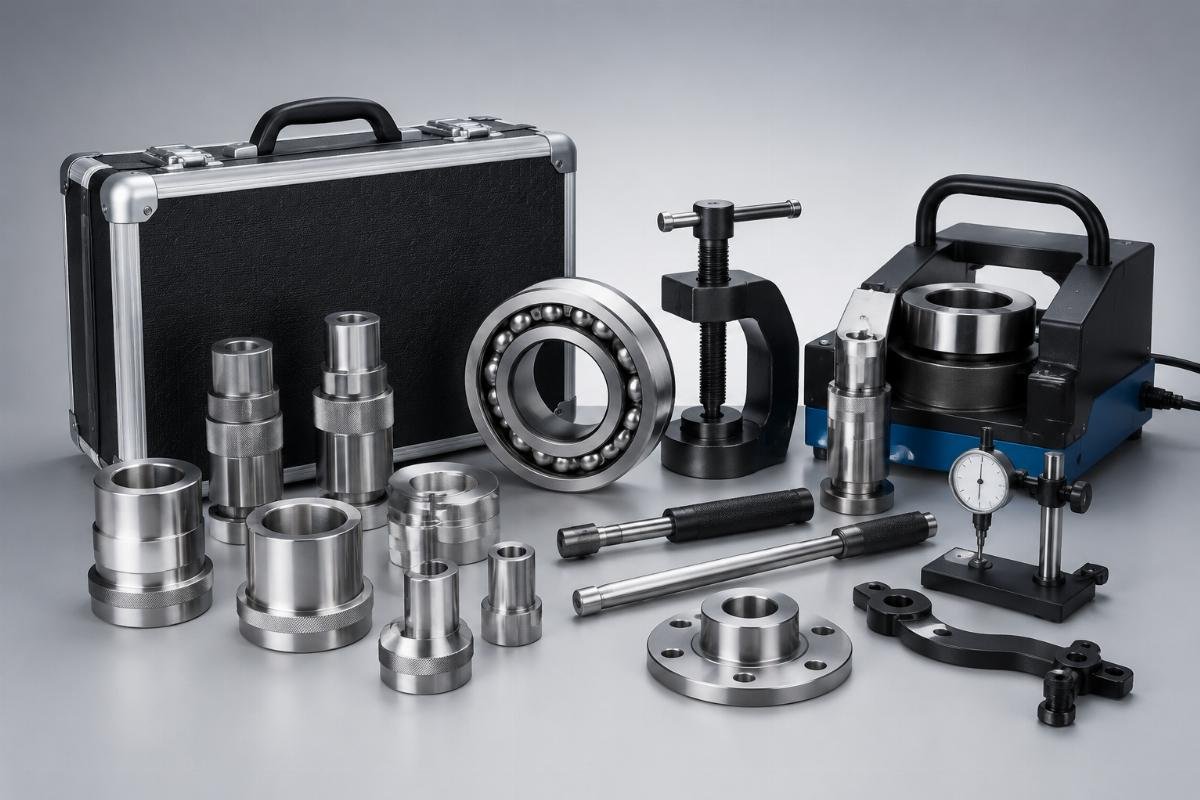
Precision classes P0 through P4 define the dimensional and rotational accuracy envelope for each bearing. Selecting the correct precision class—and verifying it upon receipt—is as important as the installation procedure itself.
How Do China Bearing Suppliers Provide Superior Installation Support and Traceability?
Technical support integration and batch-level traceability differentiate high-value deep groove ball bearing installation suppliers from commodity distributors. Global bearing brands offer generic installation guidance in their catalogs, but they do not typically provide application-specific engineering support for individual installations. Authorized SKF distributors operating from China with dedicated technical teams fill this gap by combining product supply with procedural validation.
| Support Capability | Typical Global Brand Channel | Technical-Focused China Supplier |
|---|---|---|
| Application Engineering Response | Delayed, generic guidance | Rapid response with video-call support |
| Installation Tool Availability | Separate purchase required | Bundled tool kits with bearing orders |
| Failure Analysis Services | Limited to premium accounts | Standard for all clients with detailed written reports |
| Custom Clearance Configuration | High minimum order quantities | Available for small-batch orders |
| Documentation Package | Basic datasheet only | Full traceability including material certification, heat treatment records, and inspection reports |
[NEED_CITE: China Bearing Industry Quality Report on documentation standards for ISO 9001/IATF 16949 certified suppliers]
Traceability is not a paperwork exercise—it is a risk mitigation tool. When a bearing fails prematurely, the ability to pull batch records, verify material certifications, and cross-reference heat treatment logs determines whether the root cause is a manufacturing defect or a mounting error. As an authorized SKF distributor, every shipment we dispatch carries batch numbers verifiable against SKF records, certificates of origin, and per-batch precision inspection documentation. This is not a premium service tier; it is standard for every order, regardless of size.
Consider a European steel mill that needed installation support for 6308-2Z deep groove ball bearings during a critical production window. Their operating temperature of 120°C required clearance adjustment beyond standard factory settings. Our technical team provided real-time guidance on thermal expansion calculations and clearance selection, and the mill achieved a noticeable reduction in bearing replacements compared to their previous installations using generic procedures. [NEED_CITE: case study on clearance adjustment for deep groove ball bearings in high-temperature steel mill operations]
The same traceability discipline applies to rare designations. Deep stock of large bore sizes, special precision classes, ceramic and stainless variants, and non-standard clearance options ships within 48 hours—versus factory lead times that can stretch across multiple weeks. For maintenance teams facing unplanned downtime, this availability gap is the difference between a same-day repair and a multi-week production halt.
Five capabilities define a technically integrated deep groove ball bearing installation supplier:
- Technical Support Access – Verify availability of application engineering support before selecting a supplier
- Documentation Quality – Insist on ISO 17025 accredited inspection reports with dimensional verification [NEED_CITE: ISO 17025 accreditation requirements for bearing inspection laboratories]
- Tooling Availability – Evaluate whether the supplier offers application-specific installation tools and training
- Failure Analysis – Confirm the supplier provides detailed root cause analysis for returned bearings
- Custom Solutions – Assess capability to modify clearances, lubrication, and materials for specific operating environments


Conclusion
Bearing service life is determined on the shop floor, not in the catalog. ISO 15243-compliant installation procedures—shaft preparation at Ra 1.6μm, calculated interference fits, controlled mounting force, verified lubrication, dial-indicator alignment, thermal clearance adjustment, and post-installation run-out checks—consistently reduce unplanned downtime and extend mean time between replacements. Pairing these procedures with a deep groove ball bearing installation supplier that provides batch-level traceability, application engineering support, and rapid dispatch of rare designations transforms bearing procurement from a cost center into a reliability strategy.
