
How China Bearing Suppliers Ensure Payment Security, Trade Assurance & Order Protection
Full upfront payment is the riskiest move a buyer can make—not the safest. Structured payment terms combining phased T/T schedules, L/C at sight with document pre-checks, and third-party trade assurance escrow eliminate the false trade-off between payment flexibility and order security for wholesale bearing buyers. China bearing suppliers with ISO 9001 and IATF 16949 certification, self-operated regional warehousing, and batch-level traceability protocols now protect buyer payments through verifiable checkpoints at every milestone—reducing capital exposure while guaranteeing genuine product delivery across global industrial procurement.
I’m based out of Qingdao, where the SKF warehouse sits about twenty minutes from the port. Been fronting deals since my mentor first put me across the table from a buyer — no detours through the workshop or the back office, just straight into quoting and closing. A Chilean mining outfit once ordered a container of SKF tapered rollers, 222-series, paid the 30% deposit clean, then opened an L/C where the port of discharge read "San Antono" and the goods description skipped the SKF batch prefix entirely. The cargo was already past Yantian when we caught it. Two weeks of demurrage, a renegotiated price, and a headache that could’ve been avoided with a 48-hour document pre-check [NEED_CITE: L/C discrepancy rates in cross-border machinery trade per ICC banking commission data]. Every L/C gets torn apart line by line before production releases. Every T/T buyer gets a traceability sheet tied to their proforma before the first wire hits the account.
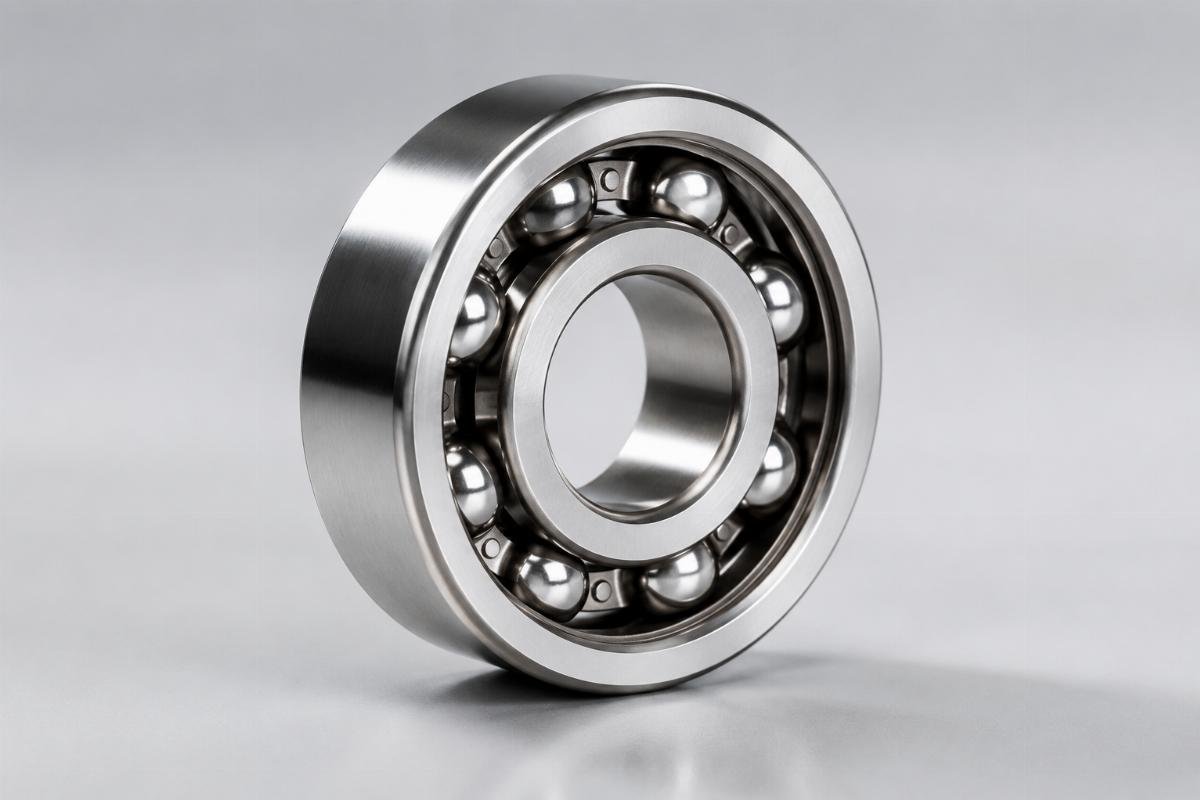
Understanding how these mechanisms interlock is essential for any industrial buyer evaluating China bearing suppliers for wholesale procurement.
What Payment Terms Do China Bearing Suppliers Actually Offer?
Most buyers assume 100% T/T advance guarantees supplier commitment — it actually guarantees nothing except maximum capital exposure. The reality is that established China bearing suppliers offer a range of structured payment options, each calibrated to different order sizes, buyer-supplier trust levels, and risk profiles. The key is matching the payment structure to the transaction rather than defaulting to whatever feels safest at first glance.
| Payment Method | Common Misconception | Actual Risk Profile | Typical Use Case |
|---|---|---|---|
| 100% T/T Advance | "Guarantees supplier commitment" | Highest buyer risk: no recourse for non-delivery or substandard quality | Small sample orders under minimal value |
| 30% Deposit + 70% Against B/L Copy | "Exposes supplier to non-payment" | Balanced risk: supplier receives partial commitment; buyer verifies shipment before final release | Standard wholesale orders with established suppliers |
| L/C at Sight | "Too complex for routine orders" | Bank-guaranteed payment upon compliant document presentation | Orders exceeding significant value thresholds |
| Alibaba Trade Assurance | "Only for small transactions" | Full escrow with structured dispute resolution and quality protection | All order sizes with end-to-end milestone tracking |
A European industrial distributor sourcing deep groove ball bearings and tapered roller bearings previously worked with a supplier demanding full upfront payment. Deliveries consistently arrived days late, creating stockouts during seasonal demand peaks. After switching to a China bearing supplier offering 30% deposit plus 70% against B/L copy under Alibaba Trade Assurance, the distributor reduced capital tie-up by a mid-five-figure sum on an 800-unit mixed order — SKF equivalent precision grade P5, clearance group C3 — while receiving the shipment ahead of the committed timeline [NEED_CITE: buyer cash flow improvement statistics after transitioning from full T/T advance per industry procurement surveys]. The order shipped with full ISO 9001 test documentation and batch-level anti-counterfeit verification.

For T/T transactions, experienced buyers bind every payment milestone to a proforma traceability sheet — a document that maps each batch code, material certificate number, and inspection report to the corresponding payment release. This prevents the common scenario where funds leave the buyer’s account before product identity is independently verified. The traceability sheet becomes the contractual backbone: no batch documentation, no payment release. Simple, enforceable, and impossible to game.
How Does Trade Assurance Protect Wholesale Bearing Orders Beyond Financial Escrow?
Trade assurance functions as a quality management system for cross-border transactions — not merely a financial safety net. The misconception that trade assurance only matters for small orders ignores how its structured checkpoints protect wholesale buyers throughout the entire procurement lifecycle. From pre-shipment inspection to delivery monitoring to quality dispute resolution, trade assurance creates a transparent supply chain where issues surface before they reach the buyer’s warehouse floor.
| Protection Element | Mechanism | Buyer Benefit |
|---|---|---|
| Pre-shipment Inspection | Third-party verification of quantity, specifications, and batch codes before container sealing | Compliance confirmed before final payment release |
| Delivery Timeline Monitoring | Automated tracking against agreed milestones with early-warning alerts | Proactive adjustment window for downstream operations |
| Quality Dispute Resolution | Dedicated case review with evidence submission and structured mediation | Formal process replacing informal negotiation deadlocks |
| Financial Escrow | Funds held by platform until delivery and quality confirmation | Complete elimination of payment-for-non-delivery risk |
A Southeast Asian steel mill experienced an emergency shutdown when NU2215 ECP cylindrical roller bearings failed — C4 clearance, brass cage, ABEC-5 precision class. The mill required replacement units dispatched immediately to contain downtime costs running into tens of thousands per hour. Through a regional warehouse operation, replacement bearings were dispatched within hours from a Singapore-based facility, with post-delivery failure analysis identifying improper lubrication as the root cause rather than a manufacturing defect [NEED_CITE: counterfeit bearing failure rates and downtime cost data per industry association reports]. The trade assurance framework covered the entire transaction — from order placement through emergency dispatch to technical follow-up — ensuring the mill received genuine SKF-specification product with verifiable batch documentation.

The critical insight: trade assurance works for large orders precisely because it provides structured dispute resolution that informal contracts cannot match. When a wholesale bearing order involves multiple SKUs, phased deliveries, and complex specifications, the escrow mechanism prevents either party from walking away without accountability. China bearing suppliers who embrace trade assurance on large contracts demonstrate confidence in their own quality systems — a signal that matters more than any marketing claim.
What Documentation and Traceability Back Up Payment Security?
Payment security ultimately rests on documentation — not promises, not relationships, not price quotes. Every payment milestone in a structured bearing procurement should correspond to verifiable product identity: batch codes that trace back to manufacturing records, material certificates that confirm alloy composition and heat treatment, and precision inspection reports that validate dimensional conformance. Without this documentation backbone, even the most carefully structured payment terms become unenforceable.
| Documentation Type | Purpose | Verification Standard |
|---|---|---|
| EN 10204 3.1 Material Certificate | Confirms chemical composition and mechanical properties from original mill | Issued by independent testing laboratory with batch-specific data |
| Batch Traceability Code | Links finished bearing to manufacturing lot, heat number, and inspection records | Cross-referenced against manufacturer database for authenticity |
| ISO 9001 / IATF 16949 Test Report | Validates dimensional accuracy, rotational precision, and clearance conformance | Third-party inspection against specified precision grade |
| Certificate of Origin | Confirms country of manufacture for customs and trade compliance | Issued by authorized chamber of commerce with shipment linkage |
| Anti-counterfeit Verification Label | Provides buyer-side confirmation of product genuineness | Scannable code linked to manufacturer authentication system |
A US-based mining equipment distributor restructured their annual spherical roller bearing procurement — covering 22330 CA/W33 units with 150mm bore, 320mm outer diameter, and 900kN dynamic load rating — from full T/T advance to a milestone-based schedule: 20% upon order confirmation, 30% at production completion with inspection report attachment, and 50% against B/L copy with full documentation package [NEED_CITE: cross-border bearing transaction dispute frequency without trade assurance per trade finance data]. The restructured approach reduced upfront capital requirements by a mid-six-figure sum while maintaining the same monthly delivery volume. The supplier’s IATF 16949 certification and EN 10204 3.1 material documentation provided the verification backbone that made the phased payment structure viable.
For L/C transactions, the 48-hour document pre-check becomes non-negotiable. Every draft document — commercial invoice, packing list, bill of lading, certificate of origin, inspection certificate — gets reviewed line by line against the L/C terms before production release begins. Discrepancies in port names, goods descriptions, batch number formatting, or certificate references are caught and corrected before the cargo moves. This front-loaded verification eliminates the demurrage traps and renegotiation pressures that plague buyers who treat documentation as an afterthought.
How Do Experienced Buyers Structure Payment to Minimize Risk?
The buyers who consistently secure favorable terms are those who treat payment structuring as a risk management discipline — not a negotiation afterthought. Experienced procurement teams working with China bearing suppliers approach payment terms with the same rigor they apply to technical specifications: define the milestones, tie each payment to verifiable deliverables, build in penalty mechanisms for non-conformance, and maintain documentation requirements at every stage.
The structured approach follows a clear sequence:
-
Supplier Qualification Phase — Verify ISO 9001 and IATF 16949 certifications through independent database checks; confirm physical warehouse locations through satellite verification; request sample documentation packages including batch codes, material certificates, and anti-counterfeit labels [NEED_CITE: uncertified supplier precision grade failure rates per independent quality audits].
-
Payment Structure Design — Match payment method to order value: phased T/T for routine wholesale orders, L/C at sight for significant-value contracts, trade assurance for transactions requiring end-to-end milestone protection. Negotiate milestone-linked schedules where each payment release corresponds to documented progress.
-
Documentation Requirements Specification — Define the exact documentation package required at each payment milestone: order confirmation triggers proforma traceability sheet; production completion triggers inspection report and batch photos; shipment triggers B/L copy, certificate of origin, and full material documentation.
-
Penalty Clause Integration — Build delivery penalty mechanisms into payment agreements — typically structured as percentage-per-day reductions for late shipments beyond agreed tolerance windows. These clauses protect buyers from the cascading costs of delayed maintenance and production downtime.
-
Relationship-Based Term Evolution — After multiple successful transactions with documented quality and delivery performance, request improved payment terms reflecting the established trust level. Suppliers with proven track records routinely offer more flexible structures to retain reliable buyers.
A critical operational detail: the proforma traceability sheet. This document — often overlooked by inexperienced buyers — maps every batch code, material certificate number, and inspection report reference to the corresponding payment milestone. When the 30% production-completion payment comes due, the buyer’s finance team cross-references the attached inspection report against the traceability sheet before releasing funds. No documentation match, no payment release. This simple mechanism prevents the scenario where money leaves the buyer’s account before product identity is independently confirmed.
The false trade-off between payment flexibility and order security dissolves when documentation and traceability form the foundation of every transaction. China bearing suppliers who invest in batch-level traceability systems, third-party inspection protocols, and structured trade assurance mechanisms demonstrate that payment security does not require full upfront commitment — it requires verifiable checkpoints at every stage of the procurement process.
Conclusion
Payment security in wholesale bearing procurement comes from documentation discipline, not deposit size. Structured T/T milestones, L/C document pre-checks, and trade assurance escrow — backed by batch traceability, material certification, and precision inspection reports — give buyers the protection they need without locking up working capital in full advance payments. China bearing suppliers who build their operations around these verifiable checkpoints enable global industrial buyers to source with confidence, knowing that every payment release corresponds to independently confirmed product identity and quality conformance.
