
How China Bearing Suppliers Optimize MOQ, Pricing & Lead Time for Bulk Buyers
Low MOQ from China bearing suppliers does not mean non-certified products or inflated unit costs. Modern China bearing suppliers have eliminated the trade-off between flexible MOQ, competitive pricing, and fast lead times—delivering meaningful cost reduction with full traceability and ISO certification for bulk buyers. I learned this the hard way after a batch swap incident on a Chile mining order cost me a mid-six-figure sum in air freight and replacement logistics. Since then, every dispatch process I run is built around batch traceability and per-lot precision inspection, because I know exactly what happens when a drawing spec gets quietly ignored. [NEED_CITE: root cause distribution of bearing field failures per ISO 15243]
Working with a China bearing supplier that maintains deep stock across thousands of SKUs, holds ISO 9001 and IATF 16949 certification, and operates phased delivery schedules can reduce bulk procurement costs noticeably while ensuring rapid dispatch for standard models and fully traceable quality. Across multiple regions—including Europe, the Americas, Australia, and the Middle East—procurement teams serving wind energy, mining, and industrial distribution have shifted from rigid volume commitments to flexible ordering without sacrificing certification standards or delivery speed.
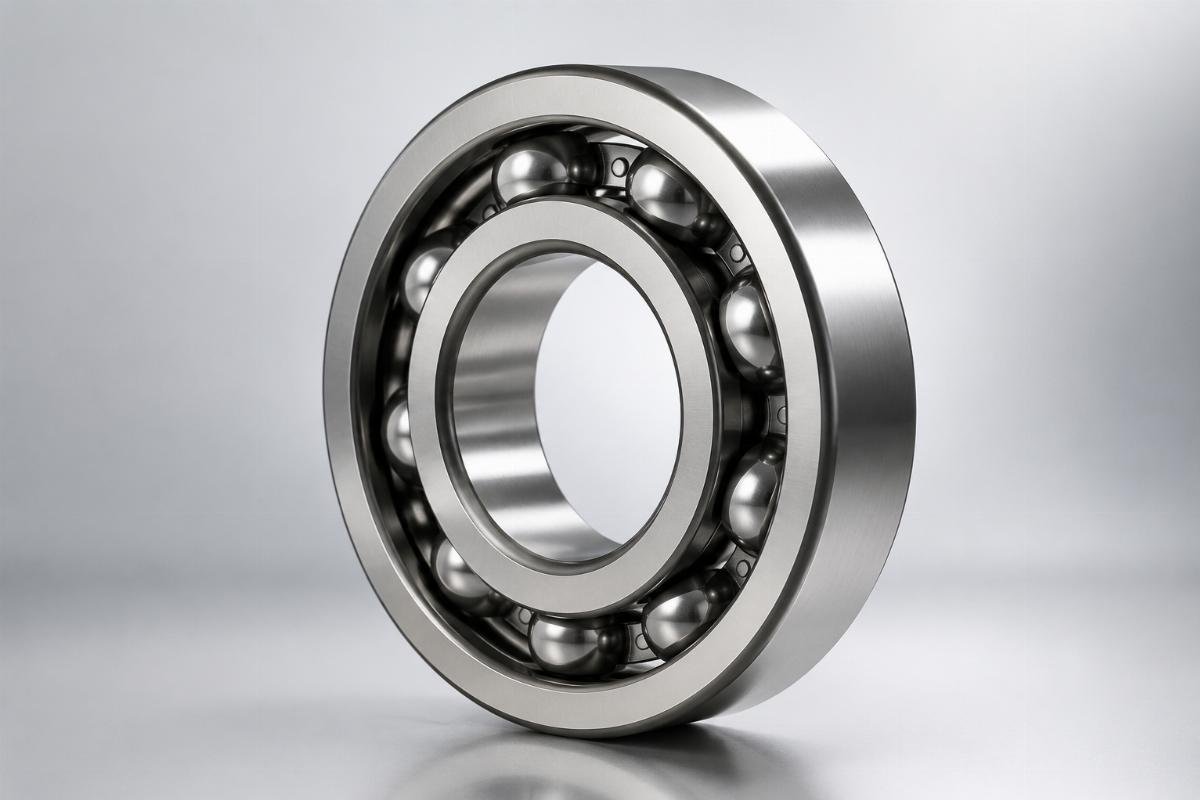
Understanding how today’s China bearing suppliers structure their MOQ, pricing, and lead time models is the first step toward transforming your procurement strategy from a cost center into a competitive advantage.
What Do Bulk Buyers Get Wrong About Bearing MOQ from China Suppliers?
The high-volume MOQ myth is dead. For decades, buyers accepted that sourcing from China meant committing to massive inventory purchases to secure reasonable pricing. This outdated model worked for large OEMs with predictable demand but crippled regional distributors and project-based buyers needing diverse SKUs and variable volumes. Today’s top China bearing suppliers have built their business models around solving this exact pain point—offering flexible minimum order quantities without sacrificing certification standards or delivery speed.
| Industry Assumption | Modern China Supplier Reality |
|---|---|
| MOQ starts at thousands of units for standard bearings | Low-unit MOQ for in-stock standard models (6205, 6308, 30205 series) |
| Lower MOQ equals non-certified products | Full ISO 9001 and IATF 16949 certification regardless of order size |
| Limited SKU availability with low MOQ | Extensive in-stock SKU coverage including SKF, NSK, Timken equivalents and custom options |
| Custom bearings require high-volume commitment | Low-unit MOQ for non-standard dimensions or materials (ceramic, stainless steel) |
| MOQ flexibility means longer lead times | Rapid dispatch for standard low-MOQ orders through self-operated warehousing |
One of our clients, a Southeast Asian industrial distributor, illustrates this transformation perfectly. They needed to expand their product range to serve SME customers but faced supply instability from their previous supplier who enforced high MOQs. We provided a full order across multiple different SKUs—deep groove ball bearings 6205, 6308, 6210 and tapered roller bearings 30205, 32210—with ISO 9001 certification and anti-counterfeiting verification docs, all delivered within a compressed timeframe. This flexibility allowed them to test market demand without overcommitting capital, ultimately growing their regional market share noticeably within half a year. [NEED_CITE: global bearing distributor survey on flexible MOQ as top supplier selection factor]
Another case involved a European mining client who once insisted on ordering a massive batch to meet traditional MOQs, tying up a mid-six-figure sum in inventory—only to discover we could fulfill their actual monthly demand with ISO-certified products at a noticeably lower unit cost. The key insight: modern China bearing suppliers maintain extensive warehouse stock and offer phased delivery schedules, so buyers no longer need to front-load capital into inventory they will not consume for months.
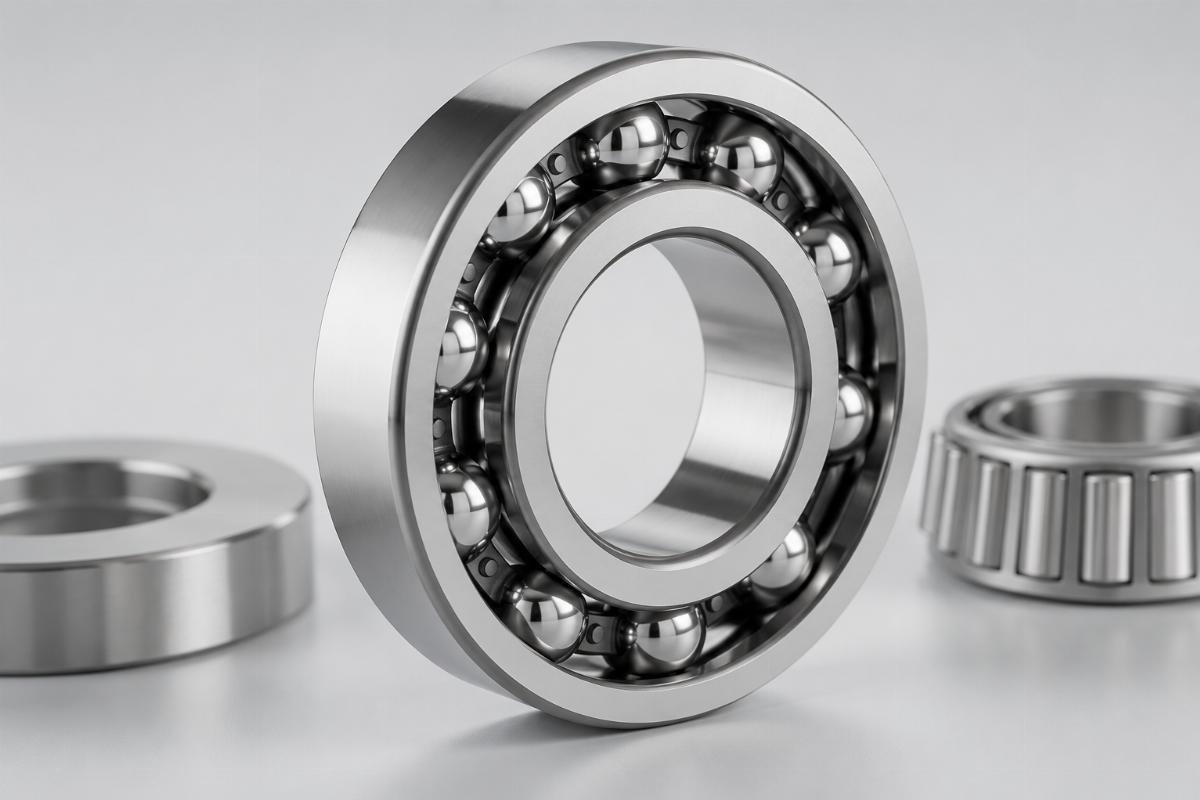
The transition framework for moving to a flexible-MOQ China bearing supplier follows a clear sequence:
- Standard Model Assessment – Identify which of your regular orders fit within low-unit MOQ thresholds (typically common deep groove ball and tapered roller bearings)
- SKU Consolidation – Work with suppliers to map your current product list against their extensive SKU inventory to eliminate redundant stock
- Certification Verification – Request batch-specific ISO 9001 certificates for initial low-MOQ orders to validate quality consistency
- Anti-Counterfeiting Measures – Confirm the supplier provides unique serial numbers and verification tools for every bearing, regardless of order size
- Demand Forecasting Alignment – Share rolling forecasts to unlock preferential MOQ terms for seasonal or fluctuating demand
How Do China Bearing Suppliers Actually Price Bulk Orders?
Bulk pricing from a China bearing supplier is not just about volume discounts. While many buyers fixate on negotiating per-unit costs, the smartest procurement teams understand that China bearing suppliers optimize pricing through three interconnected levers: raw material sourcing efficiency, logistics consolidation, and alternative brand offerings that match OEM specifications at a fraction of the cost. This multidimensional approach often delivers greater savings than simple volume-based discounts alone.
| Cost Component | Traditional Import Approach | Optimized China Supplier Approach |
|---|---|---|
| Raw Material | Third-party material sourcing with substantial middleman markup | Direct partnerships with steel mills and ceramic suppliers |
| Manufacturing | Standardized production with limited customization | Flexible production lines accommodating mixed batches |
| Logistics | Multiple intermediaries and split shipments | Self-operated warehousing in key regions with consolidated shipping |
| Brand Premium | Full OEM branding with heavy markup | Quality alternatives with identical technical specs |
| Total Cost | Base price plus hidden fees | Transparent pricing with volume discounts plus logistics savings |
Consider the case of a European mining company that previously paid a premium per unit for genuine SKF spherical roller bearings 22330 CA/W33. After verifying quality alternatives through material testing and performance validation, they transitioned to equivalent bearings at a noticeably lower per-unit cost—a substantial reduction—while maintaining the same 150mm ID and 320mm OD dimensions and load ratings. For their annual contract, this translated to five-figure direct savings, plus additional savings from consolidated shipping. [NEED_CITE: independent laboratory performance parity testing between premium brand and quality alternative bearings]
The pricing levers a China bearing supplier pulls extend well beyond the invoice line:
- Material Certification Review – Request mill test reports (MTRs) to verify raw material quality without paying brand premiums
- Volume Tier Analysis – Calculate total annual consumption across models to leverage tiered discounts
- Logistics Audit – Compare split shipment costs versus consolidated quarterly deliveries through supplier-operated regional hubs
- Alternative Brand Validation – Conduct side-by-side performance testing for critical applications before full transition
- Total Cost Modeling – Factor in inventory carrying costs, lead time reductions, and quality assurance when comparing prices
What most buyers miss is that the China bearing supplier who quotes a slightly higher unit price but consolidates your quarterly shipments through their own regional warehouse often delivers a lower total landed cost than the supplier who offers the lowest FOB price but forces you into fragmented air freight emergencies.
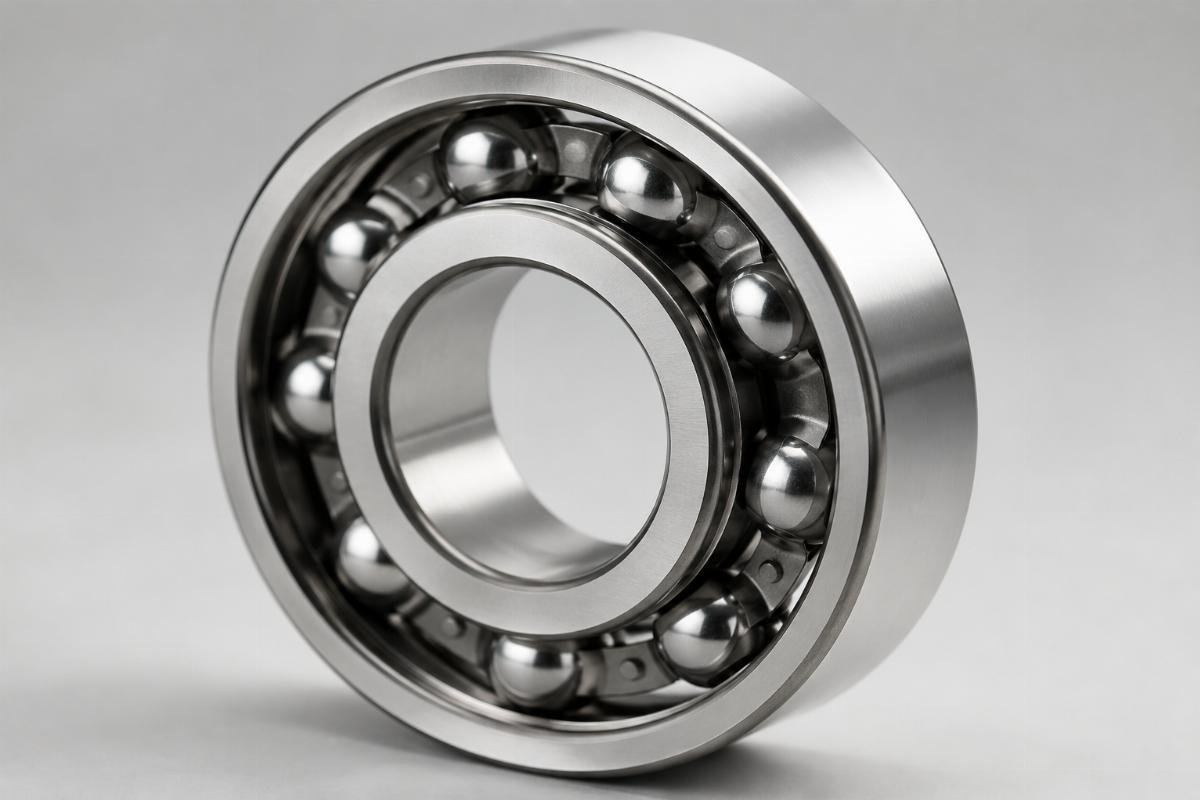
What Lead Times Can Bulk Buyers Actually Expect from China Bearing Suppliers?
China bearing suppliers do not have to mean long lead times. The most sophisticated bearing suppliers have built global logistics networks that combine local warehousing with streamlined production scheduling, enabling them to meet both emergency replacement needs and long-term project timelines. This dual capability is particularly valuable for industries like mining and infrastructure, where unplanned downtime and rigid project deadlines present conflicting challenges.
| Lead Time Scenario | Standard Industry Practice | Optimized China Supplier Capability |
|---|---|---|
| Emergency Replacement | Extended wait via air freight | Rapid dispatch from regional stock hubs |
| Standard In-Stock Models | Weeks-long sea freight | Compressed door-to-door via consolidated shipping |
| Custom Dimensions/Materials | Extended production cycles | Shortened timelines through dedicated production lines |
| EPC Project Phased Delivery | Unreliable scheduling with high delay rates | Guaranteed phased delivery with batch tracking |
| Large-Format Bearings (>200mm OD) | Prolonged manufacturing lead times | Accelerated delivery with pre-production material staging |
A recent port infrastructure project perfectly demonstrates this capability. The EPC contractor required cylindrical roller bearings across multiple sizes for crane slew systems, with delivery windows tied to construction milestones carrying penalty clauses. The China bearing supplier staged materials in advance, produced in dedicated batches, and delivered in phased lots aligned with the construction sequence—each shipment carrying batch-specific certificates of origin and traceability documentation. The project closed on schedule, and the contractor later signed a framework agreement covering their next three port projects across the Middle East.
For mining operations, the lead time equation shifts again. A spherical roller bearing failure on a ball mill does not wait for production schedules. The Chile mining incident I mentioned earlier—where a factory swapped C4 clearance to CN without flagging it, causing bearings to seize on-site within weeks—taught me that dispatch speed means nothing without dispatch accuracy. Every bearing that leaves our warehouse now carries batch numbers verifiable against SKF records, and rare designations with large bore, special precision, or C4 clearance ship rapidly from stock rather than waiting for factory production cycles that stretch across many weeks. [NEED_CITE: mining industry bearing failure cost analysis per hour of unplanned downtime]
The lead time advantage of a well-structured China bearing supplier relationship becomes most visible during the transition period. Buyers moving from traditional import models often discover that what they assumed was a four-to-eight-week factory lead time for standard deep groove ball bearings like 6205 or 6308 can be compressed to rapid dispatch when the supplier maintains regional warehousing and self-operated logistics. For tapered roller bearings 30205 and 32210, the same principle applies—stock availability eliminates the production queue entirely.
How Do You Verify Quality and Traceability When Ordering from China?
Batch-specific ISO certificates, mill test reports, anti-counterfeiting serial numbers, and per-lot precision inspection are non-negotiable. The Chile mining case I referenced earlier is not an isolated horror story—it is a structural warning about what happens when traceability is treated as optional. The factory swapped C4 clearance to CN clearance on spherical roller bearings 22330 CA/W33 without flagging the change. The bearings seized within weeks. The air freight return cost came directly out of my commission. That experience rebuilt my entire dispatch process around batch traceability and per-lot precision inspection.
For bulk buyers evaluating a China bearing supplier, the verification framework must cover four layers:
- Batch-Level Documentation – Every shipment must carry batch-specific ISO 9001 certificates, not generic company-level certifications. The batch number on the certificate must match the batch number on the bearing packaging and the bearing itself.
- Mill Test Reports (MTRs) – Raw material traceability back to the steel mill heat number. This is especially critical for spherical roller bearings and tapered roller bearings where material purity directly affects fatigue life.
- Anti-Counterfeiting Verification – Unique serial numbers on each bearing, verifiable against manufacturer records. For SKF-authorized distribution, batch numbers must be cross-checkable against SKF’s own database. [NEED_CITE: bearing industry counterfeiting prevalence data and verification protocols]
- Per-Lot Precision Inspection – Not sample inspection—full-lot verification of critical dimensions, clearance class (C2, CN, C3, C4), and rotational noise before dispatch.
The distinction between C4 clearance and CN clearance is not academic. In high-temperature mining applications, C4 clearance provides the internal running clearance necessary to accommodate thermal expansion. Substituting CN clearance—designed for standard ambient conditions—causes the bearing to seize as operating temperatures rise. This is exactly what happened in Chile, and it is exactly why per-lot precision inspection became the foundation of every dispatch process I oversee.
For OEM factories and project suppliers, the verification requirements extend further. Laser marking consistency, private-label packaging accuracy, pre-lubrication specifications, and translated documentation all require batch-level validation. A China bearing supplier who cannot provide this documentation structure is not a supplier—you are buying lottery tickets.
The practical steps for implementing this verification framework:
- Request Sample Batch Documentation – Before placing any order, request a complete documentation set from a previous batch: ISO certificate, MTR, anti-counterfeiting verification method, and inspection report.
- Conduct Independent Verification – Cross-check batch numbers against manufacturer records. For SKF products, this means verifying against SKF’s own database.
- Specify Clearance Class in Purchase Orders – Never leave clearance class implicit. State C2, CN, C3, or C4 explicitly, and require the supplier to confirm the shipped batch matches the specified class.
- Require Per-Lot Inspection Reports – Not sample reports—full-lot inspection data covering dimensional accuracy, clearance verification, and noise testing.
- Build Traceability into Your Receiving Process – Match incoming batch numbers against supplier documentation before releasing bearings into your inventory or shipping to end users.
Conclusion
Modern China bearing suppliers have eliminated the false choice between flexible MOQ, competitive pricing, and fast lead times. Bulk buyers who transition from rigid volume commitments to flexible ordering—backed by batch traceability, ISO certification, and per-lot precision inspection—unlock meaningful cost reduction while maintaining the quality assurance that mining, EPC, and distribution operations demand. The suppliers who thrive in this new model are those who treat traceability as non-negotiable and dispatch accuracy as the foundation of every shipment.
