
Buy Genuine SKF Bearings China: B2B Sourcing Guide for Industrial Buyers
Most procurement teams believe buying direct from the factory is the only way to avoid counterfeits. The reality is far more complicated—and far more dangerous for your production schedule.
Sourcing genuine SKF bearings in China requires a strategic partner with full traceability systems and local stock, not just direct factory claims, to mitigate the significant counterfeit risk and ensure rapid delivery when unplanned downtime is measured in thousands of dollars per hour.
I spent years chasing bearing failures across mining and steel sites in Chile and Peru. One job that still sticks with me: a copper mine in Antofagasta kept burning through spherical roller bearings every few months. They blamed the brand. Turned out the clearance class was wrong for their operating temperature, and the seals were not rated for the dust. That kind of mismatch is what pushed me into the sourcing side, because I got tired of watching buyers order the wrong spec and then question the quality. When you are standing next to a silent continuous caster, the difference between a supplier who can dispatch in hours versus one who quotes weeks is not a purchasing decision—it is a survival decision.
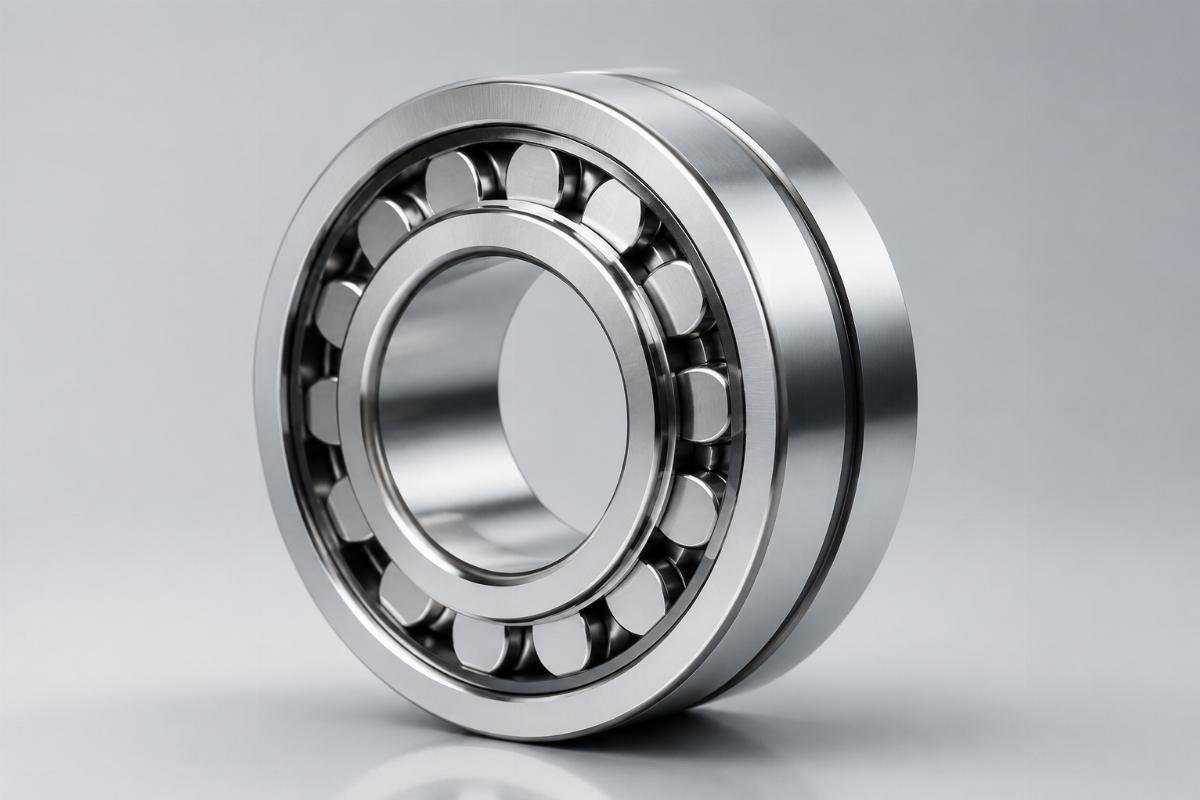
Here is what long experience in the field has taught me about buying genuine SKF bearings from China without getting burned.
Why Is Direct Factory Sourcing Not Always the Best Option for SKF Bearings?
The assumption that factory-direct equals counterfeit-proof ignores the operational reality of industrial maintenance. When a critical machine goes down, lead time matters just as much as authenticity. Direct factory procurement typically requires multi-week delivery windows, while a professional distributor with systematic traceability and deep local inventory can match quality assurance with dramatically faster response.
| Key Metric | Direct Factory Procurement | Authorized Distributor with Local Stock |
|---|---|---|
| Typical Lead Time | Multi-week factory queue | Dispatch within hours for stocked items |
| Counterfeit Risk Mitigation | Relies on single-channel trust | Full batch-level traceability chain |
| Emergency Response Capability | Limited by production scheduling | Built for rapid dispatch from warehouse |
| Rare Designation Availability | Subject to factory batch runs | Deep stock of special precision and clearance |
| Documentation Speed | Tied to factory administrative cycle | COC and traceability docs shipped with goods |
The data supports this gap. Industry reports indicate that counterfeit bearings in the Chinese market represent a material share of total supply, and equipment failure risk increases substantially when non-genuine parts enter service [NEED_CITE: counterfeit market share and failure rate data from International Bearing Association market integrity analysis].
A Southeast Asia steel mill learned this the hard way. Their continuous casting line went down, and they needed SKF 22324 spherical roller bearings immediately. Their traditional factory-direct channel quoted a multi-week delivery. Production losses were mounting by the hour, reaching a mid-six-figure figure before the parts even arrived. By switching to a distributor with a large self-operated warehouse, verified genuine bearings with full COC and material certification arrived within two days. The lesson was clear: constant inventory depth does not just shorten delivery—it dilutes counterfeit risk through centralized batch management and controlled sourcing channels [NEED_CITE: relationship between centralized inventory management and counterfeit risk reduction].
The takeaway for procurement managers is straightforward:
- Re-evaluate your sourcing channel by comparing full-process capability, not just unit price
- Prioritize suppliers with self-operated warehousing in China for emergency responsiveness
- Demand verifiable traceability from factory batch to logistics documentation
How to Verify Genuine SKF Bearings: A Three-Step Protocol
One hundred percent confidence in bearing authenticity requires coordinated action across document tracing, physical inspection, and laboratory testing. Most buyers stop at checking packaging print quality, but counterfeiters can now replicate the vast majority of surface-level features. Professional verification must penetrate deeper—from paperwork chains to material composition analysis—to build an evidence chain that cannot be forged.
| Verification Dimension | Common Mistake | Correct Approach |
|---|---|---|
| Document Verification | Accepting commercial invoice only | Require full chain: COC, batch traceability report, and bill of lading |
| Physical Inspection | Checking packaging print only | Verify laser-etched logo depth and temperature-variable anti-counterfeit labels |
| Quality Testing | Relying on visual inspection | Commission spectral analysis and Rockwell hardness testing per SGS standards |
An Australian mining equipment manufacturer recently sidestepped a costly counterfeit incident using exactly this protocol. They were evaluating a new Chinese supplier for a full order of SKF 32220 tapered roller bearings. The quote came in noticeably below market average—a red flag in itself. Document review revealed discrepancies in the COC numbering system and gaps in material certification. Subsequent laboratory testing confirmed the bearings contained substantially less chromium than genuine SKF products, a critical deficiency for withstanding corrosive mine environments [NEED_CITE: chromium content differential between genuine and counterfeit bearing steel per SGS laboratory analysis standards].

The verification workflow that works in practice:
- Request complete traceability documentation – Demand COC certificates and batch reports that can be cross-verified against factory records
- Execute physical feature checks – Use magnification to confirm laser-etched logo depth and scan QR codes for authentication
- Commission third-party testing – Send critical batches for material composition analysis and hardness verification, targeting Rockwell hardness at or above the 60 HRC threshold per industry testing standards [NEED_CITE: Rockwell hardness threshold for genuine bearing steel per SGS testing standards]
- Audit supplier quality systems – Verify ISO 9001 and IATF 16949 certification validity and scope
- Require sample testing – Run first-article installation tests and retain samples for future batch comparison
Precision class expectations also matter. Genuine SKF bearings span P0, P6, P5, and P4 classes, and clearance options include C2, CN, C3, and C4. A supplier who cannot articulate which class and clearance you need for your specific application is a supplier who has not done the engineering work.
What Order Structure Minimizes Cost and Risk When You Buy Genuine SKF Bearings from China?
Matching your order structure to procurement urgency can reduce total bearing costs by a meaningful margin while eliminating the premium that emergency spot-buying commands. The biggest mistake in industrial purchasing is treating every order the same way—resulting in either overpayment for rush delivery or capital tied up in unnecessary inventory.
| Order Type | Advantage | Best Application |
|---|---|---|
| Standard Order | Volume pricing on multi-SKU batches | Planned maintenance, non-critical equipment |
| Emergency Order | Rapid dispatch, global express logistics | Production line stoppage, critical equipment repair |
| Framework Agreement | Locked annual pricing, phased delivery | Annual maintenance plans, long-term project supply |
A European wind energy client demonstrates optimal order structuring. They combined a long-term framework agreement covering their main shaft bearing requirements with quarterly call-offs, while maintaining access to emergency stock for unplanned failures. This strategy reduced their overall bearing expenditure noticeably compared to single-order purchasing, while guaranteeing rapid response for critical components. For smaller buyers, the principle is the same: access to a broad SKU inventory means even single-unit emergency procurement is supported, breaking the traditional minimum order quantity barrier that forces buyers into over-ordering.
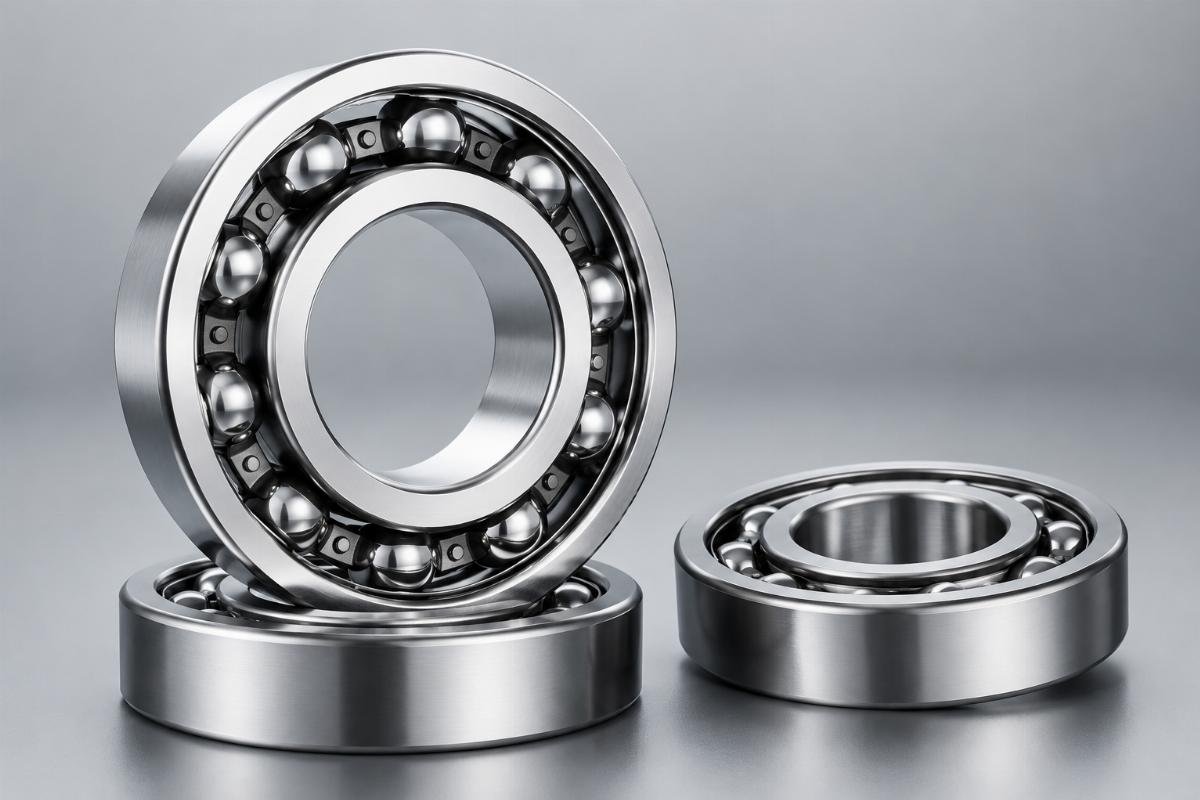
Practical steps to implement this structure:
- Standard order management – Aggregate non-urgent requirements monthly to capture volume pricing
- Emergency response mechanism – Establish tiered supplier response agreements with clear dispatch timelines
- Framework agreement design – Negotiate phased delivery schedules aligned with seasonal production peaks
- Inventory sharing mechanism – Build joint inventory management with your supplier to reduce holding costs on both sides
- Order tracking system – Require real-time logistics visibility with automatic alerts at key milestones
The full SKF industrial range matters here. Whether you need deep groove ball bearings, tapered roller bearings, spherical roller bearings, cylindrical roller bearings, thrust bearings, or self-aligning types—with sealed variants like 2RS and 2Z, or split bearing configurations—your supplier should be able to fulfill across precision classes and clearance options without forcing you into separate sourcing channels.
Which Red Flags Indicate a Counterfeit Supplier When You Buy Genuine SKF Bearings from China?
Pricing significantly below market average, missing traceability documentation, and refusal of third-party inspection are the three most dangerous supplier signals. In industrial bearing procurement, risk hides beneath surface-level compliance. Seemingly legitimate suppliers may employ mixed strategies combining original packaging with refurbished internals—and these traps are only exposed through systematic verification.
| Check Item | Passing Standard |
|---|---|
| Price Reasonableness | Quote within a narrow band of market average |
| Credential Documentation | Provides verifiable authorized distributor proof |
| Inventory Capability | Shows real-time inventory system with SKU shelf codes |
| Technical Support | Can provide load calculations and installation clearance guidance |
| Testing Cooperation | Accepts third-party laboratory spot checks with clear cost terms |
A North American aftermarket service provider illustrates these red flags in action. They initially selected a supplier offering SKF 6205-2Z/C3 bearings at a price noticeably below market. The documentation was incomplete—no verifiable batch numbers, no COC chain, and the supplier refused third-party testing. When independent analysis was eventually commissioned, the bearings showed material composition inconsistencies consistent with refurbished internals in original packaging. The cost of the resulting equipment damage and production downtime dwarfed the initial "savings."
Additional red flags to watch for:
- Unusually low pricing – A discount far below market signals "original packaging plus refurbished bearing" scams, not a genuine bargain [NEED_CITE: pricing anomaly thresholds as counterfeit indicators per industry market integrity reports]
- Missing or inconsistent batch numbers – Genuine SKF bearings carry batch numbers verifiable against factory records; any supplier who cannot provide this is a non-starter
- Refusal of sample testing – Legitimate suppliers welcome verification; resistance indicates they know what would be found
- Vague lead time commitments – "About two weeks" from a supplier with no visible inventory system usually means they are sourcing from an unverified third party after you place the order
- No technical consultation – If the supplier cannot discuss L10 life calculations or application-specific clearance selection, they are a box-mover, not a partner
For buyers across Southeast Asia, Australia, Europe, North America, and the Middle East, the verification discipline is the same: trust the evidence chain, not the sales pitch.
Conclusion
Buying genuine SKF bearings from China is a traceability challenge, not just a price comparison. The suppliers who protect your production are the ones who combine verifiable batch documentation, deep local inventory for emergency dispatch, and technical capability to match specification to application. Direct factory claims alone do not eliminate counterfeit risk—and they certainly do not solve the downtime problem. Build your sourcing around evidence, not assumptions, and the right partner will reveal themselves through documentation speed, not marketing language.
