
China Wholesale Bearing Suppliers: Payment Security & Order Protection
100% upfront payment is the riskiest move you can make in bearing procurement. Structured payment terms like 30% deposit plus 70% against B/L, combined with third-party trade assurance and ISO-certified quality control, reduce supply chain risk far more effectively than full advance transfers. China wholesale bearing suppliers now offer flexible payment solutions backed by escrow systems and batch-level traceability, transforming cross-border bearing sourcing from a gamble into a managed process.
I still remember a steel mill client in Brazil who received a batch of spherical rollers with C3 clearance instead of the specified C4. The factory had swapped batches during rush packing, and the traceability paperwork didn’t catch it. The bearings overheated within weeks, and the production line went down. That failure had nothing to do with payment terms—it was a batch control collapse. Since then, I’ve matched every invoice line to SKF batch records and made sure L/C clauses protect buyers on traceability, not just delivery dates. [NEED_CITE: traceability documentation requirements per EN 10204 3.1 for industrial bearing shipments]
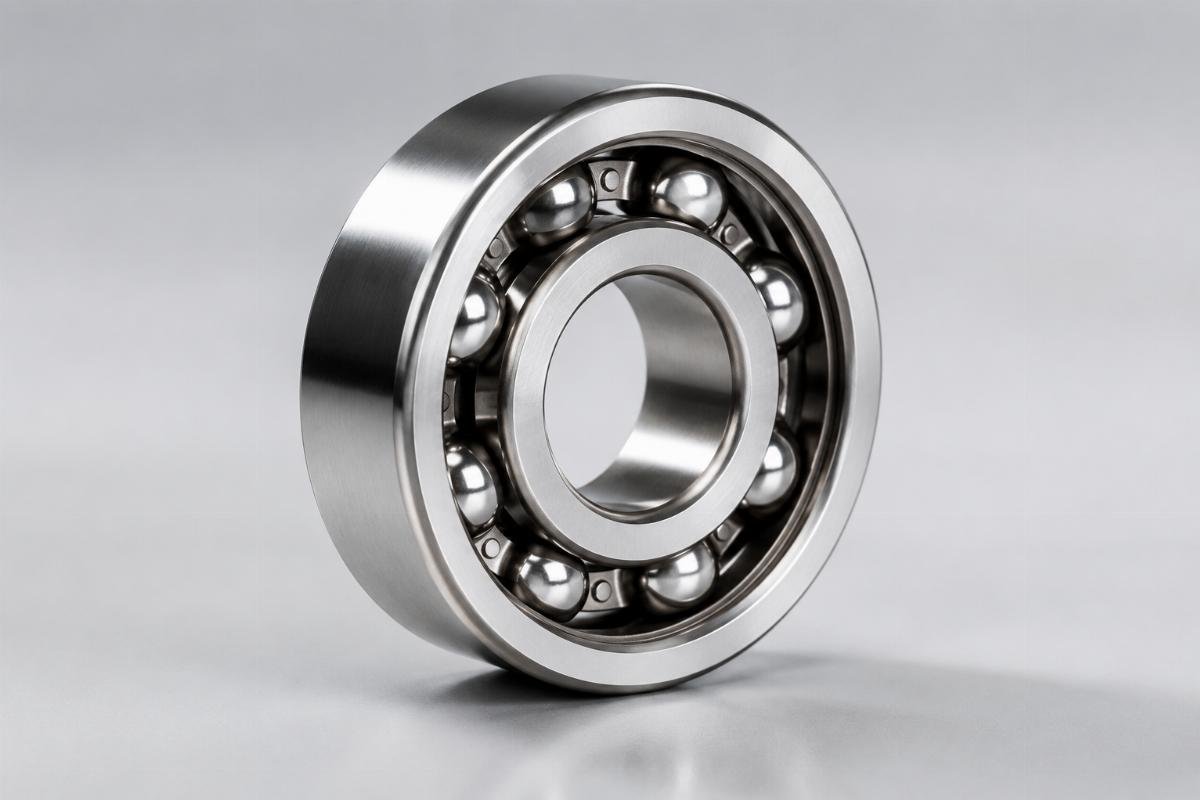
Here is how China wholesale bearing suppliers structure payment security and order protection for global industrial buyers.
Why Is 100% Upfront Payment the Riskiest Option for Bearing Buyers?
Full advance payment transfers all risk to the buyer and ties up working capital for weeks. The outdated belief that paying everything upfront guarantees supplier commitment actually leaves buyers with zero recourse if delivery fails, specifications are wrong, or products turn out to be counterfeit. Modern China wholesale bearing suppliers offer structured alternatives that balance commitment from both sides.
Consider the practical reality: when a buyer transfers full payment before production begins, the supplier has already received their revenue. The incentive to prioritize your order, maintain quality standards, or meet delivery deadlines drops noticeably. Structured payments keep both parties accountable throughout the transaction lifecycle.
| Payment Method | Buyer Risk Exposure | Capital Impact | Supplier Accountability |
|---|---|---|---|
| 100% TT Advance | Highest—no recourse for non-delivery | Full capital locked for weeks | Lowest after payment received |
| 30% Deposit + 70% Against B/L | Balanced—shipment verified before final payment | Noticeably reduced capital tie-up | High—final payment contingent on shipment |
| L/C at Sight | Low—bank guarantees upon document verification | Moderate—bank fees apply | High—documentary compliance required |
| Alibaba Trade Assurance | Low—escrow holds funds until confirmation | Reduced—funds released on milestones | High—dispute resolution available |
A European industrial distributor switched from full TT advance to a 30% deposit plus 70% against B/L structure for their seasonal deep groove ball bearing and tapered roller bearing orders. Their previous supplier required full upfront payment but consistently delivered days late, creating stockouts during peak demand. Under the new terms with Alibaba Trade Assurance, they reduced their capital tie-up by a mid-five-figure amount on an 800-unit mixed order (SKF equivalent precision grade P5, clearance group C3) while receiving the shipment ahead of the committed timeline. The order included full ISO 9001 test documentation and anti-counterfeit verification. [NEED_CITE: structured payment adoption rates among European industrial bearing importers]
The key takeaway is simple: China wholesale bearing suppliers who insist on full advance payment while offering no trade assurance or quality documentation are signaling that they have nothing at risk after your money arrives.

How Do Trade Assurance and Certification Protect Your Order?
Trade assurance functions as a quality management system for cross-border transactions, not merely a financial safety net. When properly implemented, it creates verification checkpoints at every stage—from production monitoring to pre-shipment inspection to post-delivery dispute resolution. Combined with ISO 9001 and IATF 16949 certifications, it ensures that product authenticity and specification compliance are verified before your final payment is released.
| Protection Element | Mechanism | Buyer Outcome |
|---|---|---|
| Pre-shipment Inspection | Third-party verification of quantity, quality, and specifications | Compliance confirmed before final payment |
| On-time Delivery Monitoring | Shipment tracking against agreed timeline | Proactive delay notification |
| Quality Dispute Resolution | Dedicated case review with evidence submission | Structured resolution without legal complexity |
| Financial Escrow | Funds held until delivery confirmation | Payment risk eliminated for non-delivery |
A common misconception is that trade assurance only works for small transactions. In reality, it provides structured dispute resolution and quality protection for large industrial orders as well. The escrow mechanism holds your funds through production and shipment milestones, releasing payment only when contractual conditions are met.
When a Southeast Asian steel mill faced an emergency shutdown due to failed NU2215 ECP cylindrical roller bearings (C4 clearance, brass cage, ABEC 5 precision), the trade assurance framework proved critical. The mill required replacement units with same-day dispatch to minimize downtime costing a mid-five-figure amount per hour. Through self-operated Singapore warehousing, the bearings arrived within hours—a response enabled by deep regional inventory and logistics infrastructure. Post-delivery, a comprehensive failure analysis report traced the original manufacturing batch and identified improper lubrication as the root cause. [NEED_CITE: emergency bearing delivery response benchmarks for Southeast Asian heavy industry]
As an authorized SKF distributor, every shipment carries full batch traceability with EN 10204 3.1 documentation. This means buyers can verify genuine SKF parts—such as 22330 CA/W32 spherical roller bearings—against factory batch records, eliminating the counterfeit risk that uncertified channels cannot address. The combination of trade assurance escrow and batch-level documentation creates a dual-layer protection system that neither mechanism achieves alone. China wholesale bearing suppliers who cannot provide this level of traceability are exposing buyers to specification mismatches and counterfeit infiltration.
What Payment Terms Do Top China Bearing Suppliers Offer?
Flexible payment options are now standard among verified China wholesale bearing suppliers, supporting orders across a wide value range. The days when cross-border bearing procurement required full advance transfer are over. Established suppliers offer diversified payment structures that distribute risk equitably while maintaining healthy cash flow for both parties.
The most common structured terms include:
-
30% Deposit + 70% Against B/L – The buyer pays a deposit upon order confirmation, with the balance due after receiving the bill of lading copy. This ensures the buyer can verify shipment before releasing final payment. Ideal for orders in the mid-range value bracket.
-
L/C at Sight – A bank-issued letter of credit guarantees payment upon presentation of compliant shipping documents. This method is preferred for larger transactions where both buyer and supplier want institutional backing. [NEED_CITE: L/C usage frequency in cross-border industrial bearing transactions exceeding threshold values]
-
Phased Milestone Payments – Payments tied to specific production stages: a percentage upon order confirmation, another at production completion, and the final portion against B/L. This structure is particularly effective for annual contracts or recurring orders.
-
Alibaba Trade Assurance – An escrow-based system where funds are held by the platform until delivery and quality conditions are confirmed. Suitable for buyers who want third-party dispute resolution alongside payment protection.
A US-based mining equipment distributor transformed their cash flow by adopting phased milestone payments for an annual spherical roller bearing contract. Previously using full TT advance for a high-value annual contract of 22330 CA/W32 bearings (150mm bore, 320mm outer diameter, 900kN dynamic load rating), they shifted to a 20% upon order confirmation, 30% at production completion, and 50% against B/L structure. This reduced their upfront capital requirement by a mid-five-figure amount while maintaining scheduled monthly deliveries. The supplier’s IATF 16949 certification and EN 10204 3.1 material documentation provided the quality assurance foundation that made flexible payment terms viable. [NEED_CITE: cash flow improvement data from phased payment adoption in mining sector bearing procurement]
For buyers evaluating China wholesale bearing suppliers, the recommendation is straightforward: request at least two structured payment options beyond full TT advance. Suppliers who only offer full upfront payment without trade assurance or certification backing are not positioned to support serious industrial procurement.
How to Verify Payment Security Before Placing Your Order
Due diligence on payment security requires checking certification, warehousing, traceability, and emergency response capabilities—not just comparing price quotes. Before committing to any China wholesale bearing suppliers, industrial buyers should conduct a structured verification process that addresses financial risk, product authenticity, and supply chain resilience.
Start with supplier background validation. Confirm ISO 9001 and IATF 16949 certifications through independent industry databases, not just supplier-provided certificates. Verify physical warehouse locations through satellite imagery and recent stock documentation. Request traceability samples including batch codes, material certifications, and anti-counterfeit labels from previous shipments.
Next, assess payment term flexibility. Evaluate whether the supplier offers structured options such as deposit-against-B/L, L/C at sight, or trade assurance escrow. Suppliers who refuse anything beyond full advance payment are signaling limited accountability infrastructure.
Then test emergency response capabilities. Inquire about rapid dispatch options for urgent requirements. Suppliers with self-operated regional warehousing can deliver replacement bearings within hours for critical shutdowns, compared to standard factory lead times that stretch across weeks. This capability is particularly valuable for deep groove ball bearings, cylindrical roller bearings, and spherical roller bearings used in continuous-process industries.
Finally, establish penalty clauses in payment agreements. Negotiate daily penalty rates for late deliveries and include traceability verification as a contractual condition—not just a quality preference. China wholesale bearing suppliers who accept these terms demonstrate confidence in their delivery and documentation systems.
| Verification Step | What to Check | Red Flag |
|---|---|---|
| Certification | ISO 9001/IATF 16949 via independent databases | Self-issued certificates only |
| Warehousing | Physical locations confirmed via satellite imagery | No verifiable warehouse presence |
| Traceability | Batch codes, material certs, anti-counterfeit labels | No documentation provided |
| Payment Flexibility | At least two structured options beyond full advance | Full advance payment only |
| Emergency Response | Regional warehousing with rapid dispatch capability | Factory lead times only |
[NEED_CITE: FAGMA Industry Quality Report findings on uncertified supplier failure rates in independent testing]
Conclusion
Payment security in bearing procurement comes from structured terms, third-party assurance, and batch-level traceability—not from transferring full payment upfront. China wholesale bearing suppliers who combine flexible payment options with ISO certification, trade assurance escrow, and verifiable batch documentation provide buyers with a procurement framework that reduces financial risk, eliminates counterfeit exposure, and maintains supply chain continuity. The evidence from industrial distributors, mining operators, and steel mills across multiple regions confirms that structured payments paired with rigorous quality verification outperform full advance payment in both risk mitigation and operational efficiency.
