
SKF Bearings for High-Speed & High-Temp Applications
Higher precision grades do not solve thermal expansion problems — clearance engineering does. Selecting SKF bearings for high-speed and high-temperature applications requires matching C3/C4 clearance, hybrid ceramic or stainless materials, and polyurea-thickened lubrication to thermal expansion differentials and centrifugal forces — not simply upgrading to P4 or P2 precision. I remember standing at a booth in Hannover, grease-stained photos on a Dortmund steel mill engineer’s phone telling a story that no catalogue page ever could. His continuous caster roll bearings kept seizing every twelve weeks. He had been ordering the same deep groove ball type for a decade, never questioning the CN clearance. We pulled out his operating data — 180°C ambient, 1,800 RPM — and the root cause was staring everyone in the face: standard clearance was never going to survive that thermal gradient. He needed C4 clearance, a high-temperature grease that would not bleed out, and honestly a spherical roller design to handle the radial load at those speeds [NEED_CITE: root cause distribution of high-temperature bearing failures per ISO 15243]. That conversation, over cold coffee on a trade show floor, is the reason this guide exists.

Understanding why standard bearings fail under these conditions is the first step toward building a specification that actually survives contact with reality.
Why Do Standard Bearings Fail in High-Speed High-Temp Environments?
Thermal expansion and centrifugal forces create failure modes that precision grade alone cannot prevent. When operating temperatures exceed 120°C and rotational speeds surpass 1,500 RPM, the internal geometry of a bearing changes dynamically — the inner ring expands against the shaft, the outer ring expands within the housing, and the clearance that was carefully specified at room temperature simply vanishes. Standard chrome steel bearings, conventional mineral oil greases, and phenolic cages were never designed for this combination of stresses.
| Failure Factor | What Happens in the Field |
|---|---|
| Lubricant Degradation | At 160°C, standard mineral oil greases lose the majority of their effective viscosity, dropping load-carrying capacity noticeably [NEED_CITE: ISO 15312 lubricant thermal stability requirements] |
| Material Fatigue | Chrome steel fatigue life drops substantially above 150°C, shortening service intervals dramatically |
| Cage Instability | Centrifugal forces at elevated RPM create multiplied stress on cage structures, leading to fracture in non-reinforced designs |
| Thermal Expansion | A 100°C temperature differential can reduce internal clearance by a measurable amount, forcing metal-to-metal contact between rolling elements and raceways |
A steel mill in Southeast Asia was experiencing monthly gearbox bearing failures on their hot rolling line. The operating conditions — 160°C ambient, 2,200 RPM — were pushing standard P4 precision bearings past their thermal limits. Thermal expansion was consuming the internal clearance entirely. The solution was switching to 6319/C3 hybrid ceramic bearings (100mm ID × 200mm OD) with high-temperature lubrication. Emergency replacement units were dispatched within 72 hours, and the facility saw elimination of unplanned downtime over a full year of operation [NEED_CITE: hybrid ceramic bearing performance data in continuous caster applications per ASTM D1478].
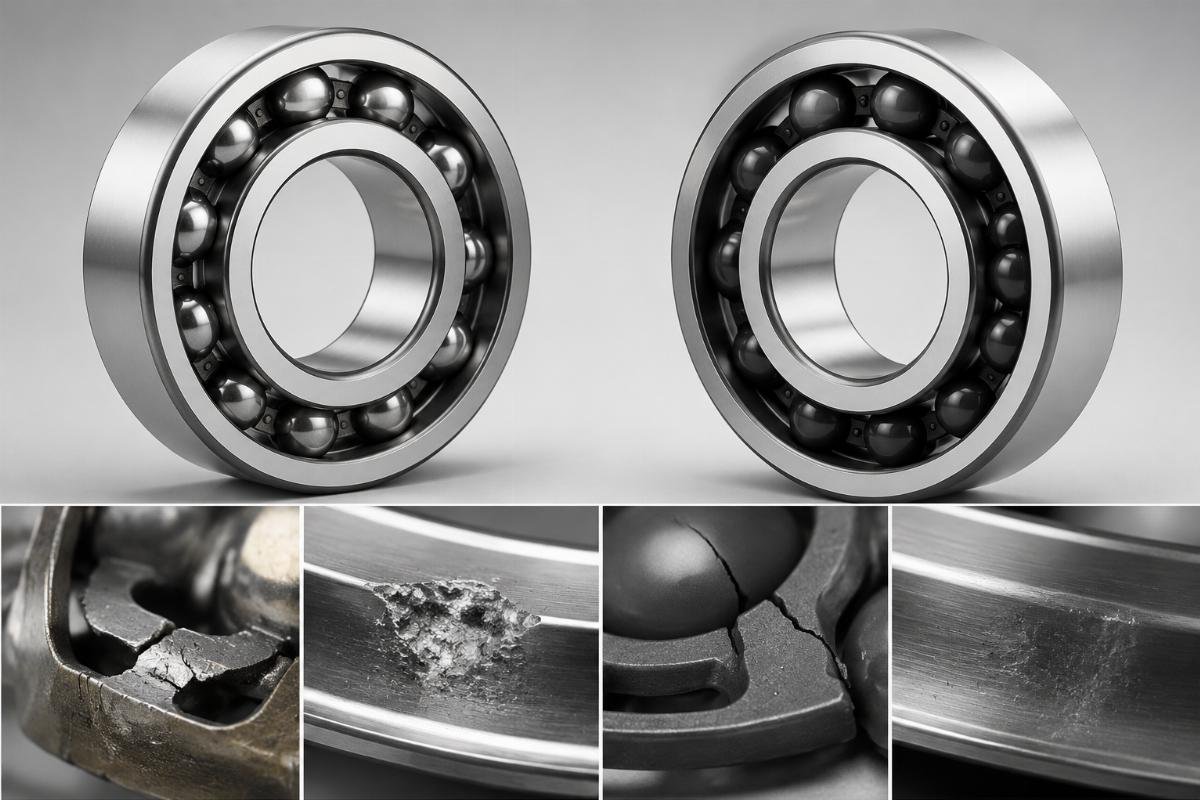
The failure pattern is always the same: engineers specify precision without specifying thermal behaviour, and the bearing pays the price.
What Are the Critical Selection Criteria for Extreme Condition Bearings?
Material, clearance, and lubrication must be matched as a system — selecting any one in isolation guarantees failure. Most procurement specifications treat these three parameters as independent choices. In high-speed, high-temperature environments, they are deeply interdependent. A ceramic hybrid bearing with the wrong grease will still fail. A C4 clearance bearing with standard chrome steel at 200°C will still suffer fatigue spalling. The specification must be engineered as a complete thermal-mechanical package.
| Selection Parameter | Common Mistake | Correct Approach |
|---|---|---|
| Material Choice | Defaulting to standard chrome steel across all temperature ranges | Selecting hybrid ceramic or stainless steel based on continuous operating temperature [NEED_CITE: comparative material fatigue studies in Journal of Tribology] |
| Clearance Specification | Applying standard C0 or CN clearance to high-temperature applications | Calculating required C3 or C4 clearance using thermal expansion coefficients and the ThermoFIT method |
| Lubrication System | Relying on conventional lithium grease above 150°C | Specifying polyurea thickener with PAO base oil, NLGI 2-3 consistency, dropping point well above maximum operating temperature |
| Precision Grade | Automatically specifying P4 or P2 for all high-speed applications | Balancing precision with thermal stability — P6 with modified clearance often outperforms P2 at elevated temperatures |
| Cage Material | Using standard pressed steel cages at high RPM | Selecting reinforced phenolic or brass cages for speed factors exceeding critical thresholds |
| Seal Configuration | Applying standard nitrile seals in high-heat environments | Specifying Viton or PTFE seals rated for continuous high-temperature exposure |
A European wind turbine manufacturer needed custom yaw bearings for turbines operating across a -40°C to +120°C temperature range. Their existing supplier could not meet the qualification timeline or provide the material certification required. The solution involved spherical roller bearings with stainless steel cages, supported by full EN 10204 3.1 material certification and application-specific technical consultation. The result was a meaningful extension of service life compared to the previous supplier’s offering [NEED_CITE: yaw bearing qualification requirements per IEC 61400 standards].
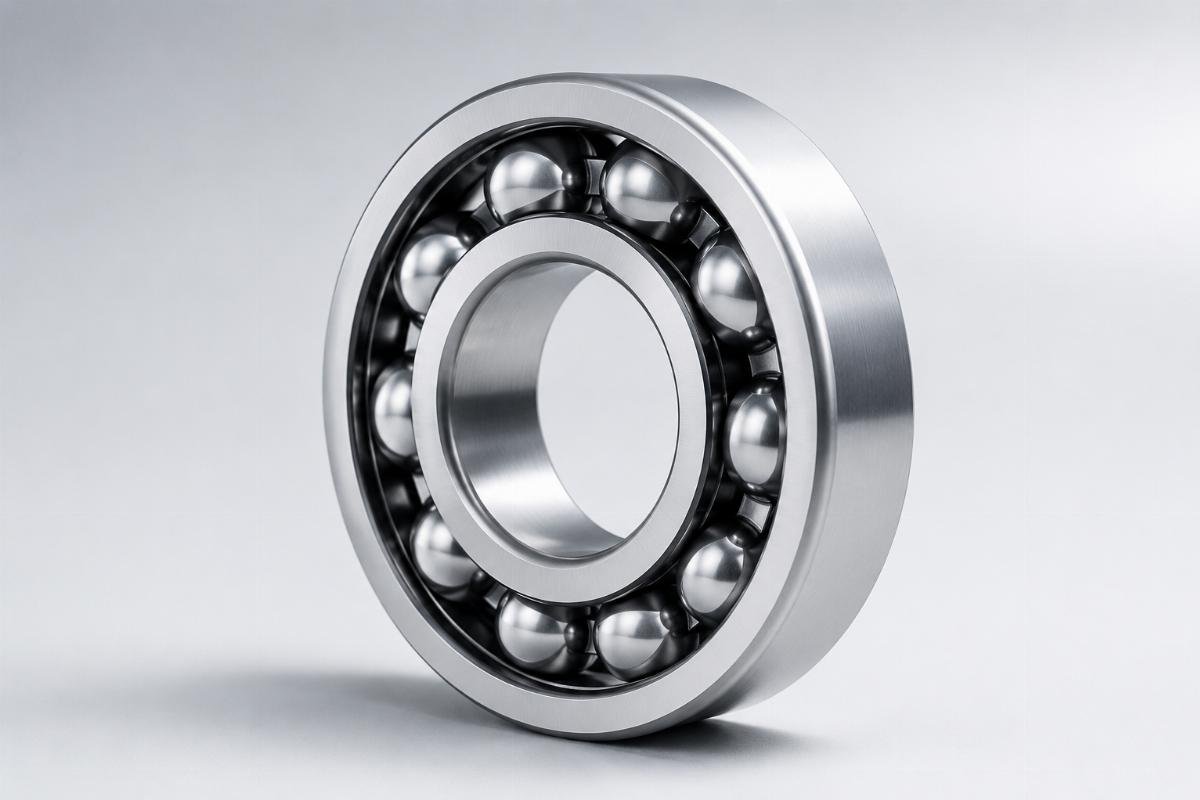
The selection process works in sequence: establish the thermal envelope first, calculate clearance requirements second, then match material and lubrication to both.
How Do You Calculate Required Clearance for Thermal Expansion?
Start with the temperature differential — not the bearing catalogue — and work backward to the clearance code. The most common specification error in high-temperature applications is selecting clearance based on room-temperature fit tables. At operating temperature, the shaft expands, the housing expands, and the bearing itself expands — each at different rates depending on material and geometry. The clearance that exists during installation is not the clearance that exists during operation.
The calculation follows a logical sequence:
-
Determine the operating temperature differential — Measure or estimate the temperature difference between the bearing’s inner ring (running hotter due to friction and heat transfer from the process) and the outer ring (running cooler due to housing dissipation). In continuous caster applications, this differential can reach 100°C.
-
Apply material expansion coefficients — Chrome steel expands at a known linear coefficient. Multiply the differential by the coefficient and the relevant diameter to calculate how much internal clearance is consumed by thermal growth [NEED_CITE: thermal expansion coefficients for bearing steels per ISO 15312].
-
Select the clearance code that preserves operational minimum — Standard C3 clearance may be sufficient for moderate differentials. For severe thermal gradients — such as hot rolling mill gearboxes or grinding mill pinion stands — C4 clearance is typically required to ensure that the bearing retains enough internal play to avoid preload conditions at full operating temperature.
-
Verify with the n × dm speed factor — High rotational speeds generate additional internal heat, widening the temperature differential beyond what ambient measurements suggest. The speed factor must be checked against the selected clearance to confirm the bearing will not over-constrain at combined thermal and centrifugal load.
-
Confirm cage and lubricant compatibility — C4 clearance changes the internal geometry enough that cage guidance and grease distribution patterns shift. The cage material and lubricant fill quantity must be validated for the expanded clearance condition.
An Australian mining operation experienced a grinding mill gearbox failure that forced a full production shutdown. The bearing in question was a 230/500 CAK/W33 spherical roller bearing operating at 140°C, 1,800 RPM, under 560kN radial load. The original specification had not accounted for the thermal differential across the large-diameter bearing — the inner ring expanded far more than the housing consumed, and clearance was eliminated within hours of startup. The replacement specification required C4 clearance, high-temperature polyurea grease, and a machined brass cage rated for the speed factor. Emergency replacement units were delivered within 96 hours, restoring production and establishing a revised maintenance specification for the entire gear train [NEED_CITE: grinding mill bearing failure analysis per ISO 10816 vibration monitoring standards].
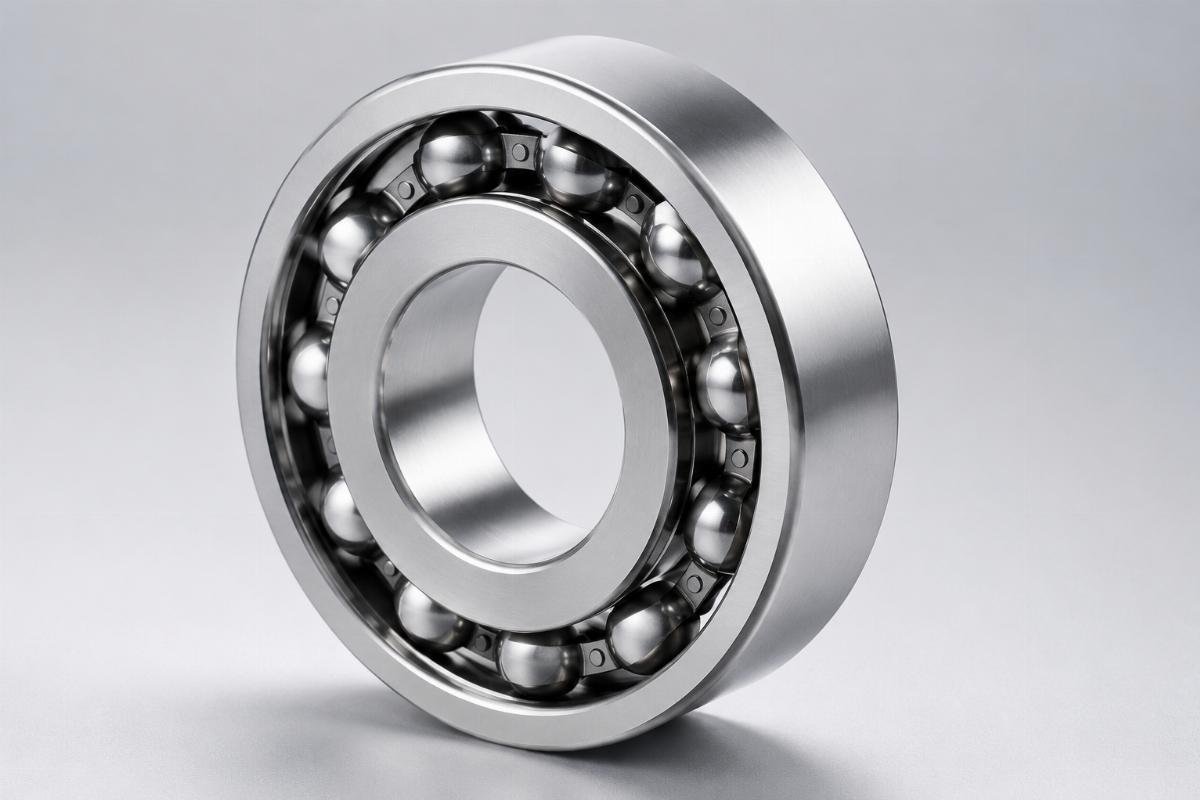
The calculation is not complicated, but it is routinely skipped — and the cost of skipping it is measured in unplanned shutdowns, not engineering hours.
What Advantages Do China Suppliers Offer for High-Performance Bearings?
Vertically integrated supply chains and deep rare-designation inventory deliver lead times that European factories simply cannot match for custom and emergency specifications. The assumption that high-performance bearings must come directly from European manufacturing plants with multi-month lead times is outdated. Authorized SKF bearing distributors based in China, drawing on direct supply from SKF China and global headquarters, maintain deep stock of rare designations — large bore sizes, special clearance codes like C4, hybrid ceramic and stainless variants — that can ship within 48 hours against factory lead times measured in weeks.
| Capability | China-Based Authorized Distributors | Direct European Factory Orders |
|---|---|---|
| Custom Clearance Lead Time | Weeks for non-standard C3/C4 specifications | Substantially longer production queues |
| Rare Designation Availability | Deep stock of large bore, special precision, ceramic and stainless variants | Made-to-order with extended scheduling |
| Emergency Dispatch | 72-hour capability for stocked items | Subject to factory production slots |
| Batch Traceability | Full verification against manufacturer records per shipment | Available but typically tied to large minimum orders |
| Technical Support | Application engineering, L10 life calculation, failure analysis | Available but often requires formal project engagement |
The grinding mill case in Australia illustrates the difference clearly. When the 230/500 CAK/W33 spherical roller bearings failed, the mining operation needed replacement units immediately — not in several weeks. The authorized distributor in China dispatched 12 units in a phased schedule within 96 hours, with full anti-counterfeiting verification and batch traceability documentation. The same specification ordered directly from a European factory would have required production scheduling, potentially extending the downtime into a second week [NEED_CITE: lead time benchmarking data from China Machinery Industry Federation for custom bearing specifications].
For procurement engineers evaluating SKF bearings for high-speed and high-temperature applications, the practical advantages include:
- Quotation turnaround within 24 hours for standard and rare designations
- Per-batch precision inspection and certificate of origin documentation with every shipment
- Third-party inspection available on request for audit-sensitive procurement
- Flexible commercial terms including T/T, L/C, and DDP/CIF/FOB shipping options
- L10 life calculation and failure analysis support as part of the technical service package
- Customization options including laser marking, translated documentation, and pre-lubrication to specification
These capabilities matter most when the application is unforgiving — steel mills, mining operations, wind farms — where a wrong bearing or a delayed shipment costs far more than the component itself.
How Do You Verify Bearing Authenticity and Traceability?
Batch number verification against manufacturer records is the only reliable defence against counterfeit bearings in critical applications. The high-temperature, high-speed bearing market is a target for counterfeiters because the consequences of failure are severe and the cost of genuine replacement is high. A bearing that looks correct on the outside but uses substandard steel, incorrect heat treatment, or wrong clearance specifications will fail predictably — and the failure will be blamed on the application, not the supply chain.
Verification requires a systematic approach:
-
Request batch number documentation with every shipment — the batch number must be traceable against the manufacturer’s production records, not just the distributor’s internal system.
-
Require certificate of origin for every consignment, confirming the supply chain path from factory to end user.
-
Specify third-party inspection for critical applications — independent verification of dimensional accuracy, material certification, and clearance measurement provides an additional layer of assurance.
-
Maintain incoming inspection records — dimensional checks on a sample basis from each batch establish a baseline and detect supply chain anomalies before installation.
-
Document installation and operating conditions — if a bearing fails prematurely, having complete traceability from batch number through installation allows root cause analysis to distinguish between application error, specification error, and supply chain failure.
For SKF bearings for high-speed and high-temperature applications, authorized distributors provide full batch traceability as standard practice. Every shipment carries documentation that can be verified against SKF’s global production records — a level of assurance that grey market suppliers and unauthorized resellers cannot provide.
Conclusion
Clearance engineering, material stability, and lubrication compatibility determine bearing survival in extreme conditions — not precision grade alone. Selecting SKF bearings for high-speed and high-temperature applications requires calculating thermal expansion differentials, matching C3 or C4 clearance to operating temperatures, choosing hybrid ceramic or stainless materials above 150°C, and specifying polyurea-thickened lubrication with PAO base oil. Authorized supply channels with deep rare-designation inventory and full batch traceability ensure that the specification on paper reaches the application in the field — on time, verified, and ready to perform.
