
How to Select Tapered Roller Bearings for Automotive Wheel Hubs Supplier
Higher precision grades don’t always mean better performance for wheel hub bearings. In dynamic automotive applications, standard precision bearings with optimized clearance settings often outperform their higher-grade counterparts, especially under varying load conditions common in commercial vehicles. This counterintuitive reality costs manufacturers millions annually in unnecessary upgrades and premature failures.
Selecting tapered roller bearings for automotive wheel hubs requires balancing load capacity, precision grade, and supplier reliability—China-based bearing suppliers with IATF 16949 certification and rapid delivery capabilities can provide cost-effective solutions without compromising on traceability or technical support. The right selection process must integrate application-specific requirements with supplier capabilities to ensure optimal performance and supply chain resilience.
I spent years at a bearing inspection bench in Wuxi before moving to the export side, so I still think in terms of internal clearances and cage wear rather than catalog numbers. A few years back, a mining client in Chile kept rejecting tapered roller bearings for wheel hubs—returned two pallets claiming premature spalling. We pulled the rejected units apart on the shop floor and found the issue wasn’t the bearings at all; they’d been spec’d with CN clearance when the application demanded C3 because of the thermal expansion from heavy continuous loading. The customer had simply copied a spec sheet from a different duty cycle. That’s the kind of mismatch I see constantly: buyers selecting tapered rollers by bore size alone, ignoring load direction, clearance class, and seal type. Now I walk every wheel hub inquiry through the actual operating conditions before quoting a single part number [NEED_CITE: root cause distribution of wheel hub bearing failures per ISO 15243].

Let’s examine the critical factors that determine bearing performance in wheel hub applications and how to align these with supplier capabilities for optimal results.
What Key Factors Impact Tapered Roller Bearing Performance in Wheel Hubs?
Bearing selection must prioritize application-specific load conditions over standard specifications. Automotive wheel hubs experience unique dynamic forces that demand careful consideration of bearing geometry, materials, and dimensional compatibility.
| Performance Factor | Industry Reality |
|---|---|
| Cone Angle Design | Bearings with 15-25° cone angles provide optimal balance of radial and axial load capacity for passenger vehicles, while commercial trucks often require 25-30° angles [NEED_CITE: optimal cone angle ranges for automotive wheel hub applications by vehicle class] |
| Material Selection | Chrome steel (SAE 52100) remains the industry standard, offering substantially higher fatigue resistance than carbon steel in wheel hub applications |
| Critical Dimensions | Inner diameter tolerance, outer ring width variation, and roller profile accuracy are the top three dimensions affecting interchangeability with OEM specifications |
| Cage Material | Polyamide cages reduce noise noticeably compared to steel cages in high-speed wheel applications |
| Heat Treatment | Through-hardened bearings with 58-62 HRC hardness rating demonstrate extended service life in high-temperature brake environments [NEED_CITE: through-hardening vs case-hardening fatigue life comparison in wheel hub conditions] |
We recently collaborated with a European NEV manufacturer developing a new commercial vehicle platform that required substantially higher load capacity than standard designs. Their engineering team initially specified P4 precision grade bearings based on assumptions about performance requirements. Our technical analysis revealed that P6 grade 30218 tapered roller bearings with C3 clearance and stainless steel cages would actually deliver superior durability under their specific load conditions. This recommendation reduced per-unit costs noticeably while meeting their 100,000 km durability target.
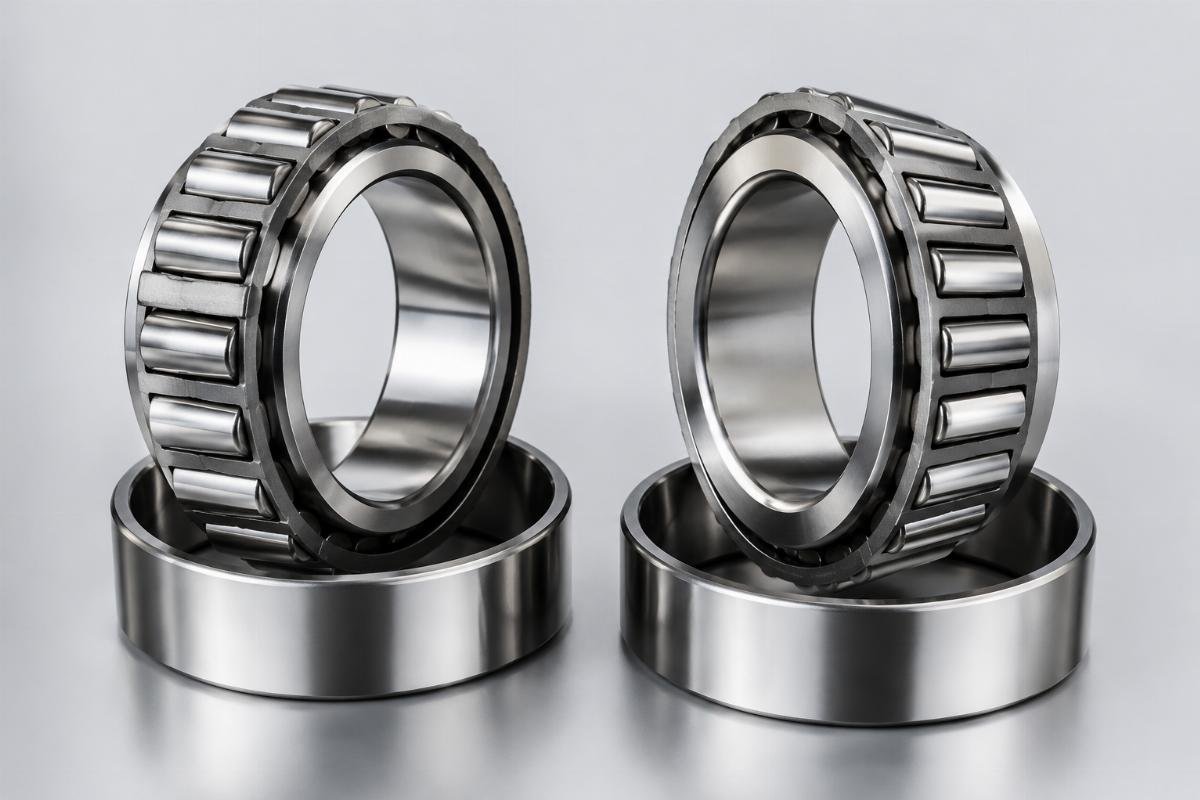
- Cone Angle Measurement – Verify the angle between the raceway and the bearing axis to ensure compatibility with axial load requirements
- Material Hardness Testing – Confirm through-hardened components meet 58-62 HRC hardness specifications
- Clearance Verification – Measure radial internal clearance under installed conditions, not just in free state
- Roller Profile Inspection – Check for proper crowning to distribute load evenly across contact surfaces
- Cage Integrity Assessment – Ensure cage design maintains proper roller spacing during extreme acceleration and deceleration
What Common Mistakes Cause Premature Wheel Hub Bearing Failures?
Incorrect clearance and preload settings account for the majority of wheel hub bearing failures. These preventable errors often result from overreliance on standard tables rather than application-specific calculations.
| Specification Aspect | Common Mistake | Correct Approach |
|---|---|---|
| Clearance Setting | Using manufacturer’s standard clearance without temperature compensation | Calculating required clearance based on operating temperature range (typically -40°C to +120°C for wheel hubs) [NEED_CITE: thermal expansion compensation methodology for wheel hub bearing clearance] |
| Preload Adjustment | Applying uniform preload across front and rear axles | Adjusting preload based on weight distribution (front axles often require noticeably higher preload than rear axles) |
| Installation Torque | Tightening to generic torque values | Following vehicle-specific torque sequences with axial load measurement during installation |
| Lubrication Volume | Over-greasing to extend service life | Using 35-40% fill volume to allow adequate heat dissipation |
| Contamination Protection | Standard seals for all applications | Specifying double-lip seals with dust deflectors for off-road or high-debris environments |
A heavy-duty truck repair facility in the American Midwest was experiencing repeated bearing failures in their fleet, with average service life dropping to a fraction of the expected 120,000 km. Their technicians were installing replacement Timken HM88649/HM88610 bearing sets using standard preload settings. Our technical team discovered they were not accounting for the increased axial loads from the truck’s modified suspension system. By adjusting the preload to the 0.0015-0.0035 inch range specific to their application and switching to equivalent bearings with optimized internal clearance, we helped them extend bearing life to match OEM performance at substantially lower cost.
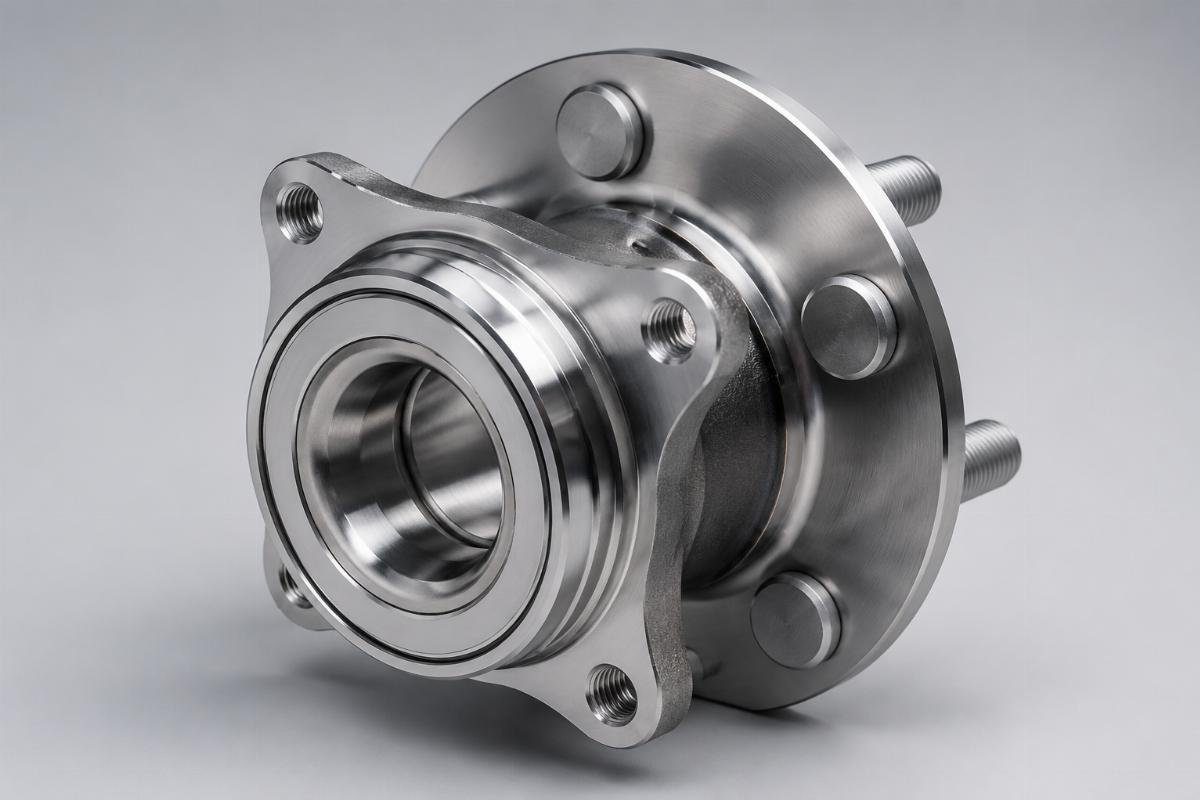
- Clearance Calculation – Use the formula: Required clearance equals thermal expansion allowance plus operational clearance plus installation interference
- Preload Measurement – Utilize a torque wrench to measure rotational resistance after setting preload
- Temperature Mapping – Record operating temperatures at various driving conditions to establish thermal profiles
- Axle Weight Analysis – Document front and rear weight distribution under loaded and unloaded conditions
- Seal Compatibility Check – Ensure seal materials are compatible with lubricant type and operating temperature range
How to Evaluate China-Based Tapered Roller Bearings for Automotive Wheel Hubs Supplier Partners?
Certification standards and warehousing capabilities matter more than country of origin for reliable supply. China-based bearing suppliers with proper certifications and global distribution networks can deliver equivalent quality to European brands with faster lead times.
| Supplier Capability | Advantage | Ideal Application Scenario |
|---|---|---|
| IATF 16949 Certification | Ensures compliance with automotive quality management systems, reducing qualification cycles substantially | OEM production with extended qualification timelines [NEED_CITE: IATF 16949 certification requirements for bearing suppliers] |
| Self-Operated Global Warehouses | Enables rapid door-to-door delivery to major automotive markets | Aftermarket emergency repairs requiring same-day cross-reference |
| Batch-Level Traceability | Provides complete documentation from raw material to finished product | Safety-critical applications requiring full quality audit capability |
| Application Engineering Support | Offers custom clearance and preload configurations | NEV platforms with unique load requirements |
| Small-Batch Production Flexibility | Accommodates minimum order quantities suitable for diverse inventories | Repair facilities with varied model requirements |
As an authorized SKF bearing distributor, we’ve built our reputation on verifiable batch traceability and rapid dispatch of rare designations. When a regional industrial bearing distributor in Southeast Asia needed to stock common automotive wheel hub bearing models including the 32205, 32206, and 32208 series, we leveraged our self-operated warehouses in Singapore and China to provide a full consolidated shipment with brand authorization documents. Each batch shipped with complete traceability documentation, enabling the distributor to offer competitive pricing with rapid local delivery. This approach helped them capture meaningful market share within the first year.
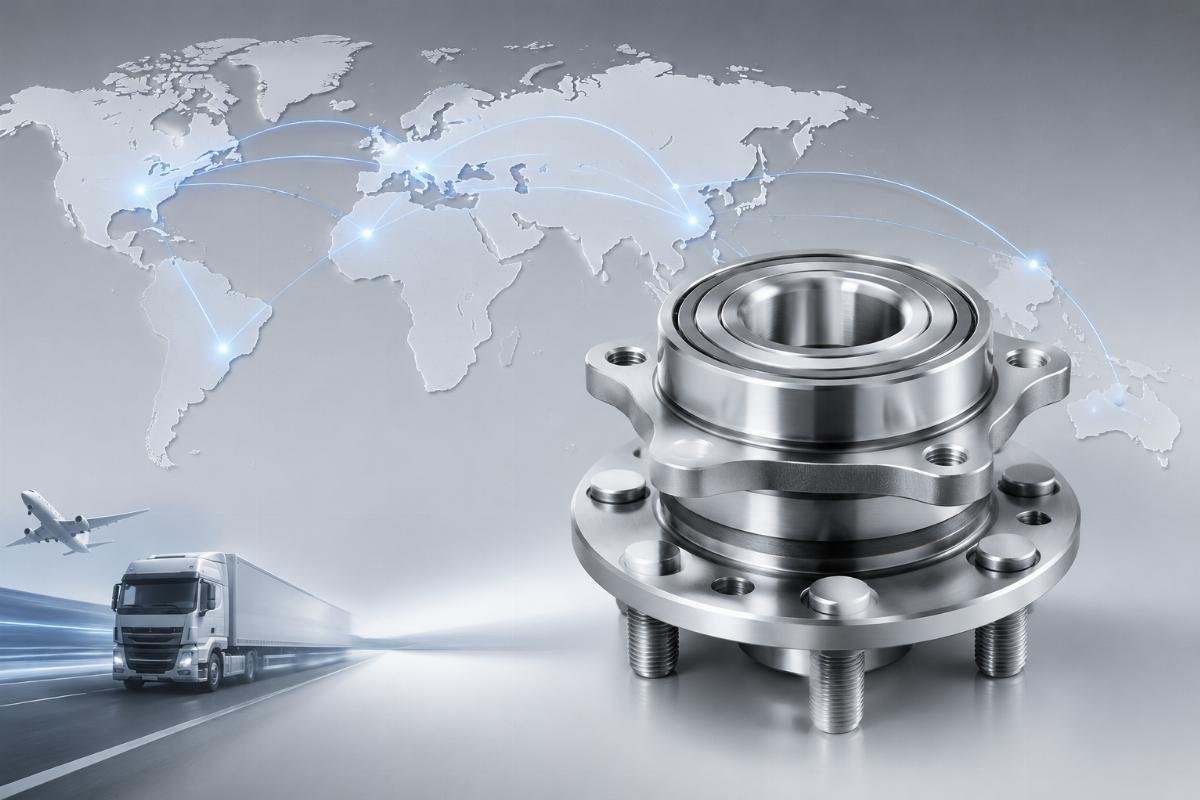
- Certification Verification – Request current IATF 16949 certificate with scope covering automotive tapered roller bearings
- Warehouse Location Confirmation – Verify proximity of supplier warehouses to your manufacturing or service facilities
- Traceability Documentation Review – Examine sample batch records including raw material certificates and heat treatment reports
- Technical Support Assessment – Evaluate response time for engineering inquiries
- Emergency Capacity Evaluation – Ask about surge production capabilities for unexpected demand spikes
What is the Step-by-Step Process for Selecting Tapered Roller Bearings with China Suppliers?
A structured collaborative selection process reduces qualification time and failure rates substantially. This approach ensures alignment between application requirements and supplier capabilities.
| Selection Step | Critical Actions |
|---|---|
| Application Data Collection | Document load magnitude and direction, operating temperature range, speed requirements, and contamination exposure [NEED_CITE: wheel hub bearing application data collection checklist per ABMA standards] |
| Specification Matching | Match cone angle, clearance class, and preload requirements to duty cycle rather than copying from similar applications |
| Supplier Qualification | Verify IATF 16949 certification, batch traceability systems, and technical support capabilities |
| Trial Validation | Conduct controlled field testing with full documentation before full fleet rollout |
The key to successful tapered roller bearing selection lies in treating each application as unique rather than defaulting to catalog specifications. When working with China-based suppliers, focus on their ability to provide custom clearance configurations, maintain batch-level traceability, and deliver technical support throughout the qualification process. Suppliers offering L10 life calculation support and failure analysis capabilities add substantial value beyond simple product supply.
For wheel hub applications specifically, the selection process must account for thermal expansion under continuous braking, axial load variations from suspension geometry, and contamination exposure from road conditions. Standard CN clearance may work perfectly for light-duty passenger vehicles operating in temperate climates, but heavy-duty commercial vehicles in extreme conditions often require C3 or even C4 clearance to accommodate thermal growth without excessive preload buildup.
Conclusion
Successful wheel hub bearing selection requires matching specifications to actual operating conditions, not catalog defaults. The majority of premature failures stem from incorrect clearance and preload settings rather than product quality issues. Partnering with certified China-based tapered roller bearings for automotive wheel hubs supplier partners who provide batch traceability, technical support, and rapid delivery capabilities ensures both performance reliability and supply chain resilience.
