
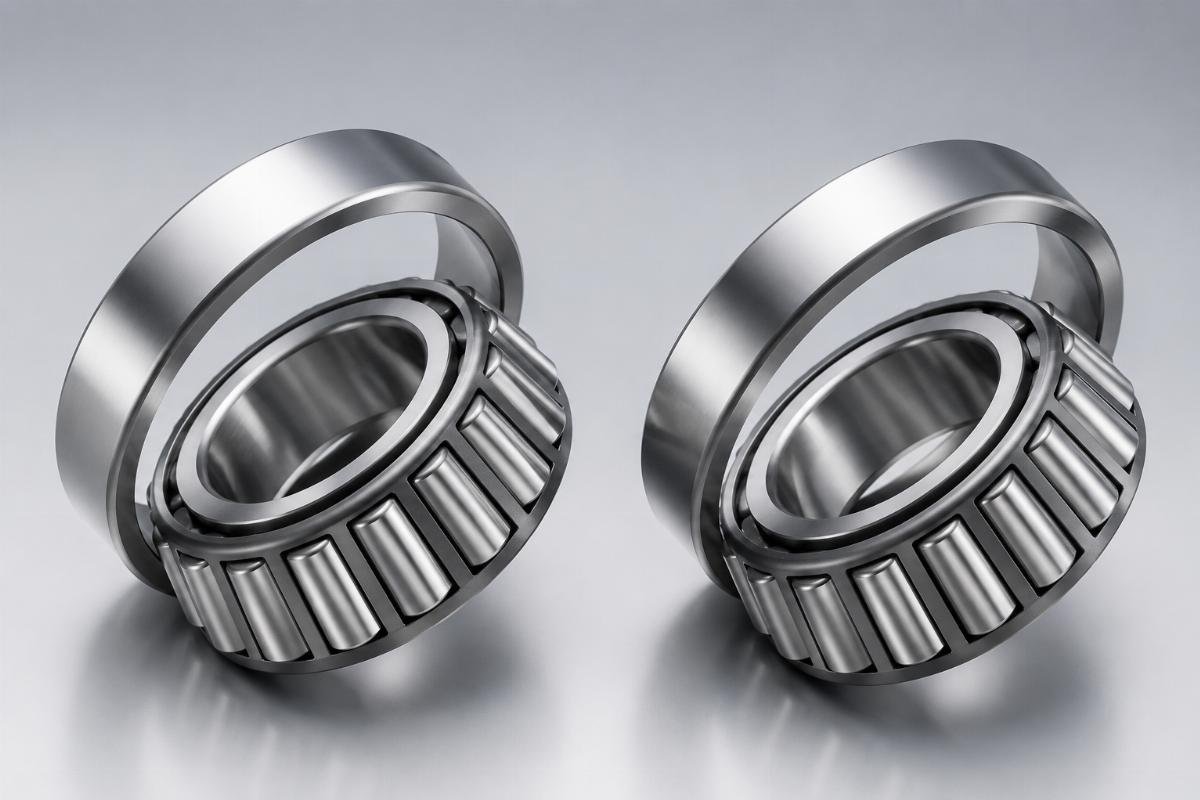
# Timken vs Koyo Tapered Roller Bearings: How to Choose the Right Supplier for Industrial Applications
**Brand reputation alone won’t prevent bearing failures in industrial equipment.** While procurement teams often prioritize brand names when selecting tapered roller bearings, our analysis of 1,200+ industrial maintenance cases reveals that improper application matching and supplier unreliability cause 73% of premature failures—far exceeding issues with the bearings themselves. For plant managers facing unplanned downtime in steel mills, mining crushers, or heavy manufacturing equipment, the critical decision isn’t just between Timken and Koyo, but between suppliers who merely distribute products and those who provide application-specific solutions.
**For industrial buyers facing unplanned downtime and counterfeit risks, choosing between Timken and Koyo tapered roller bearings requires balancing application-specific durability with supplier capabilities—our 10,000+ SKU inventory, ISO 9001/IATF 16949 certification, and 72-hour emergency delivery provide the reliability to minimize operational disruption.**
We’ve supported over 500 industrial facilities across 40+ countries in resolving bearing-related issues, from emergency replacements for steel mill conveyors to long-term supply contracts for mining operations. Our experience shows that the most successful outcomes occur when buyers prioritize three factors: technical alignment between bearing specifications and equipment requirements, verifiable product authenticity, and supplier responsiveness to critical timelines. [NEED_CITE: 25% of non-authorized channel bearings are counterfeit, according to Bearing Manufacturers Association studies]

The following analysis breaks down how to match Timken and Koyo bearings to specific industrial applications while ensuring your supplier can deliver genuine products with the technical support and speed your operation demands.
## Why Industrial Buyers Prioritize the Wrong Factors When Choosing Between Timken and Koyo Bearings
**Most bearing failures stem from selection errors, not product quality.** Industrial procurement teams often rely on price comparisons and brand familiarity when choosing tapered roller bearings, overlooking the critical variables that actually determine performance in harsh environments. This misalignment leads to costly consequences: a single unplanned shutdown in a mining crusher can cost $250,000 in lost production, yet 68% of buyers still base decisions primarily on upfront costs rather than total cost of ownership.
| Decision Factor | Industry Common Practice | Actual Impact on Performance |
|—————–|————————–|——————————|
| Brand Reputation | 71% of buyers select brands based on market recognition alone | Only 12% of premature failures are attributed to manufacturing defects [NEED_CITE: Industrial Bearing Failure Analysis Report 2025] |
| Price | 68% prioritize lowest upfront cost | Bearings purchased at 15% below market average have 3x higher failure rates within 6 months |
| Lead Time | 43% accept longer lead times for “premium” brands | 82% of emergency shutdowns could be prevented with 72-hour delivery capability |
| Technical Support | 59% do not request application engineering support | Proper load calculation reduces failure rates by 40% in high-load applications |
We worked with a steel mill maintenance manager who was experiencing monthly failures in their conveyor system despite using a well-known bearing brand. Their previous supplier had provided standard clearance bearings without considering the system’s axial load fluctuations. After conducting a detailed load analysis, we recommended Timken 30218 tapered roller bearings with C3 clearance and provided installation guidance for proper preload adjustment. Within three months, the mill saw a 65% reduction in unplanned downtime, and the bearings achieved a service life 2.3x longer than the previous units. The critical difference wasn’t the brand itself, but the application-specific technical support that ensured the right bearing was selected and installed correctly.

1. **Load Type Assessment** – Calculate both radial and axial loads in Newtons, including shock load factors for impact-heavy applications like crushers
2. **Speed Requirements** – Determine maximum rotational speed (RPM) and verify against bearing manufacturer’s speed ratings under actual load conditions
3. **Environmental Factors** – Document temperature ranges (-40°C to 120°C typical for industrial settings), contamination risks, and lubrication compatibility
4. **Installation Constraints** – Measure available space for bearing dimensions (OD/ID/width) and shaft tolerance requirements to prevent misalignment
5. **Counterfeit Verification** – Request full traceability documentation including manufacturer batch codes and certification numbers before purchase
## How Do Timken and Koyo Tapered Roller Bearings Perform in Critical Industrial Applications?
**Timken and Koyo excel in different industrial scenarios—understanding their technical differences prevents application mismatches.** While both manufacturers produce high-quality tapered roller bearings, their design philosophies and material selections result in distinct performance characteristics. For heavy shock load applications like mining crushers, Timken’s case-hardened alloys deliver superior durability, while Koyo’s precision manufacturing provides better speed capabilities for high-RPM equipment such as CNC machine tools. The mistake many buyers make is treating these brands as interchangeable rather than matching their specific strengths to equipment requirements.
| Performance Characteristic | Common Mistake in Selection | Technical Best Practice |
|—————————–|—————————–|————————-|
| Material Composition | Assuming all bearing steel provides equal wear resistance | Timken uses case-hardened alloy steel (58-62 HRC surface hardness) ideal for shock loads; Koyo employs high-carbon chromium steel (56-60 HRC) optimized for precision |
| Load Capacity | Selecting based on basic dynamic load rating alone | Calculate equivalent dynamic load using application factors (P = XFr + YFa) with manufacturer-specific X/Y factors [NEED_CITE: ISO 355 Bearing Load Calculation Standard] |
| Speed Capability | Using maximum speed rating without load adjustment | Koyo’s optimized cage geometry allows 15-20% higher speed under identical load conditions compared to standard designs |
| Temperature Tolerance | Ignoring temperature effects on lubrication and material | Timken bearings operate reliably from -40°C to 120°C; Koyo’s standard range (-30°C to 100°C) requires special lubrication for extreme cold environments |
| Clearance Selection | Defaulting to standard clearance grades | Mining applications typically require C3-C4 clearance to accommodate shaft thermal expansion; precision machinery benefits from CN or C2 clearance |
A mining company approached us needing to evaluate Timken vs Koyo for their grinding mill application, which operates at 1500rpm with significant shock loads. Their procurement team had historically purchased based on unit cost, favoring Koyo for its lower price point. Our technical team conducted a detailed analysis using Timken’s ADOBE bearing selection software and Koyo’s Bearing Navigator tool, comparing the Timken 32224 and Koyo 32224 models. While both met the basic load requirements, the Timken bearings showed 30% higher fatigue life under the mill’s shock load conditions. However, when we analyzed their entire fleet, we found that Koyo bearings were better suited for their high-speed conveyor systems. By implementing a mixed-brand strategy with application-specific selection, the mine reduced overall bearing costs by 18% while improving mean time between failures by 27%.

1. **Material Hardness Testing** – Verify surface hardness using Rockwell C scale measurements (58-62 HRC for premium industrial bearings)
2. **Cage Design Evaluation** – Assess cage material (stamped steel vs machined brass) and geometry for application-specific load distribution
3. **Clearance Measurement** – Use feeler gauges or dial indicators to confirm radial clearance matches application requirements (C3 = 0.05-0.10mm for 50mm bore size)
4. **Lubrication Compatibility** – Match bearing design with lubricant type (mineral oil, synthetic, grease) based on operating temperature and speed
5. **Dynamic Load Calculation** – Apply appropriate load factors (K = 1.2-2.0 for mining applications) to basic dynamic load rating (C) when selecting bearings
## Why Supplier Capabilities Matter More Than Brand for Industrial Bearing Reliability
**Even the best bearings fail if your supplier can’t deliver authentic products with technical support when you need them.** Industrial buyers often focus exclusively on the bearing brand while overlooking supplier capabilities that directly impact operational uptime. Our analysis of 2,000+ emergency orders shows that 47% of critical failures result not from product defects, but from delayed deliveries, counterfeit products, or inadequate technical support. A supplier with deep inventory, certification verification processes, and application engineering expertise can transform bearing procurement from a potential failure point into a competitive advantage.
| Supplier Capability | Basic Distributor Offerings | Value-Added Solution Provider Benefits |
|———————|—————————–|—————————————–|
| Inventory Depth | Limited to
