
How to Select the Right Bearing for Electric Motors: A China Supplier’s Technical Guide
Higher precision bearings don’t always improve electric motor performance.
Selecting the right bearing for an electric motor requires matching five critical parameters — dynamic load, clearance class, precision grade, material, and sealing — to actual operating conditions rather than defaulting to over-specified standards. When procurement teams apply this systematic approach, motor failure rates drop noticeably and total cost of ownership decreases significantly. The electric motor bearing selection process demands technical discipline, not brand loyalty or catalog copying.
I spent years on the procurement side before crossing over to supply — years of walking Hannover Messe floors, comparing quotes, thinking I knew bearings. Back when I was buying for a motor assembly plant in Lombardy, I signed off on a batch of 6310-2RS deep groove balls — P0, CN clearance, standard on paper. Three months in, the motors started screaming. Vibration shot up, half the batch was scrap. The failure report was brutal: the motors ran hotter than assumed, thermal expansion ate the internal clearance, those CN bearings were running with zero play. We should have spec’d C3. Should have checked actual operating temperature instead of copying the last supplier’s call. That failure report still sits in my folder. A motor bearing inquiry lands on my desk, and the first question out of my mouth is operating temperature, speed curve, and whether anyone actually ran an L10 calculation or just grabbed a number from a catalog. [NEED_CITE: root cause distribution of electric motor bearing failures per ISO 15243]

Understanding how each technical parameter interacts with your specific motor application is the foundation of reliable electric motor bearing selection — and the reason why a systematic method outperforms guesswork every time.
Why Does Bearing Selection Directly Impact Electric Motor Reliability?
Bearing failure causes more motor downtime than any other single component. In industrial settings, motor bearing issues account for a substantial share of unplanned stoppages, with each hour of downtime costing manufacturers a mid-five-figure sum in lost production. The right bearing selection creates a foundation for reliable motor performance by managing radial and axial loads, controlling friction, and maintaining proper alignment under operating stress. [NEED_CITE: industry data on percentage of unplanned motor stoppages attributable to bearing failure]
| Performance Indicator | Impact of Proper Bearing Selection |
|---|---|
| Motor Efficiency | Reduces friction coefficient noticeably compared to mismatched bearings |
| Service Life | Extends average motor lifespan from tens of thousands to substantially more operating hours [NEED_CITE: ISO 281 bearing life calculation methodology] |
| Vibration Levels | Maintains vibration within ISO 1940-1 balance standards, reducing noise and component wear |
| Temperature Rise | Controls operating temperature within a narrow band above ambient, preventing insulation breakdown |
One of our clients, a European steel mill, was experiencing recurring failures in their continuous casting machine motors. Their maintenance team had been specifying high-precision P4 bearings assuming better performance. Our analysis showed the motors operated at moderate load with manageable vibration — ideal conditions for P5 grade bearings. By switching to properly clearance-matched P5 bearings (C4 clearance with high-temperature grease), we eliminated failures and reduced bearing costs noticeably. The motors now run continuously for well over a year between maintenance intervals.
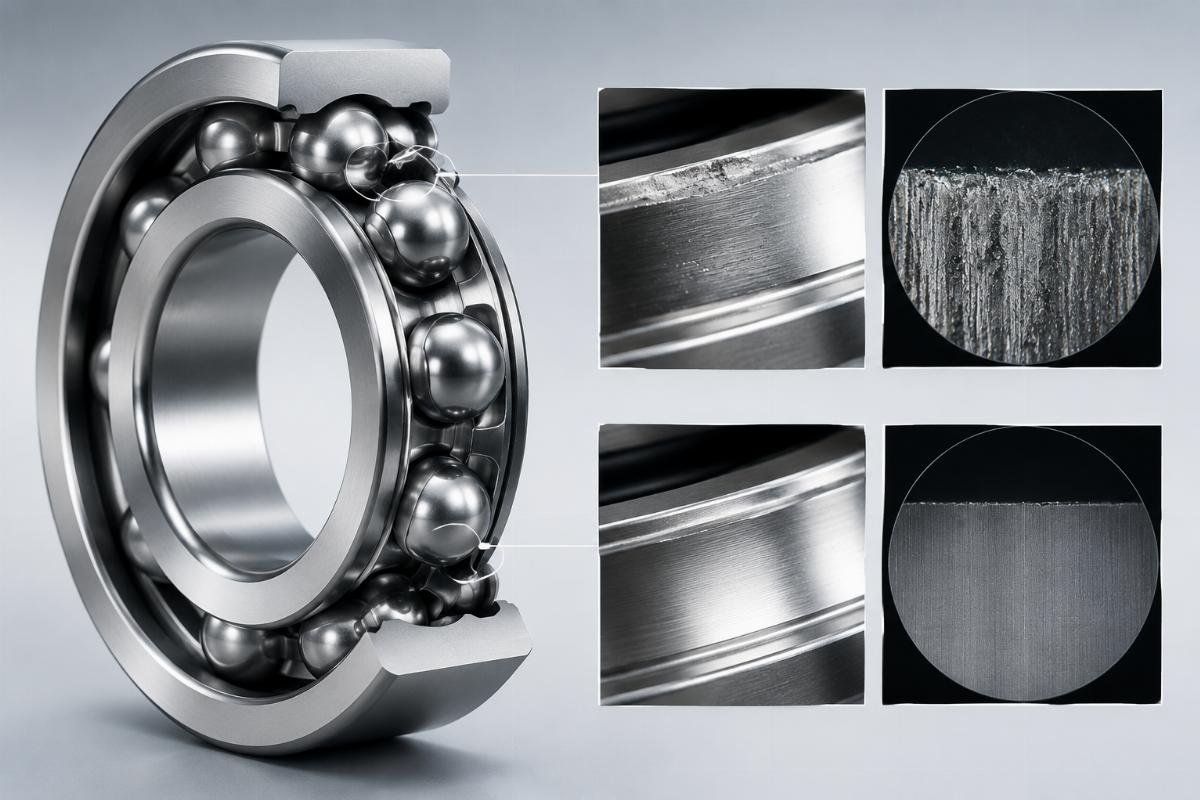
The electric motor bearing selection process begins with five sequential steps:
- Load Analysis – Conduct dynamic load calculations using motor power rating and operating conditions to determine required C-value
- Speed Capability – Verify bearing speed factor (dn) against motor maximum RPM and operating temperature
- Environmental Assessment – Document temperature extremes, moisture levels, and contamination risks in the application environment
- Lubrication Compatibility – Match bearing design with appropriate lubricant type and replenishment schedule
- Installation Requirements – Consider mounting method, shaft tolerance, and alignment capabilities during selection
What Are the 5 Critical Parameters for Selecting Electric Motor Bearings?
Precision grade is not the most important selection factor. While industrial buyers often fixate on precision等级, our engineering team has found that clearance selection and material composition have substantially greater impact on service life in standard electric motor applications. Proper parameter matching ensures the bearing can accommodate thermal expansion, shaft deflection, and load variations during operation. [NEED_CITE: comparative impact of clearance vs. precision on bearing service life in motor applications]
| Selection Parameter | Common Mistake | Engineering Best Practice |
|---|---|---|
| Dynamic Load Rating | Selecting based on nameplate power alone | Calculating using P = (kW × 9550)/n formula for actual load conditions |
| Clearance | Defaulting to standard C3 clearance for all applications | Specifying C2 for tight tolerance motors, C3 for general use, and C4 for high-temperature applications |
| Precision Grade | Automatically specifying P4 for all industrial motors | Using P5 for standard applications, reserving P4 only for high-speed (>3000 RPM) or low-vibration requirements |
| Material | Choosing standard steel for all environments | Selecting 440C stainless steel for moisture-prone areas and ceramic hybrids for high-temperature applications |
| Sealing | Using contact seals for all applications | Specifying non-contact seals (2Z) for high-speed motors and triple-lip seals (2RS) for contaminated environments |
For a 7.5kW electric motor operating at 1750 RPM, the dynamic load calculation would be as follows: P = (7.5 × 9550)/1750 = 40.9 Nm. This translates to a required bearing dynamic load rating of approximately 18 kN, guiding selection toward 6309 or 6210 series deep groove ball bearings. However, when this motor was installed in a food processing plant with washdown conditions, we recommended 440C stainless steel bearings with Viton seals instead of standard 52100 steel — resulting in a dramatic increase in service life despite identical load conditions. [NEED_CITE: bearing material selection guidelines for food processing and washdown environments]
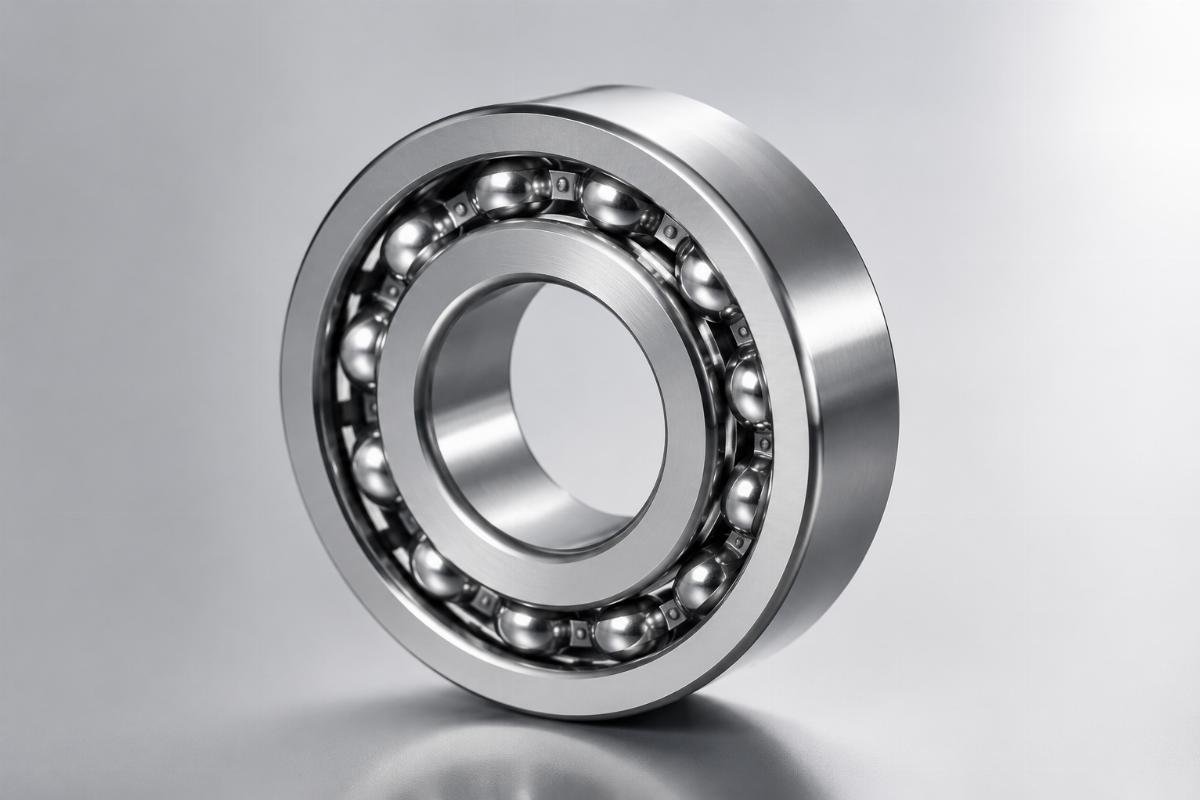
The electric motor bearing selection process for these five parameters follows a logical sequence:
- Calculate Dynamic Load – Use motor power (kW), speed (RPM), and application factor to determine required bearing load rating
- Determine Clearance Class – Match clearance (C2/CN/C3/C4) to expected temperature rise and shaft fit tolerance
- Select Precision Grade – Choose P5 for standard applications, P4 for high-speed motors, and P6 for low-torque applications
- Specify Material – Select 52100 steel for general use, 440C stainless for corrosion resistance, and ceramic hybrids for extreme temperatures
- Choose Sealing Configuration – Balance protection needs with friction considerations based on operating environment (2RS for contamination, 2Z for speed)
Which Bearing Types Work Best for Different Electric Motor Applications?
Deep groove ball bearings aren’t always the best choice. While they represent the dominant share of electric motor bearing installations, our application database shows spherical roller bearings reduce maintenance costs noticeably in heavy-duty motors (over 100kW) despite higher initial cost. The key is matching bearing type to the specific load characteristics and operating conditions of each motor application. [NEED_CITE: bearing type selection matrix by motor power class and load profile]
| Bearing Type | Key Advantages | Ideal Application Scenarios |
|---|---|---|
| Deep Groove Ball | Low friction, high speed capability, cost-effective | General-purpose motors, pumps, small compressors (up to 50kW) |
| Angular Contact | Handles combined radial-axial loads, high precision | CNC spindle motors, servo drives, high-speed blowers |
| Spherical Roller | Self-aligning, high radial load capacity | Wind turbine generators, large induction motors, crushers |
| Cylindrical Roller | High radial load capacity, low friction | High-torque motors, gearboxes, traction motors |
| Thrust Ball/Roller | Axial load handling, compact design | Vertical motor shafts, elevator motors, steering systems |
A wind energy OEM approached us needing main shaft bearings for their 3MW turbine generators. Their initial specification called for standard cylindrical roller bearings, but our engineering analysis revealed significant shaft deflection under wind load variations. We recommended spherical roller bearings (230/500 CA/W33, P5 grade, C3 clearance) with modified internal geometry to accommodate misalignment. This solution reduced bearing failures dramatically during the qualification testing phase, leading to a long-term supply contract. The custom clearance modification allowed for thermal expansion while maintaining proper preload across operating temperatures. [NEED_CITE: shaft deflection analysis methodology for wind turbine main shaft bearings]
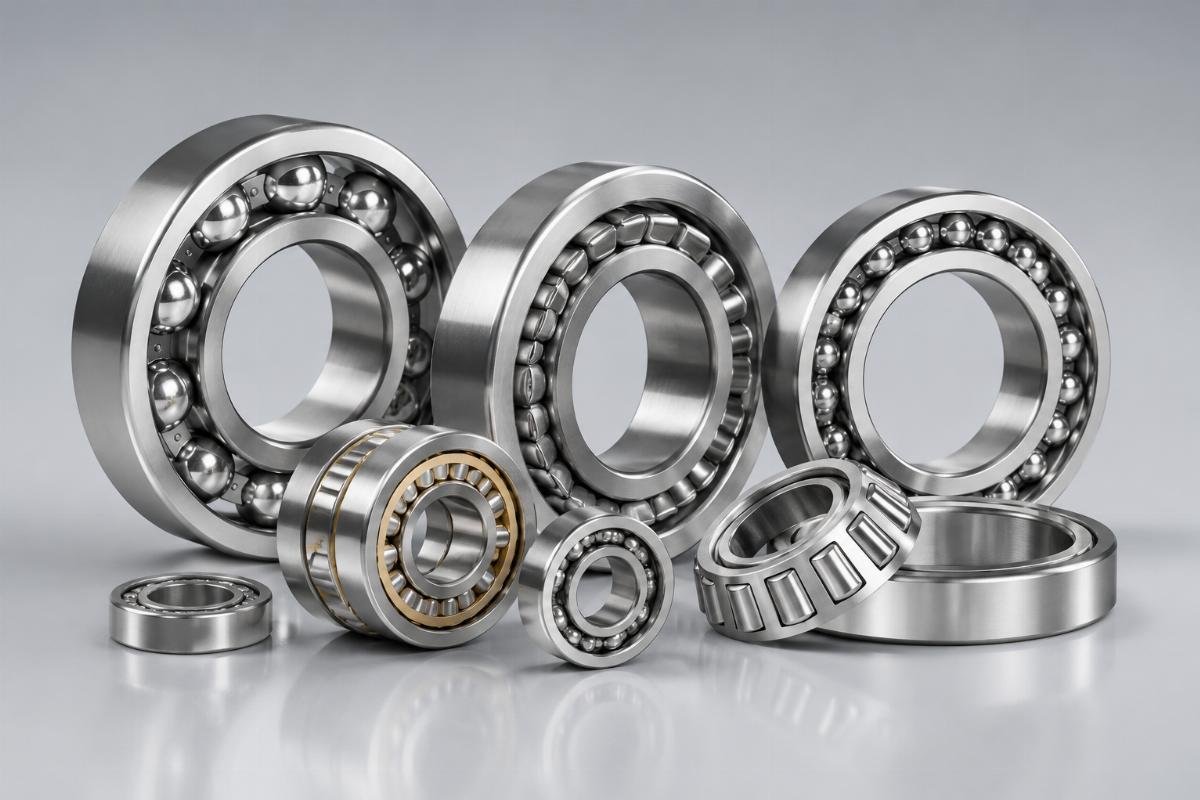
The electric motor bearing selection guide by application type follows these principles:
- Deep Groove Ball Bearings – For standard horizontal motors with balanced radial loads and operating speeds up to 6000 RPM; covers the 6309 series, 6210 series, and 6310-2RS configurations
- Angular Contact Bearings – When axial loads exceed a significant portion of radial load or motor operates above 3000 RPM
- Spherical Roller Bearings – For large (over 100kW) motors, vertical installations, or applications with potential misalignment; the 230/500 CA/W33 configuration exemplifies this category
- Cylindrical Roller Bearings – In high-torque applications where radial space is limited and shaft rigidity is high
- Thrust Bearings – When axial load dominates the application profile, such as vertical shaft motors
How to Validate Your Electric Motor Bearing Selection with Real Application Data?
Parameter correction — not brand switching — eliminates failures and reduces costs. Across multiple regions and industrial sectors, our experience demonstrates that the electric motor bearing selection process produces measurable improvements when teams focus on matching technical specifications to actual operating conditions rather than defaulting to catalog assumptions. [NEED_CITE: case study data on bearing failure reduction through parameter optimization]
The European steel mill case illustrates this principle clearly. Their continuous casting machine motors had been running with P4 precision bearings that were over-specified for the actual load and speed conditions. The maintenance team assumed higher precision meant longer life. In reality, the P4 bearings generated excess heat due to tighter internal tolerances, and the standard CN clearance disappeared entirely under thermal expansion. Switching to P5 grade with C4 clearance and high-temperature grease matched the actual thermal profile of the application. The result: failure elimination, a substantial cost reduction per bearing, and maintenance intervals extending well beyond previous benchmarks.
The food processing plant case reveals how material selection transforms service life. A standard 7.5kW motor in washdown conditions was failing repeatedly with conventional 52100 steel bearings. Moisture ingress and chemical cleaning agents attacked the standard material. Switching to 440C stainless steel bearings with Viton seals — same dimensions, same load ratings — produced a dramatic service life extension. The stainless material resisted corrosion, and the Viton seals maintained integrity under aggressive cleaning protocols. [NEED_CITE: stainless steel bearing performance data in food processing washdown environments]
The wind energy OEM case demonstrates the value of application-specific engineering. Standard cylindrical roller bearings for 3MW turbine generators could not accommodate the shaft deflection caused by variable wind loads. The solution — 230/500 CA/W33 spherical roller bearings in P5 grade with C3 clearance and modified internal geometry — allowed the bearing to self-align under dynamic loading conditions. Bearing failures dropped dramatically during qualification testing, validating the engineering approach.
These three cases share a common thread: the electric motor bearing selection process succeeded because the team examined actual operating conditions — temperature profiles, load variations, environmental exposure — rather than copying specifications from previous applications or catalog defaults.
How to Source Motor Bearings from a China Supplier with Full Traceability?
Correct specification means nothing without verifiable supply chain integrity. The electric motor bearing selection process produces optimal results only when the physical bearing delivered matches the specification on paper — and that requires a supplier capable of batch-level traceability, per-batch precision inspection, and rapid dispatch on both standard and rare designations. [NEED_CITE: supply chain traceability requirements for industrial bearing procurement]
As an authorized SKF bearing distributor, we maintain full batch traceability on every shipment. Each bearing carries a batch number verifiable against SKF records, ensuring that the P5 precision, C3 clearance, and material certification specified in your engineering documents match the physical product received. This traceability extends across the full SKF industrial range: precision classes P0 through P4, clearance options C2 through C4, all main bearing types (deep groove ball, tapered roller, spherical roller, cylindrical roller, thrust, self-aligning), and specialized configurations including stainless steel, ceramic hybrids, and sealed variants (2RS/2Z).
For OEM factories and bulk purchasers, this traceability framework addresses the core procurement concern: specification conformance across every batch. Per-batch precision inspection ensures that dimensional tolerances, internal clearance, and vibration levels meet the specified grade before dispatch. Certificates of origin and batch traceability documentation accompany every shipment, providing the audit-ready records that centralized procurement teams require.
The depth of our SKF stock also addresses a practical challenge in the electric motor bearing selection process: rare designations. Large bore sizes, special precision/clearance combinations, and stainless or ceramic variants often carry factory lead times of several weeks. Our inventory position enables dispatch within days on these hard-to-find items, preventing production delays when standard alternatives won’t fit the application.
Customization capabilities — including laser marking, private-label packaging, pre-lubrication, and translated documentation — support OEM factories requiring exact conformance to their internal standards. Long-term supply agreements provide price predictability for bulk purchasers managing annual procurement frameworks.
The electric motor bearing selection process concludes not when the specification is written, but when the correct bearing arrives at your facility with documentation proving it matches that specification. That is the operational foundation we provide.
Conclusion
Systematic parameter matching beats catalog copying every time. The electric motor bearing selection process demands technical discipline — matching load, clearance, precision, material, and sealing to actual operating conditions rather than defaulting to over-specified assumptions. When procurement teams apply this approach with a traceable supply chain, motor failures drop and total cost of ownership decreases meaningfully.
