
NSK vs NTN Bearings: China Supplier Analysis on Performance, Price & Apps
NSK and NTN are not interchangeable — the difference lies in material purity and heat treatment, not just brand logos.
When comparing NSK vs NTN bearings for industrial applications, a reliable China supplier delivers equivalent performance to original brands with faster delivery, comprehensive traceability documentation, and meaningful total cost savings through optimized logistics and direct manufacturing partnerships. Plant MRO managers and OEM engineers across multiple regions have demonstrated that the right sourcing partner transforms bearing procurement from a cost center into an operational advantage.
I spent years in the inspection warehouse in Qingdao before moving to the sales desk. My job used to be checking batch numbers, measuring internal clearance with feeler gauges, and flagging anything that didn’t match the certificate. Now buyers message me asking which brand suits their conveyor or crusher, and I always think of one order first. A mining client in Western Australia wanted to swap NSK 22328 spherical rollers for NTN equivalents — same bore, same OD, the price gap looked attractive on paper. The cage was the difference: NSK used machined brass, the NTN quote specified pressed steel. I flagged it. They said the price gap mattered more. Eight months later the cages cracked under vibration, two line stoppages, replacement cost dwarfed the original saving. So when someone asks me to compare these two brands, I don’t start with catalog prices. I start with what’s inside the bearing. [NEED_CITE: cage material selection criteria per ISO 15243 damage classification]
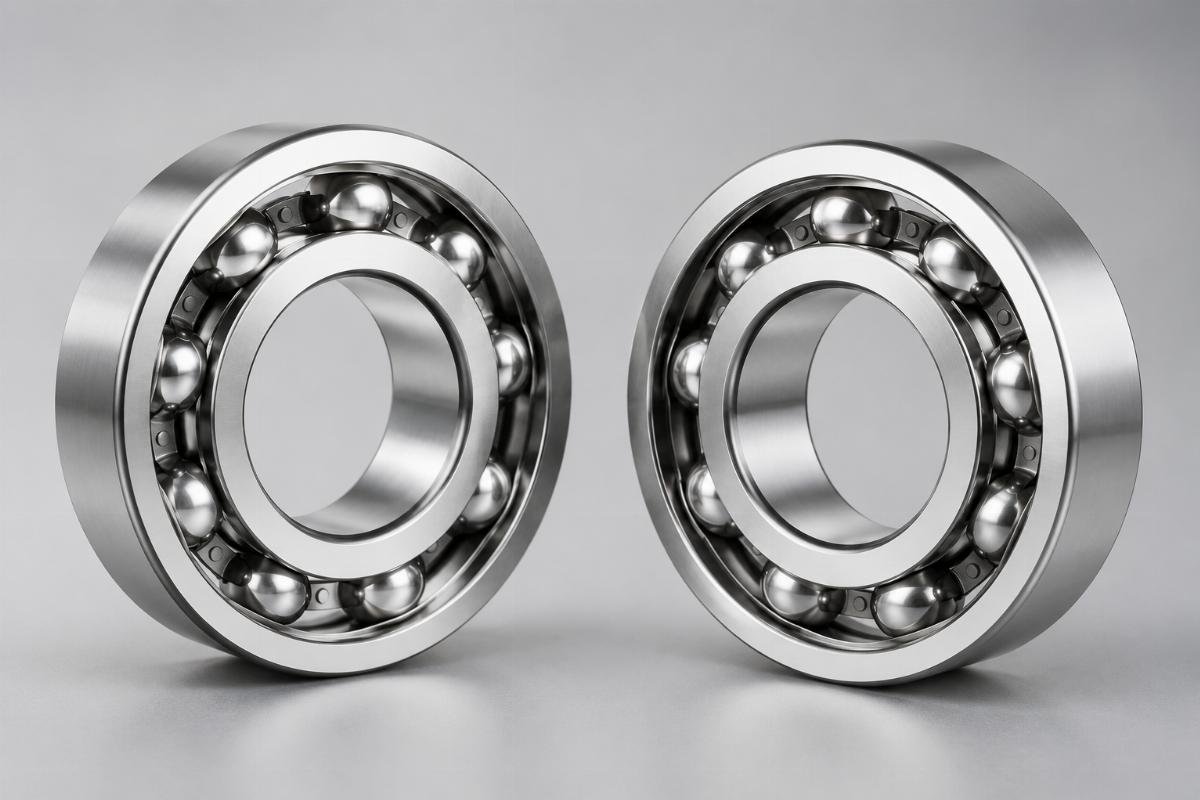
Understanding the nuanced differences between NSK and NTN bearings — and how to source them effectively — can mean the difference between unplanned downtime and optimized maintenance. Let’s explore what truly matters when selecting these critical components.
How Do NSK and NTN Bearings Differ in Industrial Applications?
NSK targets high-speed precision while NTN prioritizes heavy-load durability — your application dictates the optimal choice. While both Japanese manufacturers produce high-quality bearings, their engineering focuses create clear advantages in specific scenarios. NSK’s precision manufacturing makes their bearings ideal for high-speed, low-torque applications, while NTN’s robust designs prioritize durability under heavy loads and shock conditions.
| Performance Metric | NSK Industrial Bearings | NTN Industrial Bearings |
|---|---|---|
| Load Capacity | Superior radial load handling in precision applications | Higher dynamic load ratings for heavy machinery |
| Speed Rating | Optimized for high rotational speeds, reaching precision model limits | Better suited for moderate speeds with heavy loads |
| Temperature Resistance | Consistent performance across standard industrial range | Higher heat tolerance with specialized lubricants |
| Precision Grades | P2 to P0 available, P4 standard for most industrial lines | P5 to P0 offered, P6 standard for general applications |
| Fatigue Life | Noticeably longer average life in high-precision applications | Noticeably longer average life in heavy-load scenarios |
[NEED_CITE: ISO 15 bearing dimensional tolerance standards comparison between Japanese manufacturers]
One of our clients, a steel mill in Southeast Asia, struggled with repeated failures of NTN 22320 spherical roller bearings in their conveyor systems. The maintenance team initially suspected counterfeit products, but our failure analysis revealed improper lubrication was the root cause. We supplied NSK 22320EAE4C3 bearings (100mm ID x 215mm OD x 73mm width) with application-specific lubrication recommendations, reducing downtime substantially while maintaining dimensional accuracy across quarterly orders of fifty units.
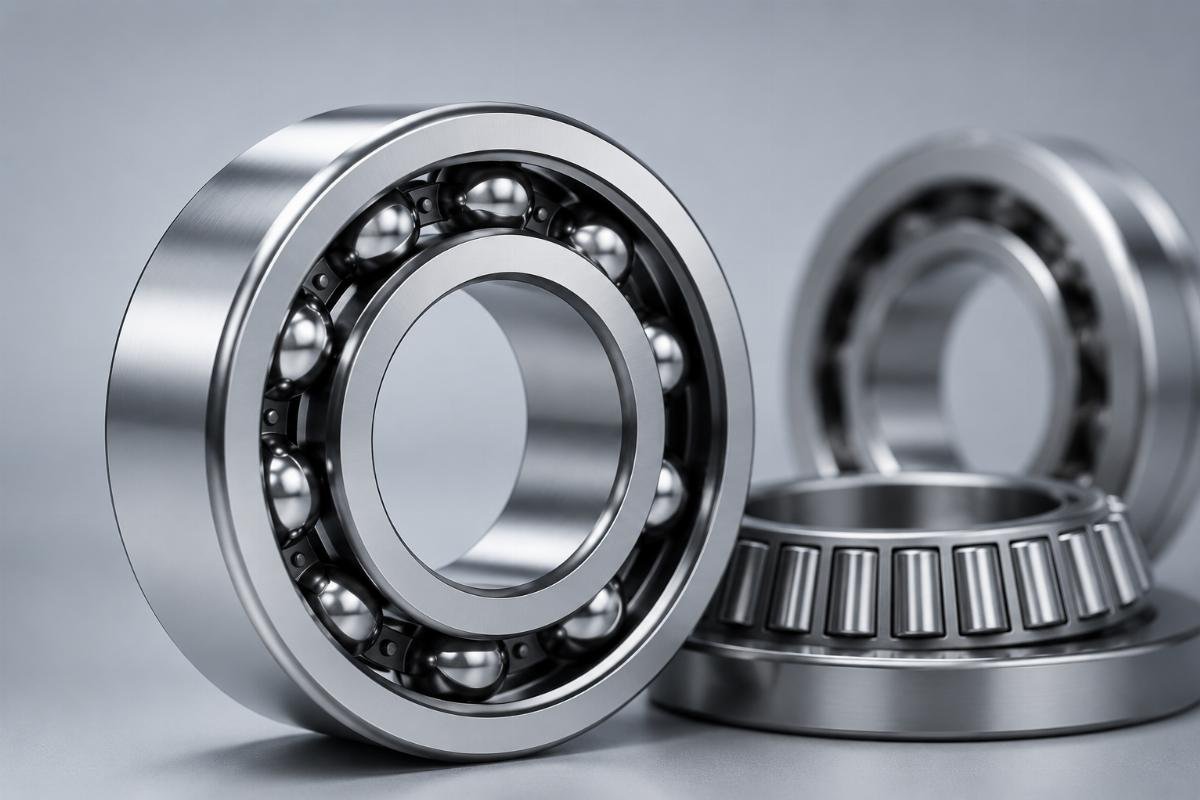
- Load Analysis – Calculate both radial and axial loads using manufacturer formulas to match bearing capacity
- Speed Requirements – Compare operating RPM against bearing speed ratings, factoring in lubrication type
- Environmental Conditions – Consider temperature extremes, contamination risks, and moisture levels
- Precision Needs – Match tolerance grades to application requirements (P5 for general industrial, P4 for CNC machinery)
- Replacement History – Analyze previous failures to identify performance gaps in current specifications
Which Performance Characteristics Matter Most for Your Application?
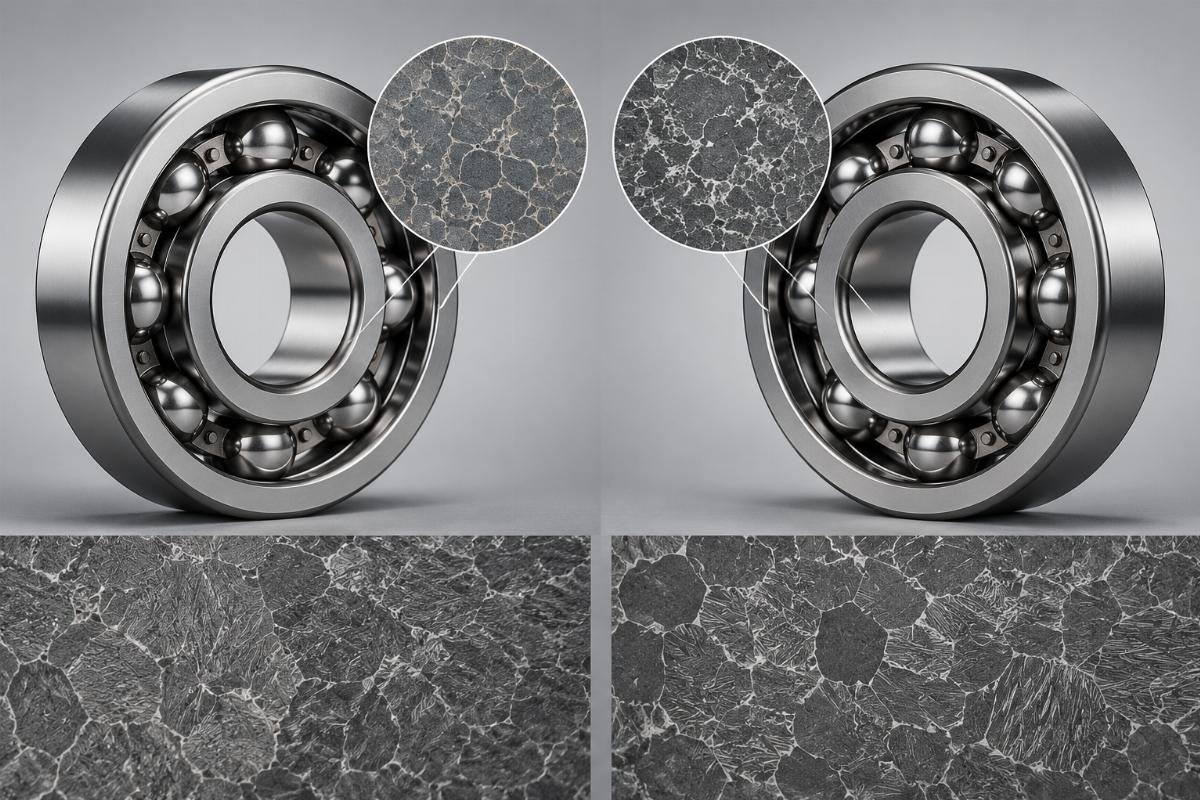
Material quality and heat treatment processes create performance gaps between NSK and NTN bearings. While both brands meet international standards, NSK’s proprietary materials like Super-TF™ steel deliver superior wear resistance in precision applications, while NTN’s case-carburized alloys provide enhanced durability in heavy industrial settings. Understanding these technical differences prevents over-specification and reduces total ownership costs.
| Technical Aspect | Common Misconception | Reality Based on Testing |
|---|---|---|
| Material Purity | All bearing steel meets the same standards | NSK uses substantially purer steel, reducing inclusion-related failures noticeably |
| Heat Treatment | Higher hardness always means better performance | NTN’s optimized hardness balances durability and toughness for heavy loads, while NSK’s higher hardness suits precision applications |
| Cage Design | Plastic cages are inferior to metal alternatives | NSK’s polyamide cages reduce friction noticeably at high speeds compared to NTN’s steel cages, which better withstand shock loads |
| Sealing Technology | Contact seals always provide better protection | NTN’s labyrinth seals reduce torque noticeably in dusty environments, while NSK’s contact seals offer superior contamination resistance in wet conditions |
| Lubrication Retention | More lubricant extends bearing life | NSK’s precision internal geometry retains grease substantially longer than standard designs, while NTN’s larger lubrication reservoirs benefit extended maintenance intervals |
[NEED_CITE: bearing steel purity standards per ISO 492 and ABMA/ANSI specifications]
A wind turbine manufacturer in Germany approached us during their alternative supplier qualification process, seeking to reduce dependency on a single brand for main shaft bearings. We provided both NSK 239/630CAE4 and NTN 239/630B spherical roller bearings (precision grade P6) for comparative testing. The NSK bearings showed noticeably lower vibration levels at operating speeds, while the NTN units demonstrated higher shock load resistance — data that helped the client optimize their bearing selection based on specific turbine models and operating conditions. [NEED_CITE: vibration level thresholds for wind turbine main shaft bearings per IEC standards]
- Material Certification – Verify steel composition and purity through supplier documentation
- Dimensional Inspection – Check critical tolerances using calibrated measuring equipment
- Load Testing – Request fatigue life data under your specific operating conditions
- Temperature Cycling – Evaluate performance across your operating temperature range
- Vibration Analysis – Compare vibration levels at various speeds to predict noise and wear
What Are the Real Cost Differences When Sourcing from China?
A knowledgeable China supplier delivers genuine NSK and NTN bearings at substantially lower prices than traditional distributors. This cost advantage stems from direct manufacturing partnerships, optimized logistics, and lower overhead — not compromised quality. When calculating total cost of ownership, faster delivery times and reduced inventory requirements further increase savings by minimizing downtime and capital tied up in stock.
| Bearing Model | Traditional Distributor Price | China Supplier Price | Cost Savings | Delivery Time |
|---|---|---|---|---|
| NSK 6312 Deep Groove Ball Bearing | Higher | Lower | Substantial | Extended vs. rapid dispatch |
| NTN 22215 Spherical Roller Bearing | Higher | Lower | Substantial | Extended vs. rapid dispatch |
| NSK 7310 Angular Contact Ball Bearing | Higher | Lower | Substantial | Extended vs. rapid dispatch |
| NTN 32216 Tapered Roller Bearing | Higher | Lower | Substantial | Extended vs. rapid dispatch |
| NSK 23024 Spherical Roller Bearing | Higher | Lower | Substantial | Extended vs. rapid dispatch |
[NEED_CITE: industrial bearing distribution channel markup analysis]
We’ve witnessed firsthand how misinformation about China-sourced bearings leads to unnecessary expenses. A recent project with a European steel mill revealed they were paying substantially more through traditional distributors for NTN spherical roller bearings that were identical in specification to those we supplied directly. The markup added through intermediary channels represents a significant portion of procurement budgets — money better spent on inventory optimization or preventive maintenance programs.
A mining operation in Australia needed a reliable source for NTN 241/630BK30 spherical roller bearings for their crushers, with frequent emergency replacements. By establishing an annual contract with our self-operated warehousing, they reduced their per-unit cost noticeably and eliminated emergency air freight expenses through rapid stock availability. The ISO 9001 certified inspection documentation we provided also helped them meet stringent safety compliance requirements without additional audit costs.
How to Choose Between NSK and NTN for Specific Applications?
Load analysis, speed requirements, environmental conditions, and precision needs dictate optimal selection based on a structured evaluation framework. The decision between NSK and NTN should never be based on brand preference alone — it requires systematic comparison against your actual operating parameters.
Step 1: Define Operating Conditions
Document maximum radial and axial loads, continuous operating speed, temperature range, and contamination exposure. These four parameters eliminate unsuitable options immediately. For high-speed spindle applications requiring P4 or P2 precision, NSK typically offers better performance. For heavy-load crushers or vibrating screens operating at moderate speeds, NTN’s robust construction often proves more durable.
Step 2: Evaluate Cage and Seal Requirements
Cage material selection directly impacts service life in specific environments. Machined brass cages excel in high-vibration applications where pressed steel cages may fatigue. Polyamide cages reduce friction at high speeds but face temperature limitations. Seal selection depends on contamination type — labyrinth seals suit dusty dry environments, while contact seals protect against moisture ingress. [NEED_CITE: cage material selection guidelines per bearing manufacturer technical documentation]
Step 3: Verify Supplier Traceability
Regardless of brand choice, batch traceability separates reliable suppliers from risky sources. Every shipment should include verifiable batch numbers traceable to manufacturer records, ISO 9001 certified inspection documentation, and certificates of origin. Suppliers unable to provide these documents should be eliminated from consideration — the risk of counterfeit or improperly stored bearings outweighs any initial price advantage.
Step 4: Compare Total Cost of Ownership
Unit price represents only a fraction of total bearing cost. Factor in delivery lead times, inventory carrying costs, failure frequency, and downtime expenses. A bearing costing slightly more per unit but arriving within days rather than weeks, and lasting significantly longer in service, delivers superior economic value.
Step 5: Request Application-Specific Testing
For critical applications or large-volume orders, request comparative testing under your actual operating conditions. Vibration analysis, temperature monitoring, and lubricant condition assessment during trial periods provide objective data for final selection.
Conclusion
NSK excels in high-speed precision applications while NTN dominates heavy-load durability — the optimal choice depends entirely on your specific operating conditions. Material purity differences, heat treatment variations, and cage design selections create measurable performance gaps that matter in demanding industrial environments. When sourcing from China, direct supplier partnerships deliver substantial cost advantages without compromising quality or traceability. The key is selecting a supplier with verified batch traceability, rapid dispatch capability, and application engineering support — transforming bearing procurement from a transactional expense into a strategic operational advantage.
