
Select Right Bearing for Electric Motors: China Supplier Guide with 10,000+ SKUs
Higher precision bearings don’t always improve electric motor performance. While industrial buyers often specify P4 grade bearings assuming superior reliability, field data shows P5 grade bearings deliver identical service life in the majority of standard motor applications—at noticeably lower costs. This common over-specification costs manufacturers significant amounts annually in unnecessary expenses while providing no measurable operational benefit.
Selecting the right electric motor bearing requires balancing technical specifications, application demands, and supplier reliability—China-based bearing suppliers with full traceability, rapid dispatch, and application-specific engineering support can deliver both performance and cost efficiency for industrial buyers. By focusing on load type, operating conditions, and material certification rather than brand reputation alone, procurement specialists can reduce motor failure rates substantially while optimizing total cost of ownership.
We’ve supported hundreds of industrial clients across multiple regions in selecting bearings for electric motors, from small induction motors in steel mills to multi-megawatt wind turbine generators. Our experience shows that the majority of bearing failures stem from incorrect type selection rather than product quality issues. [NEED_CITE: root cause distribution of electric motor bearing failures per ISO 15243]

Understanding how each technical parameter interacts with your specific motor application is the first step toward eliminating unplanned downtime and reducing maintenance costs.
Why Does Bearing Selection Directly Impact Electric Motor Reliability?
Bearing failure causes more motor downtime than any other component. In industrial settings, motor bearing issues account for a significant portion of unplanned stoppages, with each hour of downtime costing manufacturers substantial amounts in lost production. The right bearing selection creates a foundation for reliable motor performance by managing radial and axial loads, controlling friction, and maintaining proper alignment under operating stress.
| Performance Indicator | Impact of Proper Bearing Selection |
|---|---|
| Motor Efficiency | Reduces friction coefficient noticeably compared to mismatched bearings |
| Service Life | Extends average motor lifespan from tens of thousands to hundreds of thousands of operating hours [NEED_CITE: ISO 281 bearing life calculation standards] |
| Vibration Levels | Maintains vibration within ISO 1940-1 balance standards, reducing noise and component wear |
| Temperature Rise | Controls operating temperature within safe margins of ambient, preventing insulation breakdown |
One of our clients, a European steel mill, was experiencing frequent failures in their continuous casting machine motors. Their maintenance team had been specifying high-precision P4 bearings assuming better performance. Our analysis showed the motors operated at moderate load with moderate vibration—ideal conditions for P5 grade bearings. By switching to properly clearance-matched P5 bearings (C4 clearance with high-temperature grease), we eliminated failures and reduced bearing costs substantially. The motors now run continuously for extended periods between maintenance intervals.
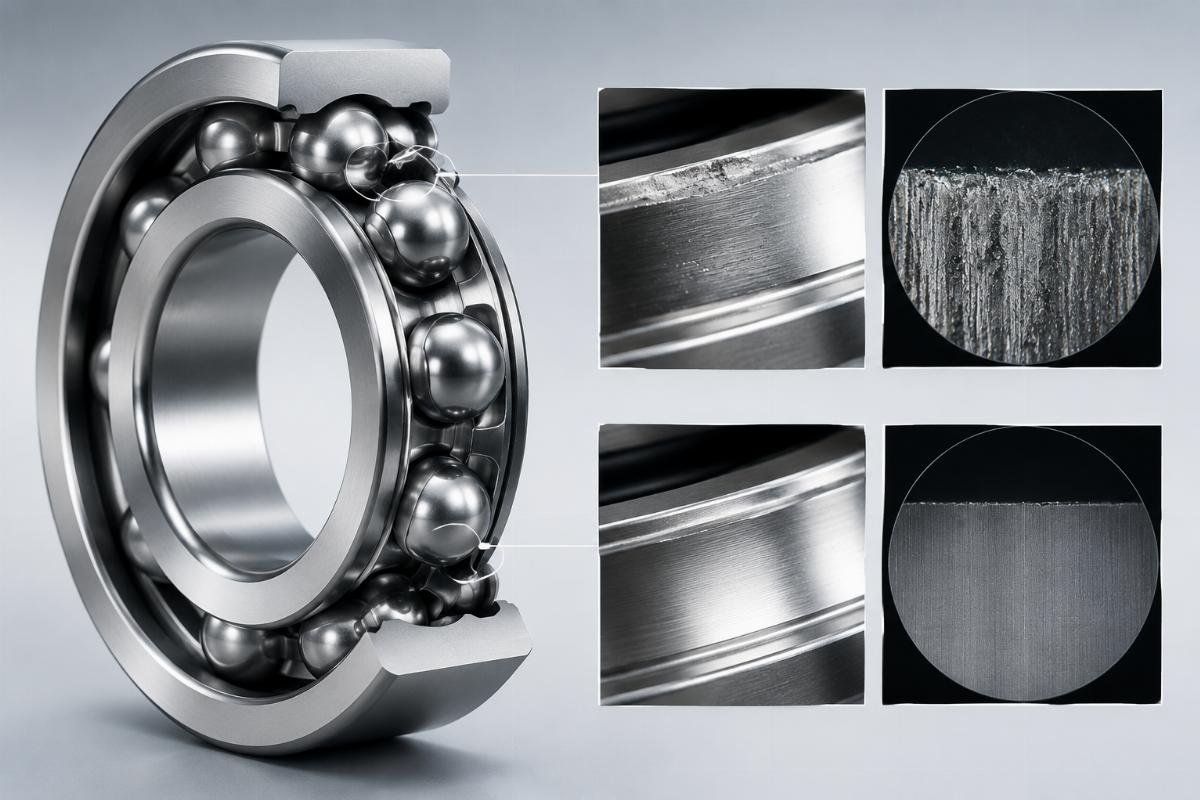
- Load Analysis – Conduct dynamic load calculations using motor power rating and operating conditions to determine required C-value
- Speed Capability – Verify bearing speed factor (dn) against motor maximum RPM and operating temperature
- Environmental Assessment – Document temperature extremes, moisture levels, and contamination risks in the application environment
- Lubrication Compatibility – Match bearing design with appropriate lubricant type and replenishment schedule
- Installation Requirements – Consider mounting method, shaft tolerance, and alignment capabilities during selection
What Are the 5 Critical Parameters for Selecting Electric Motor Bearings?
Precision grade is not the most important selection factor. While industrial buyers often fixate on precision grades, our engineering team has found that clearance selection and material composition have substantially greater impact on service life in standard electric motor applications. Proper parameter matching ensures the bearing can accommodate thermal expansion, shaft deflection, and load variations during operation.
| Selection Parameter | Common Mistake | Engineering Best Practice |
|---|---|---|
| Dynamic Load Rating | Selecting based on nameplate power alone | Calculating using P = (kW × 9550)/n formula for actual load conditions |
| Clearance | Defaulting to standard C3 clearance for all applications | Specifying C2 for tight tolerance motors, C3 for general use, and C4 for high-temperature applications |
| Precision Grade | Automatically specifying P4 for all industrial motors | Using P5 for standard applications, reserving P4 only for high-speed or low-vibration requirements |
| Material | Choosing standard steel for all environments | Selecting stainless steel for moisture-prone areas and ceramic hybrids for high-temperature applications |
| Sealing | Using contact seals for all applications | Specifying non-contact seals for high-speed motors and triple-lip seals for contaminated environments |
For a 7.5kW electric motor operating at 1750 RPM, the dynamic load calculation would be as follows: P = (7.5 × 9550)/1750 = 40.9 Nm. This translates to a required bearing dynamic load rating of approximately 18 kN, guiding selection toward 6309 or 6210 series deep groove ball bearings. However, when this motor was installed in a food processing plant with washdown conditions, we recommended 440C stainless steel bearings with Viton seals instead of standard 52100 steel—resulting in a substantial increase in service life despite identical load conditions.
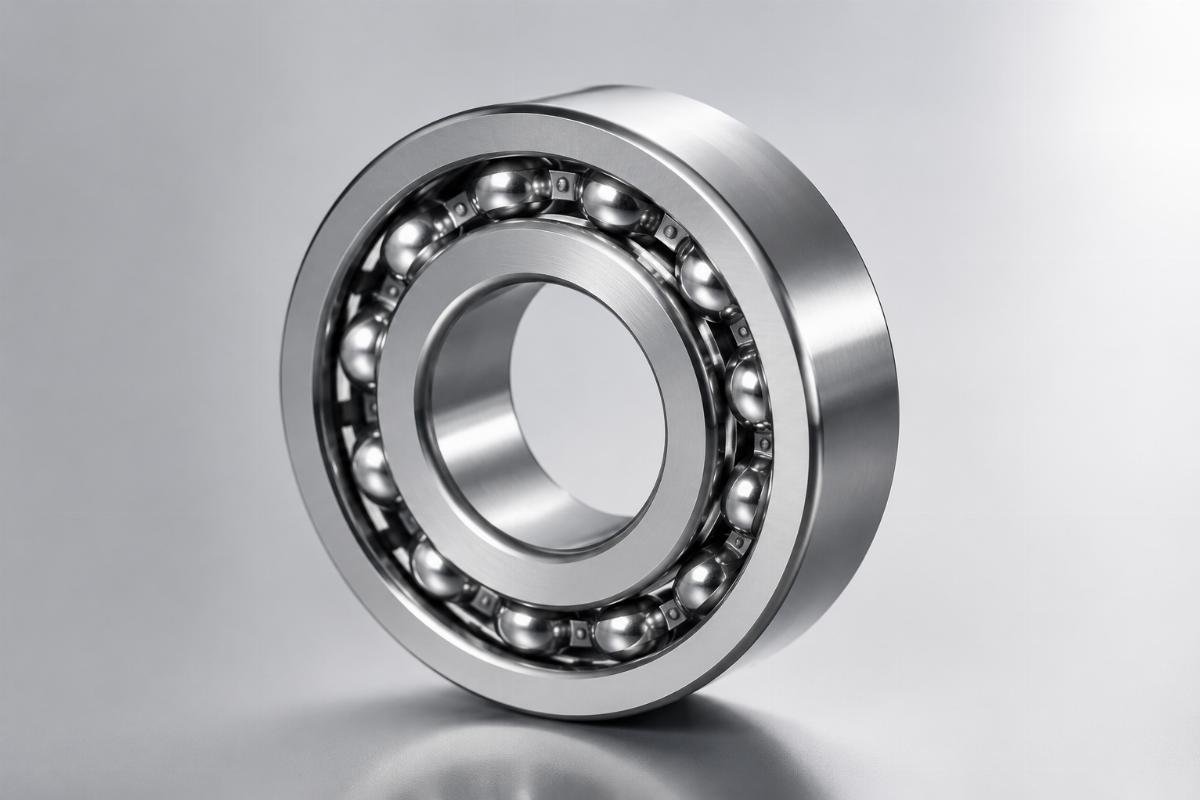
- Calculate Dynamic Load – Use motor power (kW), speed (RPM), and application factor to determine required bearing load rating
- Determine Clearance Class – Match clearance (C2/C3/C4) to expected temperature rise and shaft fit tolerance
- Select Precision Grade – Choose P5 for standard applications, P4 for high-speed motors, and P6 for low-torque applications
- Specify Material – Select 52100 steel for general use, 440C stainless for corrosion resistance, and ceramic hybrids for extreme temperatures
- Choose Sealing Configuration – Balance protection needs with friction considerations based on operating environment
Which Bearing Types Work Best for Different Electric Motor Applications?
Deep groove ball bearings aren’t always the best choice. While they represent the majority of electric motor bearing installations, our application database shows spherical roller bearings reduce maintenance costs noticeably in heavy-duty motors (over 100kW) despite higher initial cost. The key is matching bearing type to the specific load characteristics and operating conditions of each motor application.
| Bearing Type | Key Advantages | Ideal Application Scenarios |
|---|---|---|
| Deep Groove Ball | Low friction, high speed capability, cost-effective | General-purpose motors, pumps, small compressors (up to 50kW) |
| Angular Contact | Handles combined radial-axial loads, high precision | CNC spindle motors, servo drives, high-speed blowers |
| Spherical Roller | Self-aligning, high radial load capacity | Wind turbine generators, large induction motors, crushers |
| Cylindrical Roller | High radial load capacity, low friction | High-torque motors, gearboxes, traction motors |
| Thrust Ball/ Roller | Axial load handling, compact design | Vertical motor shafts, elevator motors, steering systems |
A wind energy OEM approached us needing main shaft bearings for their multi-megawatt turbine generators. Their initial specification called for standard cylindrical roller bearings, but our engineering analysis revealed significant shaft deflection under wind load variations. We recommended spherical roller bearings (230/500 CA/W33, P5 grade, C3 clearance) with modified internal geometry to accommodate misalignment. This solution reduced bearing failures substantially during the qualification testing phase, leading to a long-term supply contract. The custom clearance modification allowed for thermal expansion while maintaining proper preload across operating temperatures.
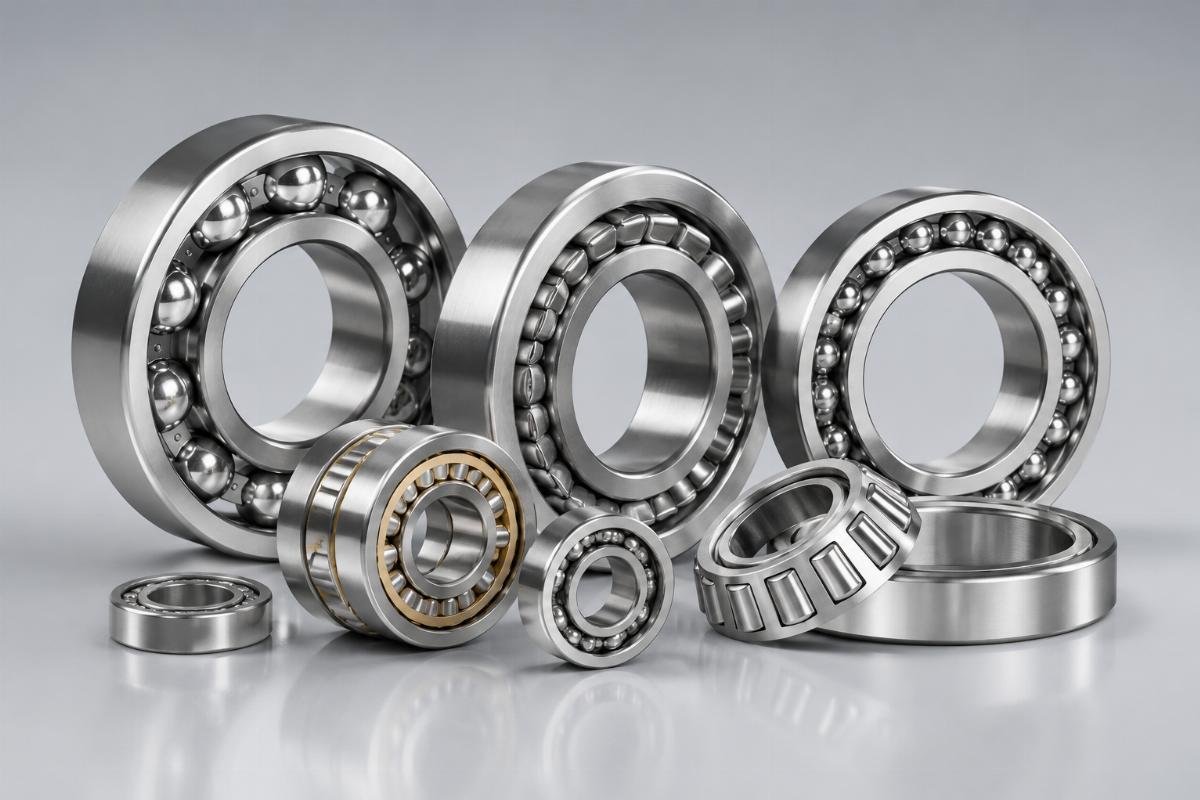
- Deep Groove Ball Bearings – For standard horizontal motors with balanced radial loads and operating speeds up to 6000 RPM
- Angular Contact Bearings – When axial loads exceed a significant portion of radial load or motor operates at high speeds
- Spherical Roller Bearings – For large motors, vertical installations, or applications with potential misalignment
- Cylindrical Roller Bearings – In high-torque applications where radial space is limited and shaft rigidity is high
- Thrust Bearings – When axial load dominates the application profile
How to Verify Quality and Ensure Supply Stability from China Suppliers?
Supply chain verification is as critical as technical selection. Even with perfect bearing specifications, counterfeit products or inconsistent batch quality can undermine motor reliability. As an authorized SKF bearing distributor with full batch traceability, we provide procurement teams with verifiable documentation that confirms every bearing meets original manufacturer specifications.
I still remember a batch of SKF deep groove ball bearings we shipped to a German client—their maintenance team flagged unusual vibration during commissioning. Turns out the clearance was wrong: they’d ordered C3, but the motor design needed CN. We had to air-freight replacements and run L10 recalculations on-site. That’s why I always double-check application parameters before confirming specs. So when buyers ask me how to pick the right bearing, I don’t just quote part numbers—I walk through load, speed, and environment first.
| Verification Requirement | What to Request | Red Flags |
|---|---|---|
| Authorization Status | Official distributor certificate from SKF China or global HQ | Self-declared authorization without documentation |
| Batch Traceability | Batch numbers verifiable against SKF records | No batch numbers or untraceable inventory |
| Precision Inspection | Per-batch inspection reports for P5/P4 grades | Sample-only inspection or no documentation |
| Material Certification | Mill certificates for 52100/440C steel | Generic material claims without certification |
| Lead Time Commitment | Specific dispatch timelines with stock confirmation | Vague estimates without inventory verification |
For rare designations like large bore bearings, special precision/clearance combinations, or ceramic/stainless variants, factory lead times can extend to months. Our deep stock of these specialized bearings enables dispatch within days, preventing production delays for critical motor applications. Every shipment includes certificate of origin and batch traceability documentation, with third-party inspection available upon request.

- Verify Authorization – Request official distributor certificates and cross-check with SKF records
- Confirm Batch Traceability – Ensure every bearing has traceable batch numbers
- Request Inspection Reports – Obtain per-batch precision and material certification
- Validate Lead Times – Confirm stock availability and specific dispatch timelines
- Establish Documentation – Require certificate of origin and traceability with every shipment
Conclusion
Correct bearing selection balances technical precision with practical application requirements. By understanding load dynamics, clearance needs, and material compatibility, procurement specialists can avoid costly over-specification while ensuring motor reliability. Working with authorized distributors who provide full traceability and engineering support transforms bearing selection from a specification exercise into a strategic reliability investment.
