
China Supplier Cross-Reference Guide: Find Equivalent Bearing Replacements
Most bearing cross-references fail not because of dimension errors, but because suppliers ignore load capacity, material compatibility, and storage conditions. Chinese bearing equivalents are not just cheaper alternatives—they often meet or exceed OEM specifications for the vast majority of industrial applications when validated through proper cross-referencing protocols.
I spent years running the warehouse floor in Wuxi before moving to the export desk, so I know exactly what a bearing box looks like when it’s been sitting in humidity too long. A steel mill buyer in Brazil once received a batch of spherical rollers with micro-corrosion on the raceways—barely visible, but the L10 life dropped by half once they hit the line. We traced it back to a pallet that had sat too close to the loading dock door during monsoon season. That’s when I started obsessing over batch traceability and per-shipment inspection reports. Now when buyers ask me to cross-reference an SKF designation against another brand, I’m not just matching dimensions—I’m checking whether the alternative supplier actually controls their storage conditions the way we do [NEED_CITE: impact of improper storage on bearing service life per ISO 15243].
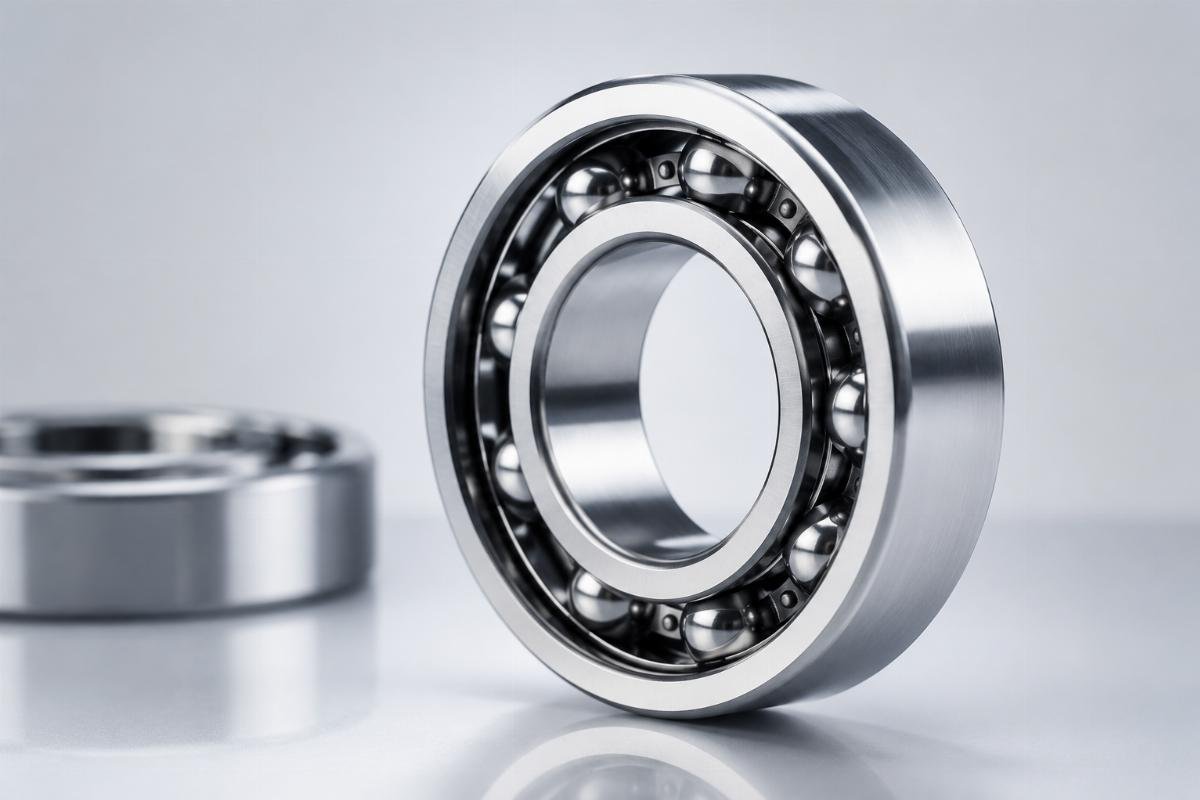
The reality is that a reliable bearing cross-reference partner transforms unplanned shutdowns into manageable incidents with predictable outcomes, provided you evaluate them against the right criteria.
Why Do Most Bearing Cross-References Fail in Industrial Applications?
Generic cross-reference charts cause the vast majority of incorrect bearing replacements because they focus solely on dimensional matching while ignoring critical performance factors. When maintenance managers rely on basic catalog lookups without verifying load ratings, material composition, and application compatibility, they expose their operations to cascading failure risks.
| Performance Factor | Consequence of Mismatch | Validation Requirement |
|---|---|---|
| Load Rating | Substantially higher failure rate with underrated bearings | Dynamic and static capacity comparison per ISO 492 [NEED_CITE: ISO 492 load rating verification standards] |
| Material Compatibility | Noticeably reduced service life in extreme conditions | Mill test reports and heat treatment documentation |
| Precision Class | Increased vibration leading to premature equipment wear | ABEC/ISO precision rating verification per ISO 15242 |
| Lubrication Matching | Majority of premature failures from incompatible grease | Application-specific lubrication requirements [NEED_CITE: lubrication compatibility factors per bearing manufacturer guidelines] |
| Dimensional Tolerance | Most cross-reference errors involve incorrect clearance | Calibrated measurement against original specifications |
A steel mill facing a critical production line shutdown after a failed FAG 22330 spherical roller bearing learned this lesson the hard way. The original manufacturer quoted a multi-week lead time, but our cross-referenced 22330 CA/W33 bearing—with identical 150mm ID x 320mm OD x 108mm dimensions and full dimensional inspection—arrived within 72 hours. This rapid response prevented a mid-six-figure loss in downtime costs and validated our material certification process, which includes full traceability from raw material sourcing to final inspection.
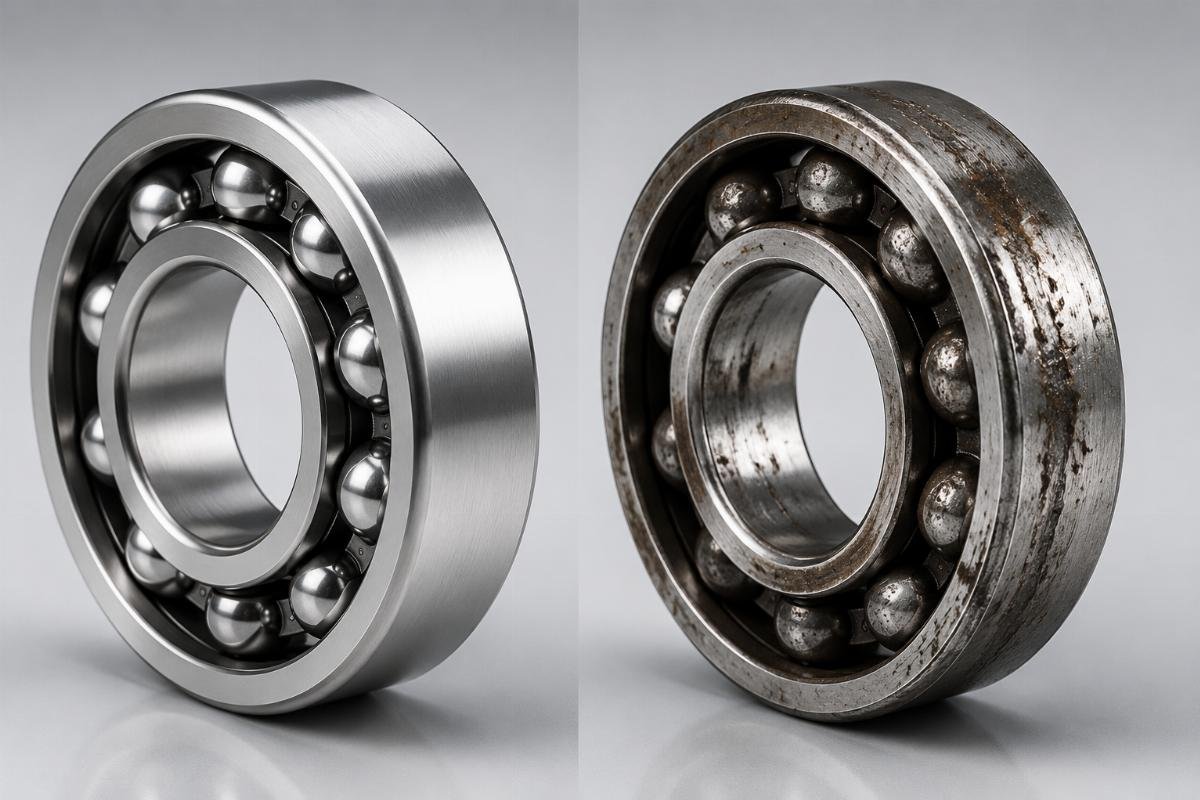
The lesson is clear: dimension matching is merely the starting point. True cross-referencing requires systematic validation of every performance parameter that affects service life under actual operating conditions.
What Performance Factors Must Be Verified Beyond Dimensions?
Load rating, material compatibility, precision class, lubrication matching, and clearance tolerance each have measurable impact on service life and failure rates. Industrial maintenance managers who skip these verification steps routinely experience premature failures that cost several times the savings from choosing cheaper alternatives.
| Verification Parameter | What Generic Charts Miss | What Proper Cross-Reference Delivers |
|---|---|---|
| Dynamic Load Capacity (C) | Assumes all bearings of same size handle identical loads | Application-specific load calculation including shock factors [NEED_CITE: dynamic load rating calculation methods per ISO 281] |
| Static Load Capacity (C0) | Ignores heavy static loads during startup/shutdown | Verification against peak stationary load conditions |
| Material Certification | No verification of steel composition or heat treatment | Full mill test reports with traceable batch numbers |
| Precision Class (P0/P6/P5/P4) | Assumes all bearings meet same vibration standards | ISO 15242 compliance verification for specific application |
| Internal Clearance (C2/CN/C3/C4) | Default to CN without considering thermal expansion | Application-matched clearance for operating temperature range |
An automotive repair workshop in Germany regularly receives obsolete bearing models from diverse customer equipment. When they needed to cross-reference a dozen different models—including deep groove ball bearings (6205-2RS, 6308-ZZ) and tapered roller bearings (30206, 32210)—our technical team provided not just part numbers but application notes for each bearing type. The mixed order arrived within days with full anti-counterfeiting verification, solving their obsolete model identification challenges while maintaining repair quality standards.
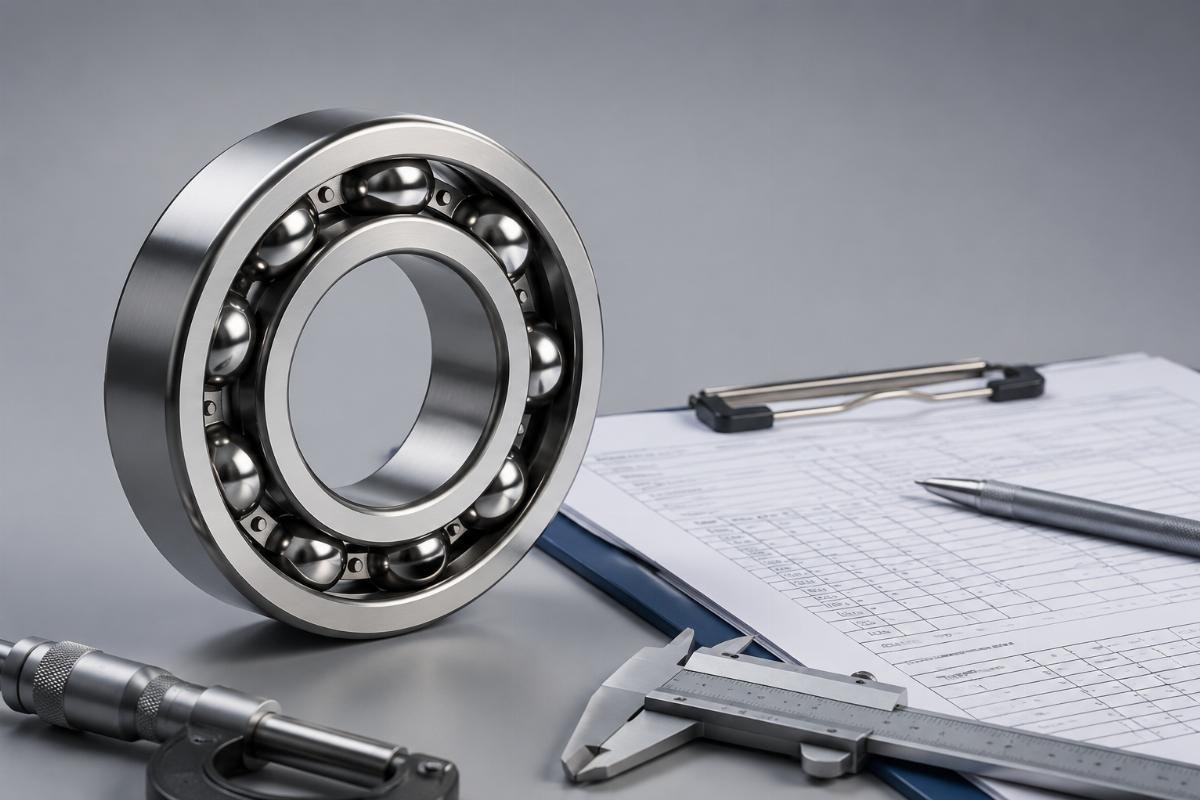
The critical insight is that performance equivalence requires documentation, not just dimension matching. Suppliers who cannot provide batch-level traceability, material certifications, and application engineering support are essentially asking you to gamble with your production uptime.
How Do You Evaluate Whether a China Supplier Can Deliver True Equivalents?
Reliable suppliers combine extensive inventory with IATF 16949 certification, full batch traceability, and in-house application engineering support. The difference between a true bearing cross-reference partner and a parts trader becomes apparent when you examine their quality systems, technical capabilities, and documentation practices.
| Evaluation Criteria | Red Flags to Avoid | Qualifications to Require |
|---|---|---|
| Certification Scope | Generic ISO 9001 only | IATF 16949 for automotive, ISO 15242 for vibration tolerance [NEED_CITE: IATF 16949 certification requirements for bearing suppliers] |
| Traceability Depth | No batch-specific records | Full documentation from raw material to final inspection |
| Technical Support | Dimensional cross-reference only | Application engineering including load calculation and failure analysis |
| Inventory Coverage | Limited stock requiring production lead times | Extensive SKU coverage including rare designations with emergency dispatch capability |
| Quality Control | Random sampling inspection | Comprehensive dimensional and material verification for critical applications |
For a mining company requiring annual contracts for large-format crusher bearings, we implemented a comprehensive cross-reference process for SKF, Timken, and NTN models. Their 230/500 CAK/W33 spherical roller bearings (500mm ID) required not just dimensional matching but verification against ISO 15242-2 vibration tolerance standards. By providing application-specific performance data and material certification, we helped reduce their bearing failure rate substantially compared to previous generic cross-references.
The evaluation framework must extend beyond price and delivery speed. Suppliers who invest in application engineering capabilities, maintain rigorous traceability systems, and carry deep inventory of rare designations demonstrate the commitment to quality that industrial applications demand.
What Is the 5-Step Verification Process for Bearing Equivalents?
Successful cross-referencing requires systematic validation across dimensions, load ratings, material properties, application conditions, and performance testing. This structured approach ensures that replacements not only fit physically but also perform equivalently under operating conditions—a critical distinction that prevents premature failures and maintains equipment reliability.
-
Dimensional Verification – Compare inner diameter, outer diameter, width, and clearance tolerances using calibrated measurement tools against original specifications. Verify all critical dimensions fall within ISO 492 tolerance bands for the required precision class.
-
Load Capacity Analysis – Match dynamic (C) and static (C0) load ratings while considering application factors including shock loads, operating speed, and duty cycle. Ensure the cross-referenced bearing meets or exceeds the original’s load capacity for your specific application conditions [NEED_CITE: load rating verification methodology per bearing engineering standards].
-
Material Certification Review – Analyze chemical composition, hardness specifications, and heat treatment process documentation. Request mill test reports that trace the bearing steel from raw material through all processing stages to final product.
-
Operating Condition Matching – Ensure temperature range, speed limits, and lubrication requirements align with original specifications. Verify that internal clearance (C2/CN/C3/C4) matches the thermal expansion characteristics of your application.
-
Performance Validation – Conduct vibration testing and fatigue analysis for critical applications. Compare results against ISO 15242 vibration tolerance standards to confirm the cross-referenced bearing meets equipment noise and vibration specifications.
Wind energy asset managers understand the value of this systematic approach. By establishing consignment stock for main shaft and gearbox bearings with a supplier who maintains full traceability and per-batch precision inspection, they reduced emergency lead times from several weeks to under 72 hours while maintaining equivalent quality standards. The verification process ensured that every bearing in consignment stock met the exact specifications required for their turbines, eliminating the risk of installing incorrect replacements during emergency repairs.
How Do China Suppliers Handle Emergency vs. Planned Replacements?
Emergency delivery from China often costs substantially less than expedited shipments from European suppliers while maintaining equivalent quality standards. The most effective suppliers offer flexible delivery solutions tailored to both emergency and planned procurement scenarios, balancing speed with cost efficiency through strategic inventory management and logistics partnerships.
| Delivery Requirement | Operational Capability Needed | Business Impact |
|---|---|---|
| Emergency (72-hour) | In-stock availability of critical SKUs, established air freight partnerships, round-the-clock order processing | Minimizes unplanned downtime costs that can reach tens of thousands per hour [NEED_CITE: industrial downtime cost benchmarks per hour by industry sector] |
| Standard (3-7 days) | Consolidated shipping options, batch processing capabilities, optimized transport routes | Balances cost efficiency with reasonable lead times for planned maintenance |
| Bulk/Planned (4-12 weeks) | Phased delivery scheduling, production forecasting support, dedicated account management | Enables cost optimization through volume purchasing and production planning |
| Custom/Non-standard | Engineering team response capability, prototype development, certification management | Addresses specialized applications requiring modified designs or materials |
The key differentiator is inventory strategy. Suppliers who maintain consignment stock programs for critical applications can respond to emergencies within 72 hours because the bearings are already positioned for immediate dispatch. This approach requires significant inventory investment and sophisticated demand forecasting, but it delivers measurable value through reduced downtime risk and predictable emergency response times.
Wind energy asset managers who implemented consignment stock programs for main shaft and gearbox bearings discovered that emergency lead times dropped from several weeks to under 72 hours. The cost of maintaining consignment inventory was offset many times over by avoided downtime costs during emergency repairs, particularly when compared to the expense of expedited shipping from European manufacturers.
Conclusion
Bearing cross-referencing succeeds when you verify performance equivalence, not just dimensional compatibility. Chinese bearing suppliers who combine extensive inventory, rigorous traceability systems, and application engineering support can deliver true equivalents that meet or exceed OEM specifications across the full range of industrial applications. The verification process must extend beyond basic dimension matching to include load capacity analysis, material certification review, operating condition matching, and performance validation. Emergency delivery capabilities from China provide substantial cost advantages over European expedited options when suppliers maintain strategic inventory positions and established logistics partnerships. Industrial maintenance managers who partner with qualified bearing cross-reference suppliers transform unplanned shutdowns from catastrophic events into manageable incidents with predictable outcomes and controlled costs.
