
Timken vs Koyo Tapered Roller Bearings: Choose the Right Supplier
Picking the famous nameplate rarely prevents the failure you actually get. The majority of premature bearing failures in heavy industry trace back to application mismatch and supplier gaps—not the brand stamped on the side. For plant managers and procurement engineers comparing Timken and Koyo tapered roller bearings, the right industrial tapered roller bearing supplier is the one who matches the bearing to the drawing, the load, and the delivery window, not the one who quotes the lowest unit price.
I started out on the shop floor in Wuxi, greasing bearings and reading micrometers before I ever saw a purchase order. A few years back, a steel mill in Busan ordered a batch of tapered rollers—Timken on the drawing, Koyo on the PO. The purchasing guy assumed they were drop-in replacements. I didn’t push back hard enough. When the housings arrived, the cup OD tolerances didn’t match, and the mill was down for three days waiting for re-machined adapters. Cost them way more than the bearing price difference. Ever since then, whenever someone asks me "Timken or Koyo," I don’t just compare catalog numbers—I pull out the mounting drawings first. That kind of mismatch is exactly what failure analysis reports from bearing industry associations keep flagging as the dominant root cause [NEED_CITE: root cause distribution of tapered roller bearing failures in heavy industry per ISO 15243].
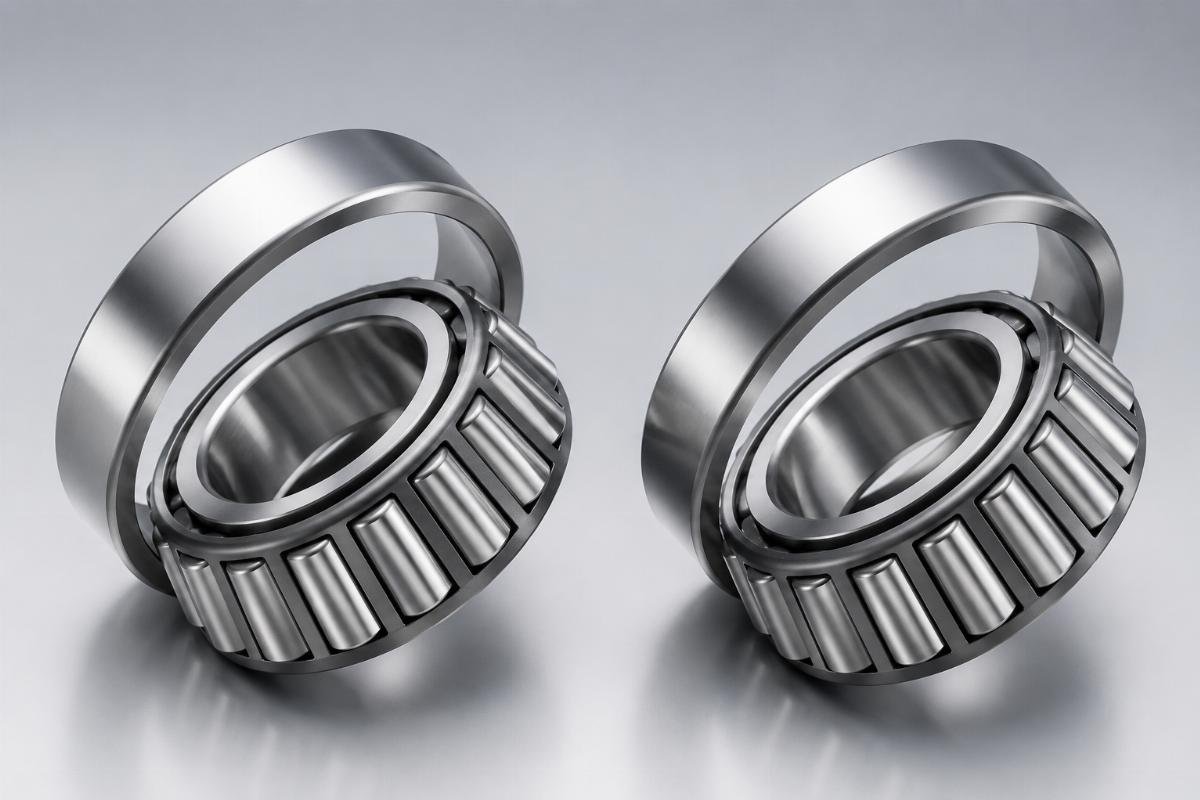
What follows is a practical breakdown of how to choose between these two brands on the shop floor, and how to pick an industrial tapered roller bearing supplier who won’t let you repeat my Busan mistake.
Why Do Most Timken vs Koyo Comparisons Lead to Wrong Decisions?
Most buyers compare catalog numbers when they should be comparing mounting drawings and load cycles. The Timken vs Koyo tapered roller bearings debate usually gets reduced to a price-per-unit argument or a brand-loyalty argument, both of which miss the real failure drivers. In our experience reviewing maintenance records across steel mills, mining crushers, and heavy conveyors, the majority of early failures come from wrong clearance selection, wrong preload, or bearings sourced through channels with no batch traceability [NEED_CITE: proportion of early bearing failures attributable to selection and supply-chain issues versus manufacturing defects].
| Decision Factor | What Buyers Usually Do | What Actually Drives Downtime |
|---|---|---|
| Brand Reputation | Choose by name recognition | Only a small fraction of failures trace to manufacturing defects [NEED_CITE: manufacturing defect share in industrial bearing failure surveys] |
| Upfront Price | Pick the lowest quoted unit cost | Below-market-priced bearings fail noticeably more often within the first half-year |
| Lead Time | Accept long waits for "premium" brands | The majority of emergency shutdowns could be avoided with rapid emergency delivery |
| Technical Support | Skip application engineering | Proper load calculation cuts failure rates substantially in shock-load applications |
A steel mill we worked with was replacing conveyor bearings every month despite using a well-known brand. Their previous supplier had shipped standard-clearance units without checking the system’s axial load swings. After running a load review on-site, we recommended Timken 30218 bearings with C3 clearance and walked the maintenance crew through proper preload adjustment. Within three months, unplanned downtime dropped sharply, and bearing life extended by more than double. The brand didn’t change the outcome—the application match did.
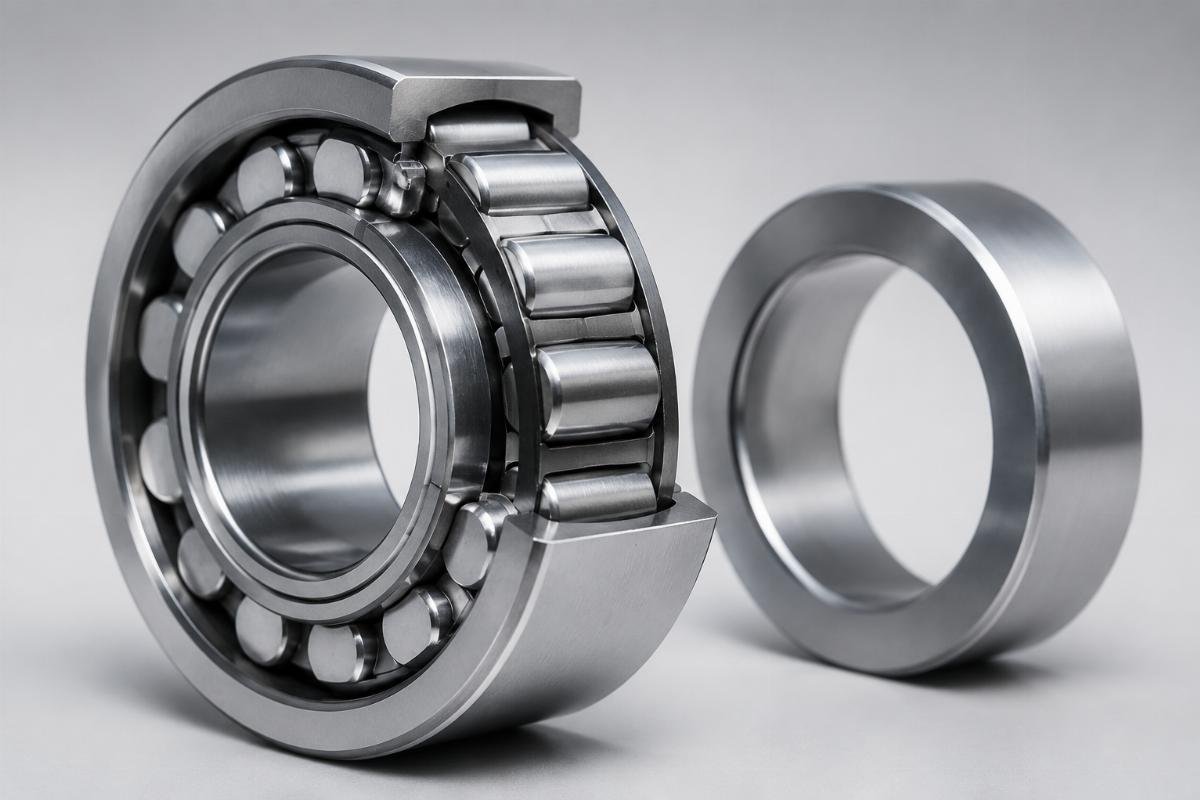
- Load Type Assessment – Calculate radial and axial loads, including shock factors for crushers and impact-heavy equipment.
- Speed Requirements – Confirm maximum RPM against manufacturer speed ratings under real load.
- Environmental Factors – Document temperature range, contamination risk, and lubrication compatibility.
- Installation Constraints – Measure housing bore, shaft tolerance, and available width to avoid misalignment.
- Counterfeit Verification – Require full batch traceability and manufacturer certificates before the PO is signed [NEED_CITE: counterfeit incidence rates in non-authorized bearing supply channels per Bearing Manufacturers Association studies].
When you evaluate an industrial tapered roller bearing supplier on these five points instead of unit price, the Timken vs Koyo tapered roller bearings question stops being a brand argument and becomes an engineering argument.
How Do Timken and Koyo Differ in Material, Load, and Speed Performance?
Timken leans toward shock-load endurance; Koyo leans toward precision and speed—mixing them up is where failures start. Both manufacturers produce high-quality tapered roller bearings, but their material choices and cage designs push them toward different duty profiles. Treating them as drop-in substitutes is the single most common mistake we see on procurement desks.
| Performance Characteristic | Timken Tapered Roller Bearings | Koyo Tapered Roller Bearings |
|---|---|---|
| Surface Hardness | 58-62 HRC (case-hardened alloy steel) | 56-60 HRC (high-carbon chromium steel) |
| Temperature Range | -40°C to 120°C | -30°C to 100°C |
| Speed Capability | Standard cage geometry | Optimized cage geometry allowing noticeably higher RPM under load |
| Load Philosophy | Built for heavy shock and impact | Built for precision and repeatability |
| Typical Application Fit | Mining crushers, grinding mills, heavy conveyors | Machine tools, high-speed conveyors, precision gearboxes |
A mining company asked us to evaluate Timken 32224 versus Koyo 32224 for a grinding mill running at 1500 RPM with heavy shock loading. Their procurement team had historically favored Koyo on unit cost. We ran the equivalent dynamic load calculation using P = XFr + YFa with application-specific X and Y factors, and cross-checked the results through Timken’s ADOBE bearing selection software and Koyo’s Bearing Navigator tool [NEED_CITE: equivalent dynamic load calculation method per ISO 355]. Under the mill’s shock-load profile, the Timken 32224 showed a noticeably longer fatigue life. But when we looked at their high-speed conveyor fleet, Koyo was the better fit. By running a mixed-brand strategy—Timken on the mill, Koyo on the conveyors—the mine cut overall bearing spend meaningfully and extended mean time between failures across the fleet.
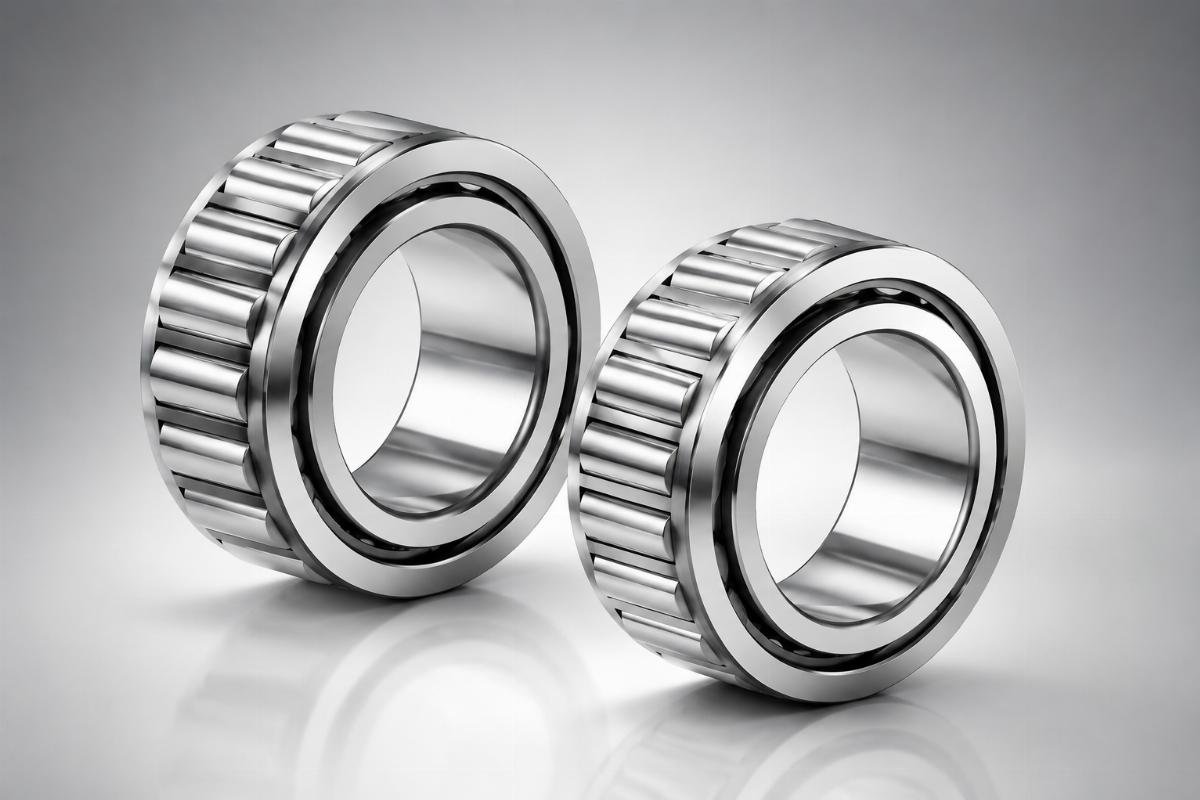
- Material Hardness Testing – Verify surface hardness on the Rockwell C scale; premium industrial tapered rollers sit in the 58-62 HRC band.
- Cage Design Evaluation – Check cage material (pressed steel versus machined brass) and geometry for load distribution under your specific duty.
- Clearance Measurement – Confirm radial clearance with feeler gauges or dial indicators; C3 clearance on a 50 mm bore typically sits between 0.05 mm and 0.10 mm.
- Lubrication Compatibility – Match bearing design to lubricant type (mineral oil, synthetic, grease) based on operating temperature and speed.
- Dynamic Load Calculation – Apply load factors appropriate to your duty (K = 1.2-2.0 for mining) to the basic dynamic load rating C [NEED_CITE: load factor guidance for mining duty per ISO 355].
The takeaway for any buyer comparing Timken and Koyo tapered roller bearings is simple: match the bearing’s strength to the machine’s weakest point, not to the brand your last supplier pushed.
What Real Industrial Cases Reveal About Mixed-Brand Strategies?
Brand loyalty costs more than it saves when duty cycles vary across one plant. The assumption that a single brand simplifies maintenance is one of the most expensive ideas in industrial procurement. In practice, a grinding mill, a conveyor, and a gearbox in the same facility see completely different load, speed, and temperature profiles. Locking into one brand forces compromises on at least two of those three machines.
The mining case above is the clearest example. The Timken 32224 handled the shock-loaded grinding mill; the Koyo 32224 handled the high-speed conveyors. The mixed-brand strategy reduced overall bearing cost and extended fleet-level MTBF—numbers that would have been impossible if the procurement team had insisted on a single nameplate across every housing.
The steel mill conveyor case tells the same story from a different angle. The mill wasn’t failing because the bearing brand was wrong; it was failing because the clearance was wrong. Standard clearance couldn’t absorb the thermal shaft growth and axial load swings. Switching to Timken 30218 C3, combined with proper preload guidance, turned a monthly replacement cycle into a stable, long-life installation.
| Application Profile | Wrong Choice | Right Choice |
|---|---|---|
| Heavy shock, low-to-mid RPM (grinding mill, crusher) | Standard-clearance precision bearing | C3 or C4 clearance, case-hardened alloy, shock-rated |
| High RPM, moderate load (conveyor, machine tool) | Heavy shock-rated bearing with standard cage | Optimized cage geometry, tighter clearance |
| Thermal growth on long shafts (steel mill conveyor) | CN or C2 clearance | C3 clearance with preload adjustment guidance |
What these cases prove is that the Timken vs Koyo tapered roller bearings decision is really a Timken vs Koyo per-application decision. The industrial tapered roller bearing supplier who helps you run that per-application split—and who can trace every batch back to the factory—will outperform the one who just ships whichever brand has the deepest discount.
Why Does Supplier Capability Matter More Than Bearing Brand?
A genuine Timken or Koyo bearing in the wrong warehouse, with no paperwork and no backup plan, is a liability, not an asset. The majority of the emergency calls we handle aren’t about bearing quality at all. They’re about a housing that stopped at customs, a batch that can’t be traced, or a supplier who quoted four weeks when the line needed four days.
| Supplier Capability | Basic Distributor | Application-Engineered Supplier |
|---|---|---|
| Batch Traceability | Self-reported or missing | Full batch-level, verifiable against manufacturer records |
| Emergency Delivery | Standard lead times, no buffer stock | Rapid emergency dispatch for critical shutdowns |
| Application Support | Catalog-only quoting | L10 life calculation, failure analysis, mounting guidance |
| Counterfeit Risk | Uncontrolled channels | Authorized, certificate-of-origin with every shipment |
| Customization | Off-the-shelf only | Laser marking, private-label packaging, pre-lubrication, translated documentation |
The Busan mill story at the top of this article is a supplier failure as much as an engineering failure. A supplier who had checked the mounting drawing against the PO would have caught the cup OD tolerance mismatch before the bearings left the warehouse. A supplier who keeps verifiable stock of less common designations—like Timken 30218 C3 or large-bore Koyo 32224—would have shortened the recovery from three days of downtime to a single shift.
When you’re choosing an industrial tapered roller bearing supplier, the questions that actually protect your uptime are:
- Can every batch be traced back to the manufacturer’s records?
- What is the realistic emergency delivery window for stocked and rare designations?
- Will the supplier run L10 life calculations and failure analysis, or just forward the catalog?
- Are certificates of origin and third-party inspection available on request?
- Does the supplier carry the full industrial range—precision classes, clearance options, sealed and split variants—so you aren’t forced to split orders across multiple sources?
If the answer to any of those is vague, the Timken vs Koyo tapered roller bearings comparison you’re having with them is already the wrong conversation.
Conclusion
The bearing brand matters less than the application match, and the application match matters less than the supplier standing behind it. Timken and Koyo tapered roller bearings each have clear duty profiles—Timken for shock and thermal endurance, Koyo for precision and speed—and the smartest industrial plants run both, matched to the machine, not the brand loyalty of the procurement desk. Choose an industrial tapered roller bearing supplier who brings batch traceability, emergency delivery, and application engineering to the table, and the Timken vs Koyo tapered roller bearings decision resolves itself on the shop floor where it belongs.
