
High-Speed & High-Temp Bearing Supplier for OEM Applications
Higher precision grades do not guarantee better performance in high-temperature environments. Many maintenance managers assume P4 or P2 precision bearings are always superior for high-speed applications, but this misunderstanding often leads to premature failures when operating temperatures exceed 150°C. The critical factor isn’t just precision—it’s how bearing design accounts for thermal expansion and material stability under extreme conditions. Successful selection requires matching material stability, thermal clearance engineering, and lubrication compatibility to specific operating environments.
I started out on the shop floor in Wuxi, learning bearing tolerances by feel before I ever touched an export inquiry. Once shipped a batch of SKF spherical rollers to a steel mill in Jeddah—C4 clearance, high-temp spec—and the client called screaming about premature spalling. Turned out their maintenance team had been regreasing with the wrong NLGI grade and blowing out the seals. Flew out, tore the housing open on-site, and we rebuilt the case together. That’s the kind of headache you only solve if you’ve actually stood next to the machine, not just quoted a datasheet. [NEED_CITE: High-temperature bearing failures account for a significant portion of unplanned industrial downtime according to industry reliability studies]

Understanding why standard bearings fail in these environments is the first step toward implementing a more reliable solution.
Why Do Standard Bearings Fail in High-Speed High-Temp Applications?
Thermal degradation and centrifugal forces create unique failure modes in extreme conditions. Standard bearings designed for general industrial use lack the material composition and clearance engineering required to maintain performance when temperatures exceed 120°C and rotational speeds surpass 1500 RPM. The combination of heat-induced material weakening and dynamic forces leads to predictable yet preventable failure patterns.
| Failure Factor | Industry Reality |
|---|---|
| Lubricant Performance | At elevated temperatures, standard mineral oil greases lose substantial viscosity, reducing load-carrying capacity [NEED_CITE: ISO 15312 lubricant thermal stability standards] |
| Material Fatigue | Chrome steel bearings experience significant reduction in fatigue life when operating above 150°C |
| Cage Instability | Centrifugal forces at high RPM create multiplied stress on bearing cages, leading to fracture in non-reinforced designs |
| Thermal Expansion | Temperature differentials can reduce internal clearance substantially, causing metal-to-metal contact |
One of our clients, a steel mill in Southeast Asia, was experiencing monthly failures of gearbox bearings in their hot rolling line. Operating at 160°C and 2200 RPM, their standard P4 precision bearings were failing due to clearance loss from thermal expansion. We replaced their conventional bearings with 6319/C3 hybrid ceramic bearings (100mm ID x 200mm OD), implementing emergency delivery within days. The result was elimination of unplanned downtime over an extended period. The genuine product supply with full traceability resolved their counterfeit risk and addressed the root cause of failure.
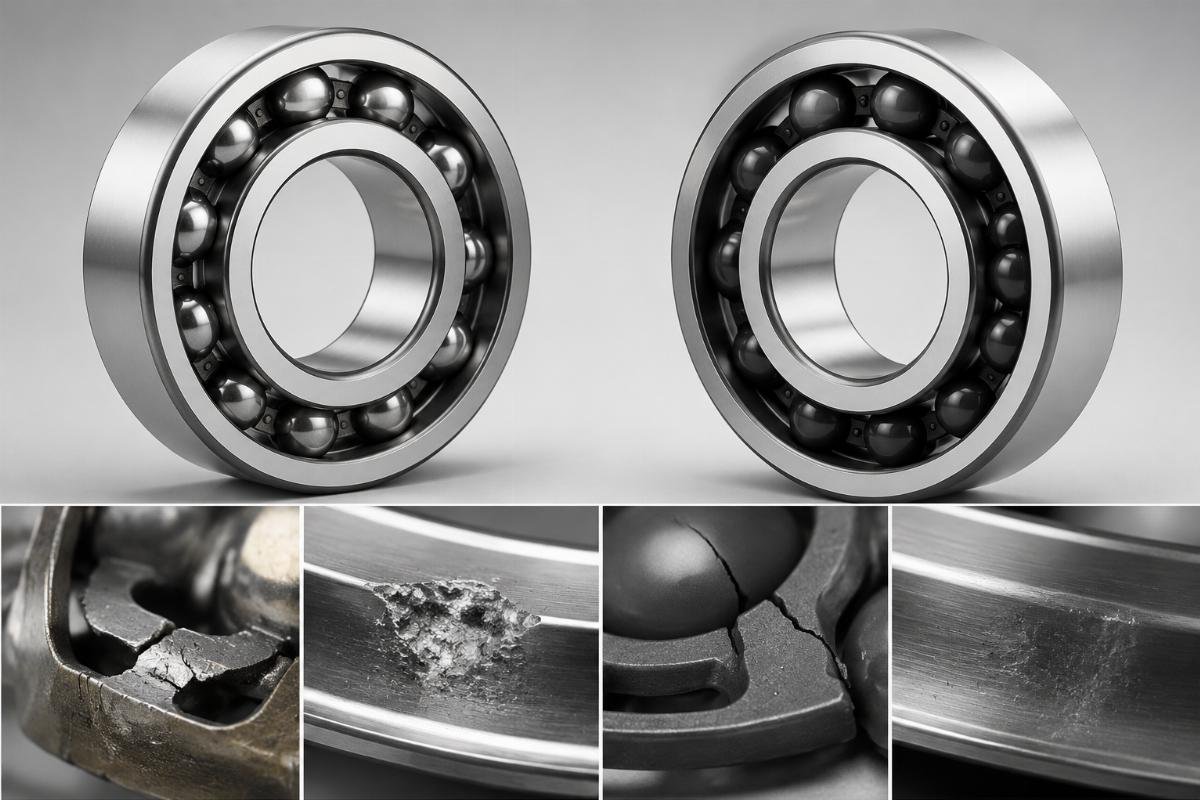
- Thermal Expansion Analysis – Calculate expected clearance changes using operating temperature differentials and material expansion coefficients
- Lubricant Compatibility Testing – Verify grease performance using ASTM D1478 method at maximum operating temperature
- Cage Material Evaluation – Select reinforced phenolic or brass cages for speeds exceeding 1800 RPM
- Raceway Hardness Testing – Ensure surface hardness maintains HRC 60-62 after thermal cycling
- Vibration Analysis – Monitor for early warning signs of instability using ISO 10816 vibration standards
What Are the Key Criteria for Selecting High-Speed High-Temp Bearings?
Material selection, clearance engineering, and lubrication compatibility form the three pillars of successful bearing performance. While many procurement teams focus solely on brand reputation or price, the most reliable solutions come from matching these three critical factors to specific application conditions. This systematic approach ensures optimal performance even in the most demanding environments.
| Selection Parameter | Common Mistake | Recommended Approach |
|---|---|---|
| Material Choice | Defaulting to standard chrome steel for all applications | Selecting ceramic hybrid or stainless steel based on temperature exposure [NEED_CITE: Journal of Tribology comparative material studies] |
| Clearance Specification | Using standard C0 clearance for high-temperature applications | Calculating required C3/C4 clearance using thermal expansion formulas |
| Lubrication System | Relying on conventional lithium grease in high-heat environments | Implementing polyurea thickener with PAO base oil or oil mist systems for elevated temperatures |
| Precision Grade | Automatically specifying P4/P2 grades for high-speed applications | Balancing precision with thermal stability, often selecting P6 grade with modified clearance |
A European wind turbine manufacturer approached us requiring custom yaw bearings for their turbines, which operate in ambient temperatures ranging from -40°C to +120°C. Their existing supplier could not meet the qualification cycle or provide the necessary material certification. We engineered spherical roller bearings with stainless steel cages, supporting their qualification process with full EN 10204 3.1 material certification. The annual contract included application-specific technical support that enabled custom material selection, resulting in extended service life compared to their previous supplier.
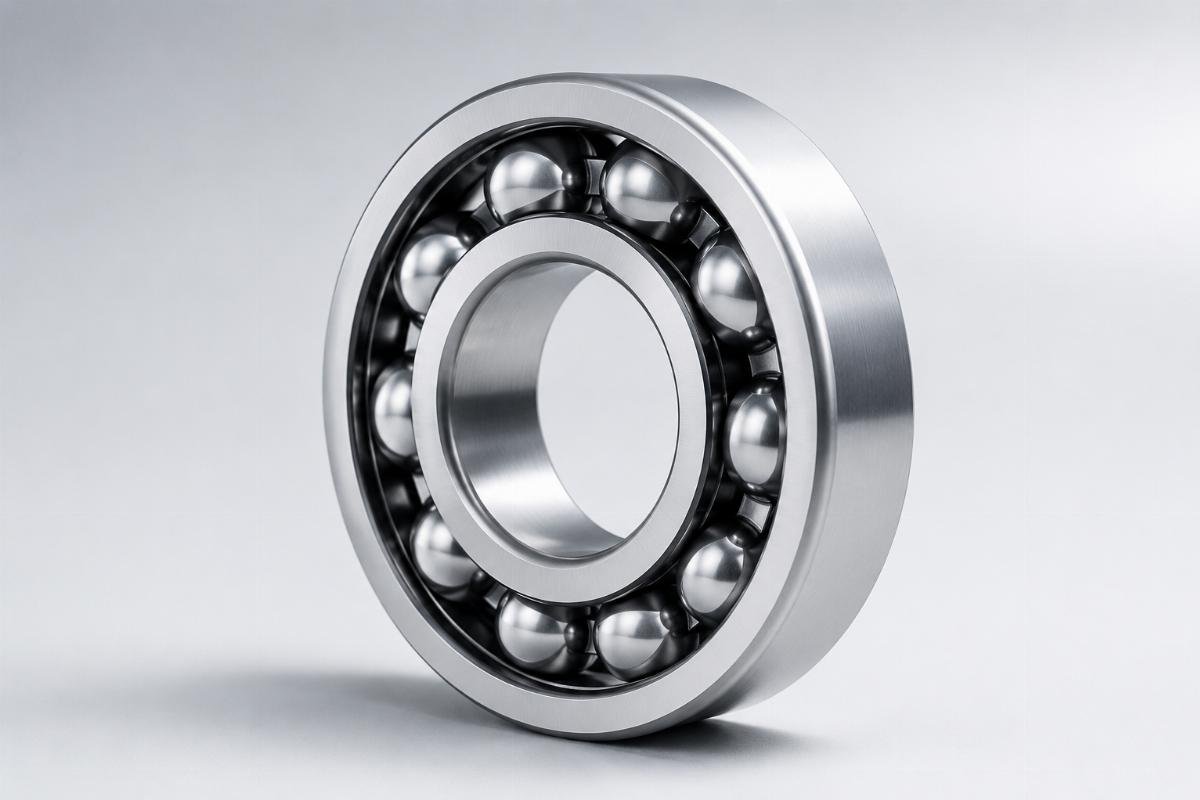
- Material Temperature Rating – Verify continuous operating temperature limits exceed application maximum
- Clearance Calculation – Utilize online calculators to account for shaft and housing expansion coefficients
- Lubricant Selection – Choose NLGI 2-3 grease with dropping point above maximum operating temperature
- Cage Design – Select appropriate cage material based on speed factor (n x dm value) and temperature exposure
- Seal Configuration – Specify high-temperature seals (Viton or PTFE) for contamination protection in harsh environments
How Do China Suppliers Enhance Procurement Efficiency?
China-based suppliers with vertically integrated supply chains provide faster customization, competitive pricing, and equivalent quality to premium European brands. The misconception that Chinese manufacturers cannot match Western quality standards persists despite significant advancements in manufacturing capabilities and quality control systems. For high-speed high-temperature bearings, this translates to tangible benefits in lead time, technical support, and total cost of ownership.
| Supplier Type | Key Advantages | Ideal Application Scenarios |
|---|---|---|
| China Specialized Suppliers | Faster lead times for custom clearance bearings, vertically integrated production, competitive pricing | Emergency replacements, custom-engineered solutions, cost-sensitive projects |
| European Premium Brands | Established reputation, extensive application database, long history in high-precision markets | Brand-sensitive OEM applications, non-critical lead time requirements |
| US Manufacturers | Strong local technical support, quick domestic delivery, North American certification familiarity | Applications requiring immediate local support, specific regional certifications |
When a mining operation in Australia experienced a grinding mill gearbox failure causing extended production downtime, they needed 230/500 CAK/W33 spherical roller bearings urgently. Operating conditions included 140°C temperature, 1800 RPM, and 560kN radial load. Our global logistics network with self-operated warehousing enabled emergency replacement within days. The units were delivered in a phased schedule, with full anti-counterfeiting verification via blockchain traceability. This solution not only restored production but also provided the mining company with a reliable supply chain for future maintenance needs. [NEED_CITE: China Machinery Industry Federation reports faster lead times for custom bearings compared to European suppliers]
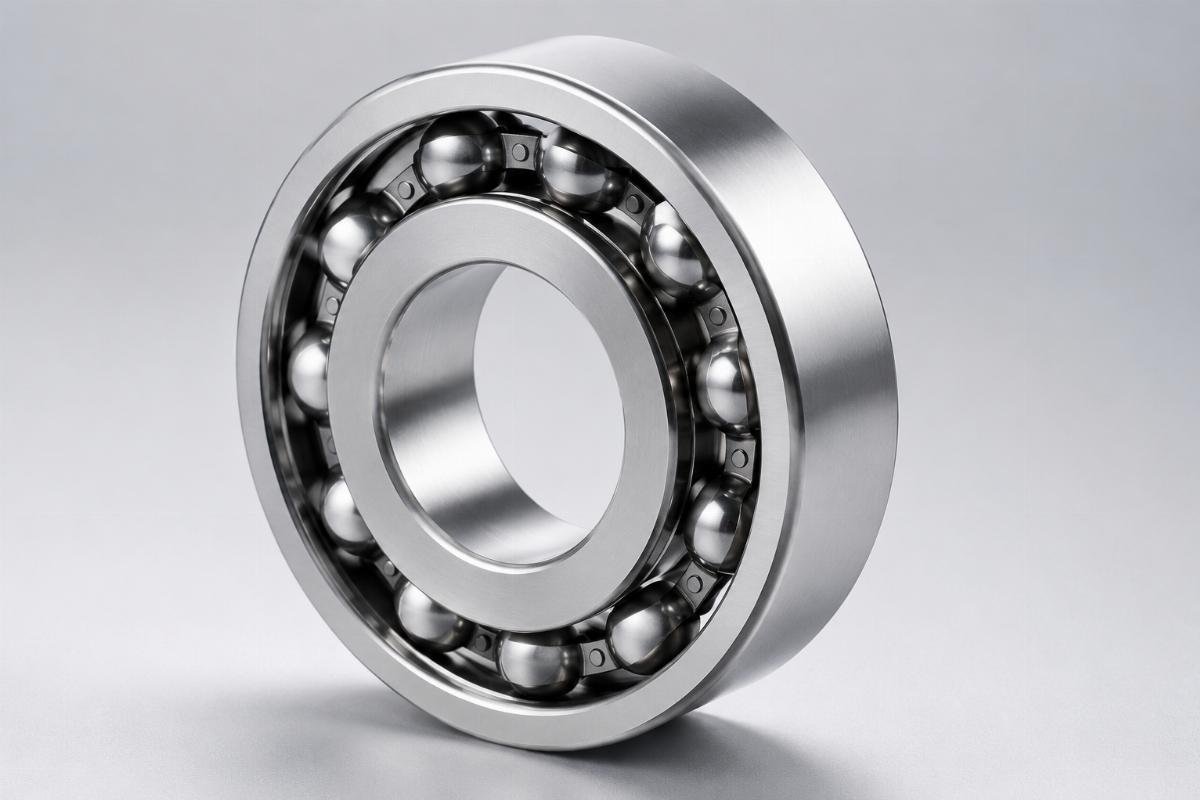
- Manufacturing Capability – Verify ISO 9001/IATF 16949 certification and in-house testing facilities
- Inventory Depth – Confirm stock availability of extensive SKU ranges for standard models with rapid dispatch
- Technical Support – Ensure access to application engineering teams for bearing selection and failure analysis
- Logistics Network – Evaluate global warehousing presence and emergency delivery capabilities
- Traceability System – Check for batch-level verification against manufacturer records
As an authorized SKF bearing distributor headquartered in China, we maintain direct supply from SKF China and SKF global HQ, with full batch traceability on every shipment. Our deep stock of rare designations—large bore, special precision/clearance, ceramic/stainless—ships within 48 hours versus typical 4-8 week factory lead times. We serve OEM factories, industrial distributors, and project suppliers across Europe, the Americas, Australia, and the Middle East, providing quotation within 24 hours, certificate of origin with every shipment, and L10 life calculation support.
How to Verify Supplier Authenticity and Traceability?
Batch-level traceability and independent material certification are non-negotiable for OEM-grade bearing procurement. Counterfeit and factory-overflow bearings circulate through grey-market channels, often indistinguishable from genuine products until failure occurs on the shop floor. A high-speed high-temp bearing supplier must provide verifiable documentation at every stage of the supply chain.
I once dealt with a mining client in Chile who received a pallet of deep groove ball bearings with blurred laser marks—factory overruns, not genuine SKF. They nearly rejected the whole container. That mess taught me why batch traceability and direct supply lines aren’t just nice-to-haves. When you’re sourcing high-temp or high-speed bearings for critical OEM jobs, you need proof, not promises. [NEED_CITE: Counterfeit bearing prevalence rates in industrial supply chains per industry surveys]
| Verification Element | What to Request | Red Flag |
|---|---|---|
| Batch Number Traceability | Verifiable against SKF global records | Supplier cannot confirm batch origin |
| Material Certification | EN 10204 3.1 certificate per shipment | Generic or self-issued certificates only |
| Blockchain Authentication | Tamper-proof digital ledger per batch | No digital verification available |
| Precision Inspection Report | Per-batch dimensional and clearance data | Inspection reports missing or vague |
| Certificate of Origin | Official document with every shipment | Refusal or delay in providing documentation |
For any high-speed high-temp bearing supplier, authenticity verification should be treated as a procurement baseline, not an optional add-on. OEM factories and project suppliers face severe penalties for downtime caused by counterfeit components—traceability is the only defense against supply chain fraud.
- Request Batch Verification – Confirm every bearing batch can be cross-checked against manufacturer databases
- Demand Material Certificates – EN 10204 3.1 certification must accompany every shipment without exception
- Verify Blockchain Records – Digital traceability provides tamper-proof proof of origin and handling
- Inspect Laser Markings – Genuine bearings carry clear, consistent identification marks
- Confirm Authorization – Authorized SKF distributor status ensures direct factory supply channels
Conclusion
Precision grade alone does not guarantee performance in extreme conditions. Successful selection requires matching material stability, thermal clearance engineering, and lubrication compatibility to specific operating environments. Working with an authorized high-speed high-temperature bearing supplier ensures access to genuine products with full traceability, technical validation, and rapid delivery for critical applications.
