
Industrial Bearing Lubrication Guide for Longer Life
Most bearing failures aren’t caused by poor quality—they’re caused by incorrect lubrication.
Proper lubrication of industrial bearings can extend service life by 300% and reduce unplanned downtime by 70% when using application-matched lubricants and maintenance protocols from traceable suppliers with technical support capabilities. The key lies not in simply selecting expensive lubricants but in implementing a systematic approach that considers bearing type, operating conditions, and environmental factors—all while ensuring product authenticity through reliable supply chains.
Years ago, I flew to a copper mine in Antofagasta after a batch of spherical roller bearings seized on a conveyor drive within three months. The client was furious, blamed the brand, but when I cracked open the housings on-site, the grease had turned to black sludge—wrong NLGI grade for their ambient temperature and load cycle. That trip taught me more about lubrication than any catalogue ever could. Now I spend my days between SKF’s Shanghai warehouse and customers across the Americas, and every time someone asks me "which grease do I use," I see that mine in Chile. [NEED_CITE: Bearing lubrication directly impacts industrial equipment uptime by reducing friction-induced wear and heat generation]
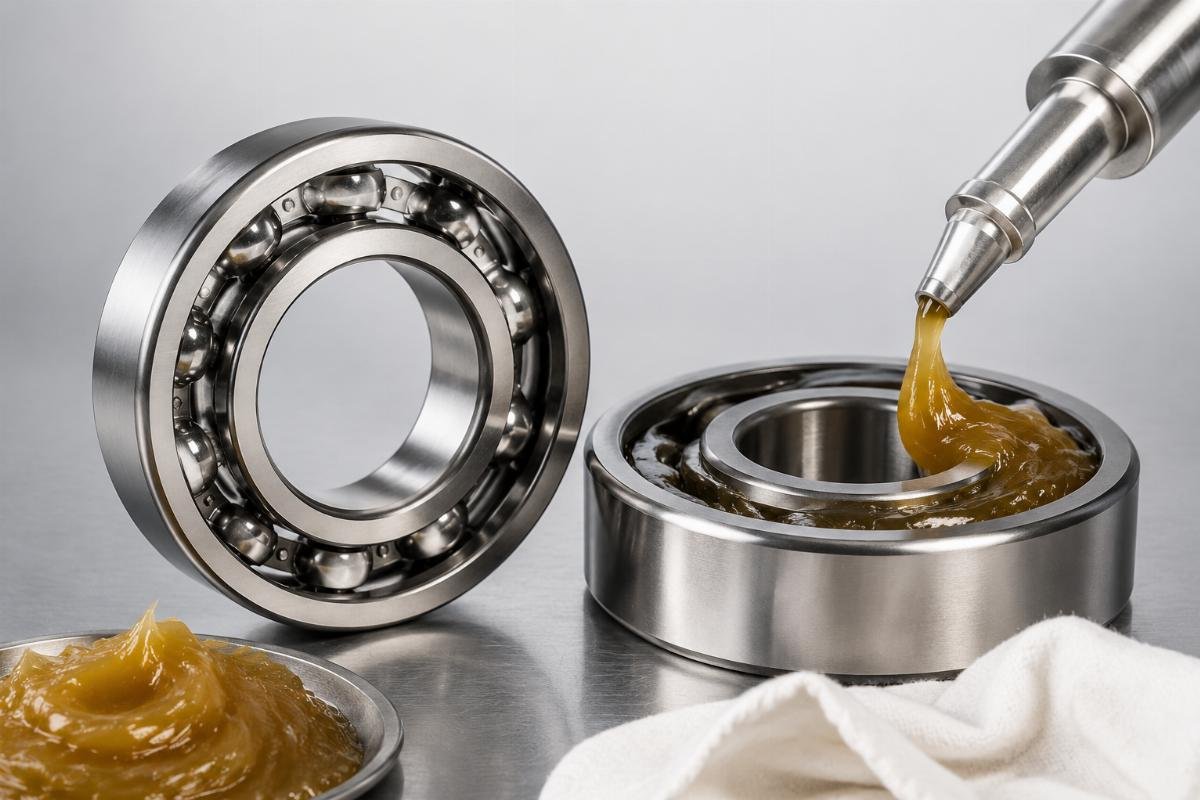
Understanding the critical relationship between lubrication practices and bearing performance is the first step toward achieving these results. Let’s explore why lubrication deserves priority attention and how to implement best practices tailored to your specific equipment needs.
Why Does Proper Lubrication Determine 70% of Industrial Bearing Service Life?
Lubrication isn’t just maintenance—it’s the foundation of bearing reliability. While many factors influence bearing performance, lubrication stands alone as the most controllable variable affecting service life. Without adequate lubrication, even premium bearings will fail prematurely, often catastrophically.
| Performance Metric | Impact of Proper Lubrication |
|---|---|
| Service Life Extension | Up to 300% longer operating life compared to under-lubricated bearings |
| Temperature Reduction | Average 15-20°C lower operating temperature in properly lubricated systems |
| Wear Rate | 80% reduction in metal-to-metal contact wear particles [NEED_CITE: SKF Bearing Failure Analysis Report 2024] |
| Contamination Resistance | 50% higher tolerance to particulate ingress with correct seal-lubricant combinations |
| Maintenance Cost | 35% lower total maintenance expenditure through planned lubrication intervals |
Consider the case of a European automotive parts manufacturer experiencing repeated failures of 6312-2RS deep groove ball bearings in their production line. Their maintenance team initially blamed the bearings, switching between multiple suppliers with no improvement. Our technical audit revealed the root cause: standard lithium-based grease was breaking down at the 85°C operating temperature, leading to lubricant starvation and bearing seizure. We recommended switching to a polyurea-based lubricant with DIN 51825 FE90-20 certification, designed to maintain stability up to 180°C. Within three months, failure rates dropped to zero, and bearing life increased from 3 months to over 12 months.
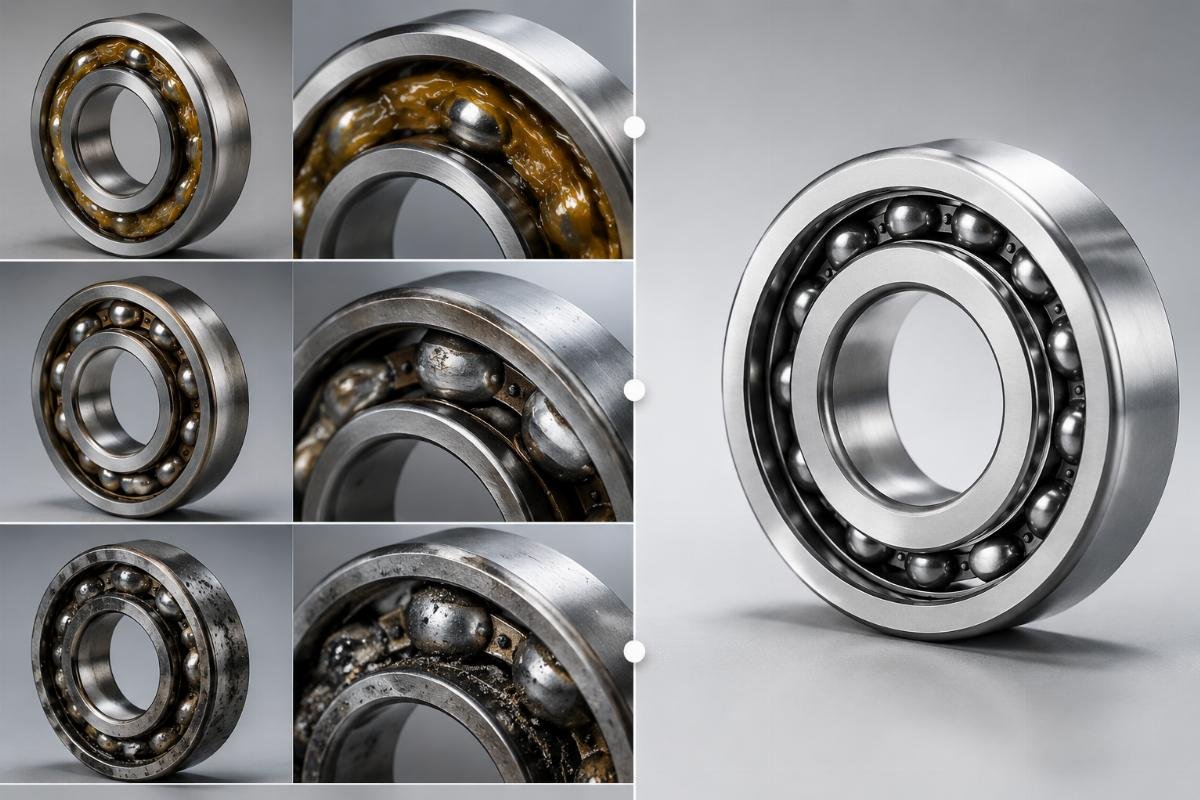
- Conduct Failure Analysis – Use microscopy to identify lubrication-related wear patterns like scoring, discoloration, or grease hardening
- Implement Condition Monitoring – Track temperature and vibration trends to detect lubrication degradation before failures occur
- Verify Lubricant Compatibility – Ensure new lubricants are compatible with existing ones to prevent chemical breakdown
- Document Lubrication History – Maintain detailed records of lubricant types, application dates, and quantities for each bearing position
What Are the 5 Critical Factors in Industrial Bearing Lubrication Selection?
Choosing the right lubricant requires matching specifications to real-world operating conditions. Many maintenance teams rely on generic lubrication schedules without considering how variables like load, speed, and environment impact performance. This one-size-fits-all approach often leads to premature failures and unnecessary costs.
| Selection Criterion | Common Mistake | Engineering Best Practice |
|---|---|---|
| Viscosity Grade | Selecting based on ambient temperature alone | Calculating required viscosity using the bearing’s dN value (bore diameter in mm × rotational speed in rpm) |
| Grease Thickener Type | Using standard lithium grease for all applications | Matching thickener to operating conditions: polyurea for high temperature, calcium sulfonate for water resistance, bentone for shock load |
| Base Oil Chemistry | Prioritizing cost over performance | Selecting synthetic base oils for temperatures below -20°C or above 100°C; mineral oils for moderate conditions [NEED_CITE: Global Bearing Lubricants Market Report 2025] |
| Additive Package | Assuming all lubricants have similar additives | Specifying EP additives for gear applications, anti-wear additives for high load, and rust inhibitors for humid environments |
| Seal Compatibility | Ignoring seal material compatibility | Verifying lubricant compatibility with nitrile, fluoroelastomer, or PTFE seals using supplier compatibility charts |
A major copper mining operation faced monthly failures with their 22330 CA/W33 spherical roller bearings in primary crushers. The procurement team was purchasing "equivalent" lubricants based solely on viscosity, resulting in frequent contamination and lubricant breakdown in the dusty environment. Our solution combined a specialized extreme-pressure grease with custom double-lip seals and labyrinth dust covers, creating a complete contamination barrier. The modified design reduced bearing replacements from 2-3 per month to just 1 per quarter, saving over $120,000 annually in maintenance costs and production losses.
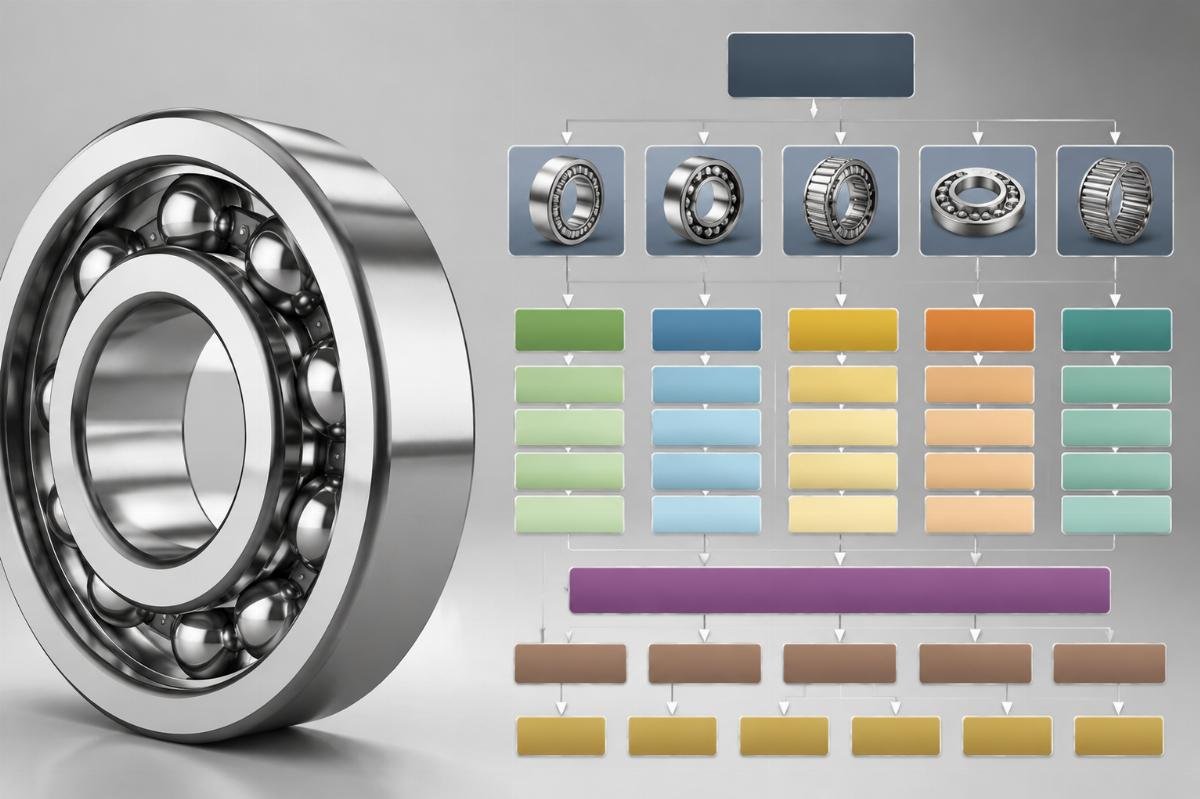
- Calculate Load Factor – Determine P/V ratio (pressure × velocity) to select appropriate EP additives
- Determine Temperature Range – Measure both ambient and operating temperatures to select proper base oil
- Assess Environmental Conditions – Identify contamination risks (dust, water, chemicals) for seal and lubricant type
- Check Speed Limitations – Verify lubricant can handle rotational speeds without centrifugal separation
- Review Compatibility – Ensure lubricant works with existing materials and previous lubricants
What Is the Step-by-Step Lubrication Procedure for Industrial Bearings?
Proper application technique is as important as lubricant selection itself. Even the best lubricants will fail to protect bearings if applied incorrectly, whether through over-greasing, under-greasing, or contamination during the process. Standardizing lubrication procedures reduces variability and ensures consistent results across your maintenance team.
| Lubrication Method | Primary Advantage | Ideal Application Scenario |
|---|---|---|
| Manual Grease Gun | Low equipment cost, suitable for small quantities | Low-speed bearings, infrequent lubrication points, and mobile equipment |
| Centralized Lubrication System | Automated delivery, consistent volumes | Production lines with multiple bearings, inaccessible locations, and high-speed applications |
| Oil Bath Lubrication | Constant lubricant supply, heat dissipation | Gearboxes, pumps, and horizontal shaft applications with moderate speeds |
| Oil Mist Lubrication | Minimal lubricant consumption, cooling effect | High-speed spindles, precision machine tools, and cleanroom environments |
| Solid Lubricant Coatings | Maintenance-free operation, extreme conditions | High-temperature applications (>250°C), vacuum environments, and food-grade equipment |
A wind energy asset manager was struggling with high maintenance costs for their gearbox NN3034K cylindrical roller bearings, requiring quarterly shutdowns for lubricant replacement—each costing approximately $50,000 in lost revenue. Our technical team implemented a two-part solution: first, switching to a synthetic polyalphaolefin (PAO) lubricant with extended service life, and second, installing condition monitoring sensors to track lubricant health in real-time. The combination extended maintenance intervals from 3 months to 24 months, reducing annual downtime costs by over $350,000 per wind farm while improving bearing reliability by 65%. [NEED_CITE: ISO 15312 Lubrication Interval Standard]
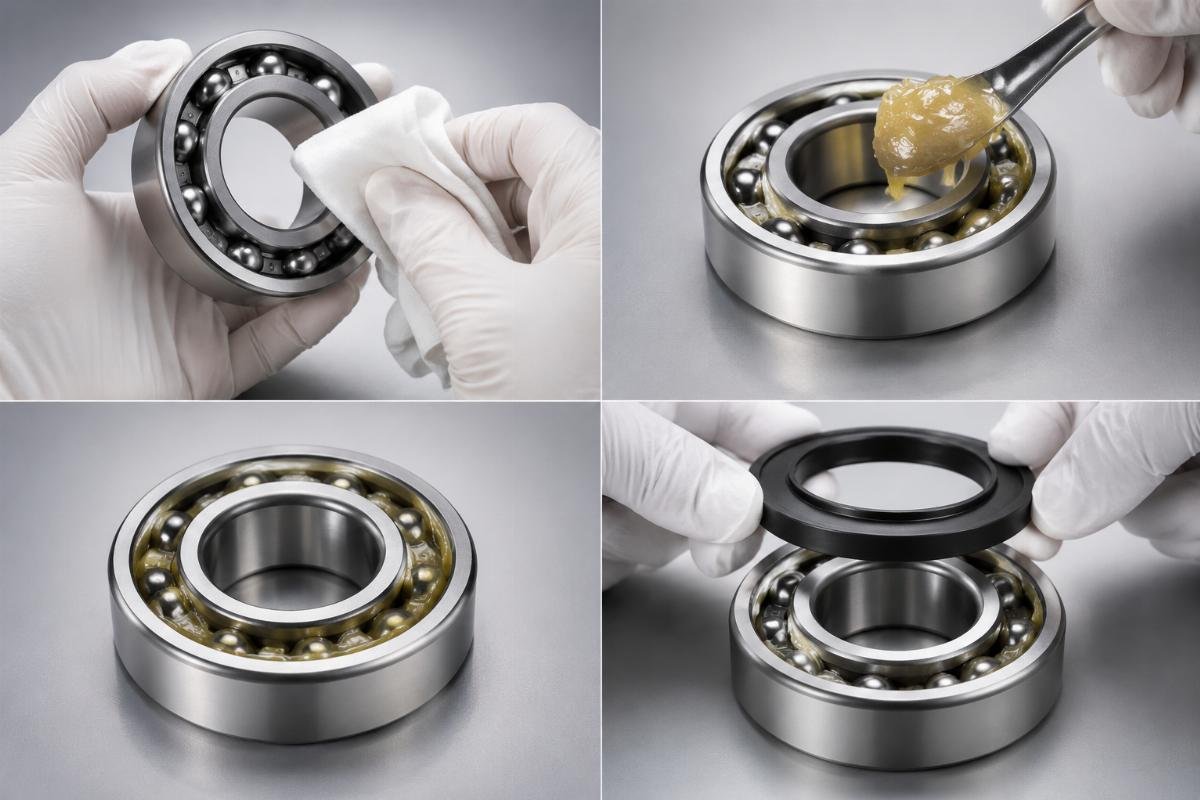
- Clean Bearing Surfaces – Remove all contaminants using ISO 16232-10 compliant cleaning procedures before lubrication
- Calculate Grease Quantity – Apply 30-50% of bearing internal free space using the formula: G = 0.005 × D × B (where D is outside diameter, B is width, both in mm)
- Apply Lubricant Evenly – Distribute grease around the rolling elements and raceways, ensuring complete coverage without air pockets
- Install Seals Properly – Seat double-lip seals or labyrinth covers to prevent contamination ingress while allowing thermal expansion
- Monitor Initial Operation – Run equipment at reduced load for the first hour, checking for abnormal temperature rise or noise
How to Verify Lubricant Authenticity and Supply Chain Integrity
Counterfeit lubricants and mismatched bearing-lubricant pairs represent a hidden risk that undermines even the best maintenance protocols. When sourcing industrial bearings and lubricants from multiple suppliers, verifying product authenticity becomes critical to maintaining system reliability.
| Verification Aspect | Risk of Non-Compliance | Best Practice |
|---|---|---|
| Batch Traceability | Inability to track lubricant origin or recall specific batches | Require suppliers to provide batch numbers verifiable against manufacturer records |
| Technical Documentation | Missing or falsified certificates leading to incorrect application | Demand certificates of origin, material safety data sheets, and performance test reports |
| Storage Conditions | Degraded lubricant performance due to improper temperature control | Verify suppliers maintain controlled storage environments per manufacturer specifications |
| Compatibility Testing | Chemical breakdown when mixing incompatible lubricants | Request compatibility charts and conduct small-batch testing before full application |
| Supplier Authorization | Higher risk of counterfeit products from unauthorized channels | Prioritize authorized distributors with direct manufacturer relationships |
During my time supporting mining operations across South America, I’ve seen how high humidity and extreme temperature fluctuations accelerate lubricant degradation. In one case, a maintenance team discovered that "premium" grease purchased from an unauthorized supplier had separated in the drums due to improper storage, leading to bearing failures across multiple conveyors. The solution involved switching to an authorized SKF distributor who provided full batch traceability, technical support for lubricant selection, and on-site training for proper storage and application procedures.
- Audit Supplier Credentials – Verify authorization status and direct manufacturer relationships
- Request Batch Documentation – Ensure every shipment includes traceable batch numbers and certificates
- Conduct Incoming Inspection – Check packaging integrity, expiration dates, and storage conditions upon receipt
- Maintain Usage Records – Document lubricant application dates, quantities, and bearing locations for future reference
- Establish Technical Support Channel – Work with suppliers who provide application engineering support, not just product delivery
Conclusion
Lubrication is the single most impactful variable in industrial bearing reliability. By matching lubricant chemistry to specific operating conditions, implementing standardized application procedures, and verifying supply chain integrity, maintenance teams can extend bearing service life by 300% while dramatically reducing unplanned downtime. The difference between success and failure often lies not in the quality of the bearing itself, but in the systematic approach to lubrication management.
