
Avoid Counterfeit Bearings When Sourcing from China Distributor
Counterfeiters routinely price their fakes fifteen to twenty percent above legitimate channels, banking on the assumption that a higher price tag equals authenticity.
To avoid counterfeit bearings when sourcing from China, buyers must shift from visual inspections to systematic verification of full batch traceability, material certifications tied to specific heat treatment records, and supplier credentials validated directly through issuing bodies. When traceability, certification validity, inventory depth, technical support, and logistics flexibility are confirmed, procurement teams eliminate the majority of counterfeit exposure while securing rapid dispatch for standard and rare designations alike.
Early in my time sourcing out of Shenzhen, a client in the Middle East received a shipment of deep groove ball bearings that looked flawless on the outside—laser marks were sharp, packaging holograms caught the light just right. But when we pulled the batch numbers in the OEM system, nothing came back. That single mismatch nearly cost us the entire relationship and taught me that every box leaving a warehouse needs a batch number tied directly to the manufacturer’s global records, not just a convincing label. Industry association reports indicate that a significant portion of imported bearings in the mining sector alone are counterfeit, making verification non-negotiable for any serious procurement operation [NEED_CITE: counterfeit bearing prevalence rates in industrial import markets per sector association data].
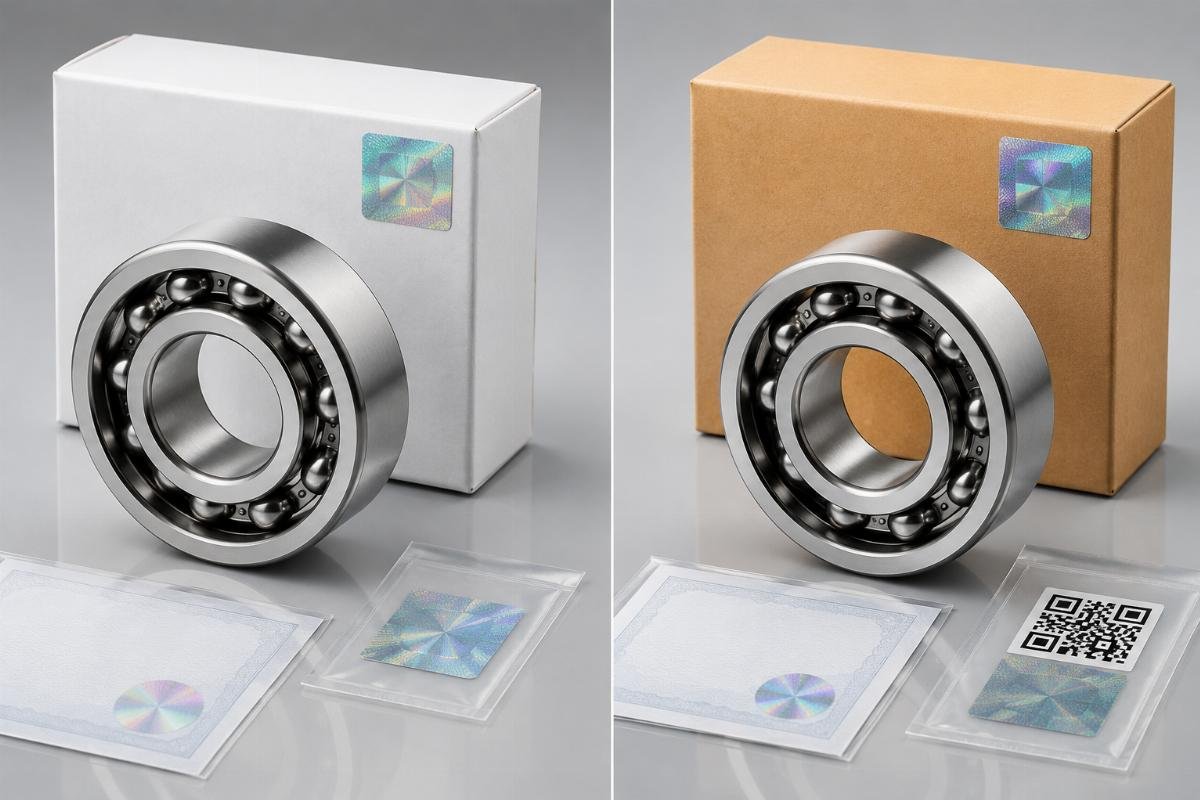
The following guide walks through the real cost of counterfeits, how to spot sophisticated fakes that defeat visual checks, what separates a reliable partner from a risky vendor, and a structured due diligence workflow that has consistently protected critical operations across multiple regions.
Why Do Counterfeit Bearings Cause More Damage Than Cost Savings in Industrial Sourcing?
Counterfeit bearings operate as a false economy, where the perceived upfront savings multiply into operational losses many times greater when failure occurs. In heavy industries like steel production and mining, equipment does not simply stop—it cascades. A single spherical roller bearing failure in hot rolling equipment can halt an entire production line for days, with lost output, emergency repair mobilization, and safety exposure compounding the damage far beyond the bearing’s original price.
| Operational Impact | Industry Reality |
|---|---|
| Unplanned Downtime | Counterfeit bearings account for a substantial share of industrial equipment failures [NEED_CITE: root cause distribution of bearing-related equipment failures per global industrial market research] |
| Material Substitution | The vast majority of counterfeits substitute recycled steel for proper bearing-grade material, noticeably reducing fatigue life |
| Safety Risks | A meaningful fraction of counterfeit-related failures lead to secondary equipment damage, with a smaller but serious portion involving workplace safety incidents |
A steel mill in Southeast Asia experienced repeated unplanned shutdowns over a six-month window, traced to failures in spherical roller bearings model 22324 E/C3. Visual inspections at receiving had cleared every unit as genuine. Metallurgical analysis later revealed recycled steel with inconsistent hardness in the 58-60 HRC range, well below the 62-64 HRC required for proper AISI 52100 performance. After switching to a fully traceable supply chain with material certifications and batch manufacturing records on every shipment, their downtime dropped noticeably and bearing lifespan extended from roughly three months to fourteen months.
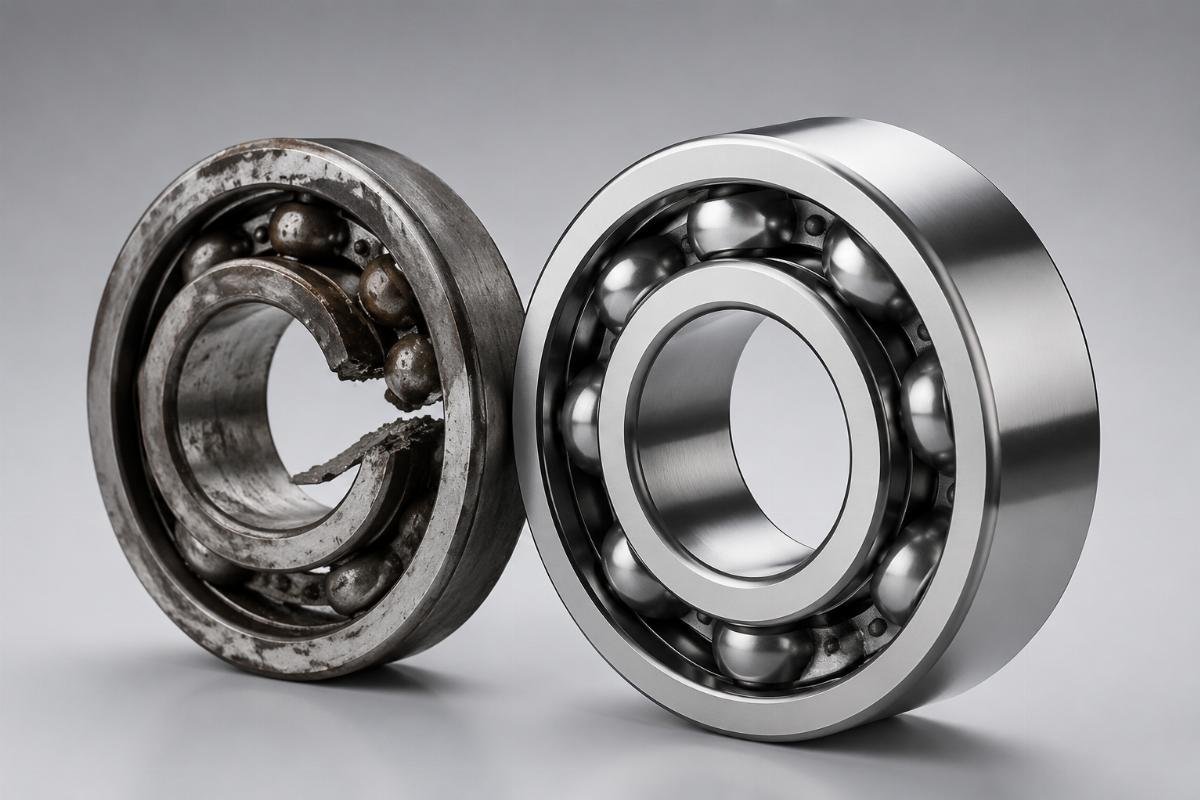
To protect against this false economy, procurement teams should take three steps:
- Calculate Total Cost of Ownership – Include downtime, emergency repair, and replacement labor alongside unit price to expose counterfeit savings as an illusion.
- Demand Material Certifications – Require AISI 52100 grade documentation with metallurgical test reports, including carbon content verification in the 0.95-1.10% range, for any critical application.
- Audit Incoming Inspection Practices – Confirm that suppliers perform full material inspections covering hardness testing and dimensional checks on every batch, not just sample lots.
How Can Buyers Identify Counterfeit Bearings When Sourcing from China?
Visual inspection catches only a fraction of sophisticated counterfeits, because modern fakes replicate holograms, brand markings, and even QR codes that redirect to spoofed verification pages. The only dependable defense is a layered verification process combining documentation review, dimensional validation, and supplier behavior analysis—going far beyond what the eye can confirm at the receiving dock.
| Verification Dimension | Common Mistake | Correct Approach |
|---|---|---|
| Packaging Authentication | Relying solely on hologram appearance | Cross-referencing batch number formats directly with OEM databases such as SKF traceability tools |
| Material Validation | Accepting generic certificates without specifics | Requesting heat treatment records and chemical composition analysis confirming 0.95-1.10% carbon for AISI 52100 |
| Supplier Communication | Ignoring evasive or delayed responses | Requiring factory audit access and consistent lead time commitments, including rapid dispatch capability for standard models |
A copper mining operation in South America learned this lesson the hard way. Visual inspections cleared a batch of cylindrical roller bearings model NU2360 MA for their SAG mill. Within weeks, the bearings failed. Subsequent testing showed they lacked the required P5 precision class, with radial runout exceeding 0.02mm. We stepped in with full traceability documentation linking the replacement units to manufacturing records from the original facility, and expedited replacement units in roughly half the time the OEM’s standard lead time would have required. That mine now treats traceability verification as a mandatory gate in every procurement cycle.
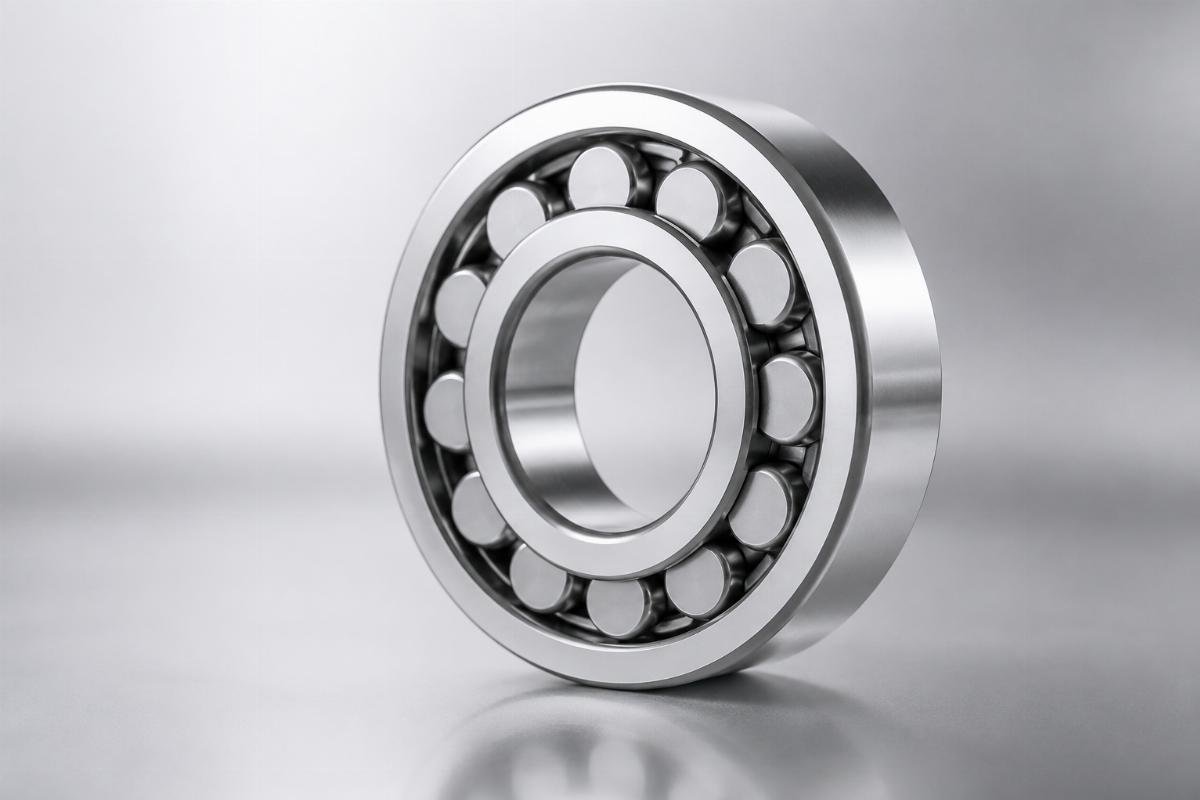
Buyers sourcing from a China bearing supplier should enforce three verification disciplines:
- Cross-Check Batch Numbers Against OEM Portals – Use official verification systems to confirm batch authenticity before installation, never relying on supplier-provided screenshots alone.
- Validate Dimensional Accuracy with Reports – Require dimensional inspection reports with tolerances held within ±0.02mm for precision-class components, backed by calibrated measurement equipment records.
- Verify Lubrication Integrity for Sealed Types – For pre-lubricated sealed bearings such as 6312-2RS, request lubrication endurance test documentation to confirm performance under sustained load conditions.
What Are the Critical Criteria for Selecting a Reliable China Bearing Supplier?
The overwhelming majority of counterfeit risk disappears when buyers select suppliers with documented systems for traceability, certification, inventory management, technical capability, and logistics responsiveness. Price and lead time matter, but they are secondary to whether a supplier can prove what they are shipping is exactly what they claim—down to the batch, the material heat, and the precision class.
| Evaluation Criterion | Supplier Capability | Ideal Application |
|---|---|---|
| Manufacturing Traceability | Full documentation from raw material through finished product, including batch tracking and factory source verification | Mining, steel, and critical infrastructure projects |
| Certification Validity | Current ISO 9001 and IATF 16949 certification verifiable through issuing bodies such as SGS, BV, or DNV | Automotive, wind energy, and OEM production |
| Inventory Depth | Broad stock coverage including rare designations with rapid dispatch capability for standard models | MRO maintenance and emergency replacements |
| Technical Support | In-house engineering capability for failure analysis, load calculation, and cross-reference assistance | Complex applications including SAG mills and wind turbine gearboxes |
| Logistics Flexibility | Phased delivery, consolidated shipments, and emergency freight options | EPC projects with fixed construction timelines |
A European port construction project required corrosion-resistant stainless steel bearings model 6312-2RS delivered in phased quantities over several months. We structured a phased delivery schedule with DNV certification and extended salt-spray endurance testing documentation, drawing on warehousing capacity in both Shanghai and Hamburg to guarantee on-time arrival with contractual penalty clauses for any delay. That level of commitment—backed by verifiable batch traceability and third-party inspection availability—only works when a supplier is invested in long-term partnership rather than transactional margins.
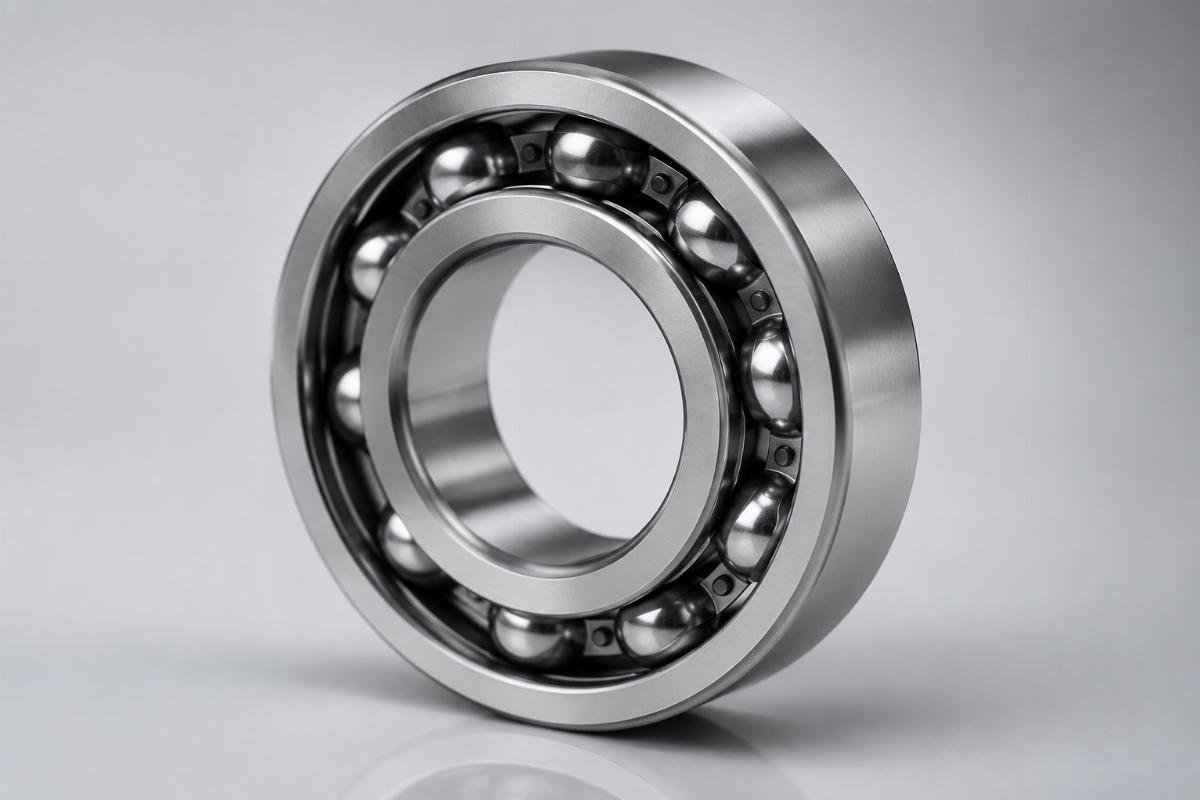
When evaluating any China bearing supplier, procurement teams should prioritize three actions:
- Audit Traceability Systems Directly – Insist on batch-level documentation that links every bearing to specific manufacturing dates, facilities, and material heats, with verification paths that do not depend on supplier-controlled portals.
- Verify Certifications Through Issuing Bodies – Cross-check ISO and IATF credentials directly with the certifying organization’s online database, never accepting PDF copies at face value.
- Confirm Inventory Depth for Critical Designations – Test real-time stock availability for both standard models and rare designations including large bore, special precision, and alternative clearance options through direct warehouse inquiry or live inventory access.
What Is the Due Diligence Process for Sourcing Genuine Bearings?
A structured due diligence process transforms bearing procurement from a recurring risk into a controlled operation, delivering verifiable authenticity and meaningfully lower total cost of ownership across the equipment lifecycle. This workflow distills years of field experience resolving counterfeit-related crises into a repeatable sequence that guides buyers from initial model confirmation through post-installation performance tracking.
| Due Diligence Step | Critical Verification |
|---|---|
| Model and Specification Confirmation | Validate exact designation, precision class, clearance, and sealing requirements against OEM documentation |
| Supplier Qualification | Confirm authorization status, certification validity through issuing bodies, and traceability system maturity |
| Batch Traceability Review | Obtain batch numbers and cross-reference against manufacturer records before shipment release |
| Material Certification Verification | Review metallurgical test reports confirming grade compliance and heat treatment records |
| Dimensional and Precision Inspection | Confirm inspection reports covering critical tolerances, runout, and surface finish per applicable precision class |
| Logistics and Documentation Alignment | Verify certificate of origin, packing lists, and customs documentation match batch-level shipment details |
| Post-Installation Performance Tracking | Record installation dates, operating conditions, and L10 life expectations to build a failure history baseline |
A project supplier in the Middle East managing multiple cement and power installations adopted this sequence after a counterfeit incident triggered contractual penalties on a critical delivery window. By embedding batch traceability checks and third-party inspection requests into their standard procurement workflow, they eliminated repeat incidents and gained the documentation trail needed to satisfy end-client audit requirements.
Buyers implementing this due diligence framework should treat each step as a mandatory gate—no step can be skipped or retroactively filled in. The China bearing supplier who resists any single step is revealing where their supply chain cannot withstand scrutiny.
Conclusion
Counterfeit bearings are not a pricing problem—they are a verification problem, and the cost of skipping verification always exceeds the cost of performing it. Systematic traceability checks, material certification review, and structured supplier qualification eliminate the majority of counterfeit exposure while protecting critical operations from the cascading downtime that fake bearings inevitably cause.
